
PPWR packaging labels: what a self-service sandwich actually needs on the wrapper
The EU's new Packaging and Packaging Waste Regulation is already in force, and it splits into three obligations for food service — a 2030 ban on single-use condiment sachets for dine-in, a 2028 sorting-label mandate on almost everything else, and a Declaration of Conformity that can legally be the food business's problem, not the packaging supplier's.
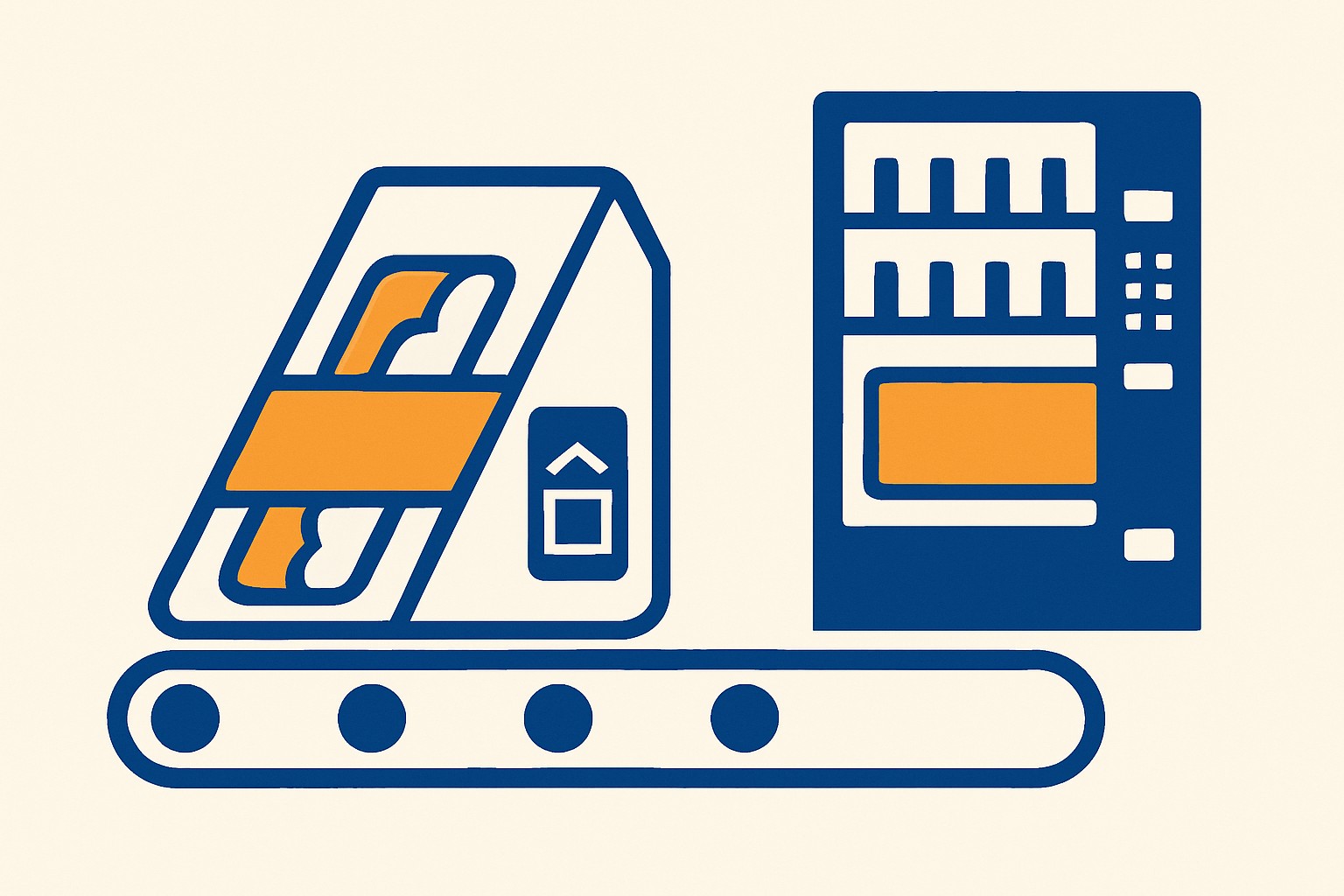
One regulation, two very different deadlines for food service
PPWR — Regulation (EU) 2025/40 — entered into force in February 2025 and becomes generally applicable from 12 August 2026, this month. It’s a regulation, not a directive, so it applies directly in every member state without national transposition. But “PPWR” isn’t one rule with one effective date; for anyone packaging food, it’s really two separate obligations that land on completely different things.
The one that gets quoted most is the 2030 ban on single-use plastic packaging for individual condiment portions consumed on-site in HORECA — the ketchup sachet, the mini butter, the single-serve sugar, handed out for dine-in. It only applies to on-premise consumption, and it doesn’t arrive for another three and a half years.
The one that actually affects more businesses, sooner, is Article 12 — and it’s the one people ask about less.
Article 12: the label goes on almost everything
From 12 August 2028 (or 24 months after the Commission’s implementing acts, whichever is later — those acts are due by this August), essentially all packaging placed on the EU market must carry a harmonised label showing its material composition, using pictograms that mirror the sorting symbols already on municipal waste bins. This isn’t a HORECA-specific rule and it isn’t about the on-site ban at all — it applies to packaging in general, dine-in or not.
That’s the part worth checking against a very ordinary product: a pre-packed sandwich sold through a self-service fridge or vending automat — the kind you’ll find at a station kiosk, a hospital cafeteria, or a Migros/Coop self-checkout corner across Switzerland and Germany.
The self-service sandwich test
Walk through what actually happens to that sandwich’s packaging under PPWR:
- The 2030 dine-in ban doesn’t apply to it. A sandwich sold pre-packed for immediate consumption away from the counter isn’t the “on-site HORECA servingware” the sachet ban targets — this is closer to ordinary retail packaging.
- Article 12 does apply to it. From August 2028, the wrapper or clamshell needs the harmonised sorting pictogram, the same as a supermarket ready-meal. A central kitchen or dark kitchen producing sandwiches at volume for automats will need that pictogram on every unit, alongside the use-by and allergen information already required today.
- Design-for-recycling requirements apply too. From 2030, only packaging meeting a minimum recyclability grade (A–C) can be placed on the market at all — so the film or box itself has to be reassessed, not just relabelled.
- PFAS restrictions are already active now, from this month. Grease-resistant paper wraps — a common choice for sandwiches specifically because they resist oil and moisture — are exactly the packaging category regulators are watching, with thresholds of 25 ppb for any single PFAS substance and 50 ppm for total PFAS.
None of this needs a dine-in room to apply. It needs a wrapper.
Whose name is on the box
Here’s the part that catches food businesses off guard: PPWR requires a Declaration of Conformity for packaging (Articles 38–39), and it isn’t automatically the packaging supplier’s paperwork. PPWR defines the “manufacturer” as whoever designs packaging, or has it designed and made, and markets it under their own name or trademark. For sales packaging that’s often the filler or brand owner, not the film or box producer — if your logo is on the sandwich sleeve or the automat’s own-brand box, you’re the manufacturer for PPWR purposes, not your packaging vendor.
That obligation isn’t paperwork you can wait to think about. It means: running the internal conformity assessment (Article 38, Module A) against the essential requirements as they come into force — substance restrictions like the PFAS limits already active this month, then recyclability, minimum recycled content, and the rest as their own dates land through 2030 — keeping the technical documentation behind it (Annex VII), and being able to hand it to a market surveillance authority within 10 days of a request. Contract language that tries to push this onto the packaging supplier doesn’t change who’s legally on the hook; if your name is on the box, the obligation is yours.
For a central kitchen or dark kitchen supplying its own branded packaging to vending automats or self-service fridges, that’s a real, near-term compliance task — not a 2030 problem.
What already exists, not what’s planned
This is one where we want to be precise about what’s real today versus what’s coming. CalcMenu already calculates and prints per-item labels — use-by dates, allergens, ingredient declarations — straight from the recipe data through BlazeIQ Labels, at the point where the sandwich (or any other item) actually gets packed. That’s live today, not a roadmap claim. A harmonised packaging-material sorting pictogram is a different piece of information than an allergen or a use-by date — it describes the packaging, not the food — and it’s not something CalcMenu prints today. But it sits on the same physical label, printed at the same moment, from a system that already knows exactly what packaging format each recipe leaves the kitchen in.
The Declaration of Conformity and its technical file are a different problem again — document retention and inspection-ready retrieval, not label printing. Blaze Checks already keeps HACCP logs, SOPs, and audit exports ready to hand an inspector on demand; it does not, today, hold PPWR Declarations of Conformity as a document type. The same audit-ready retrieval model applies, but that’s a gap to flag honestly rather than a feature to claim.
If you’re running high-volume grab-and-go or vending production under your own brand and want to know whether that Declaration of Conformity obligation actually lands on you, that’s worth a short conversation now rather than after a surveillance request.
Book a 15-minute call to walk through it: Book now
Explore CalcMenu's recipe management software for restaurants, hotels & catering to see how it applies to your kitchen.
Related sectors
Comments
Comments coming soon.