
Blog
Meals, care and kitchen: what we learn in the field
Practical insight into meal management across care homes, psychiatry, rehabilitation and hospitality — no jargon, written for the teams.
Page 4 / 10

EGalim in Practice: How to Reach 50% Sustainable Products in Catering
The EGalim law sets a clear target for collective catering: 50% sustainable and quality products by value. This post breaks down what that means in practice and how the right software can help you get there.
July 12, 2026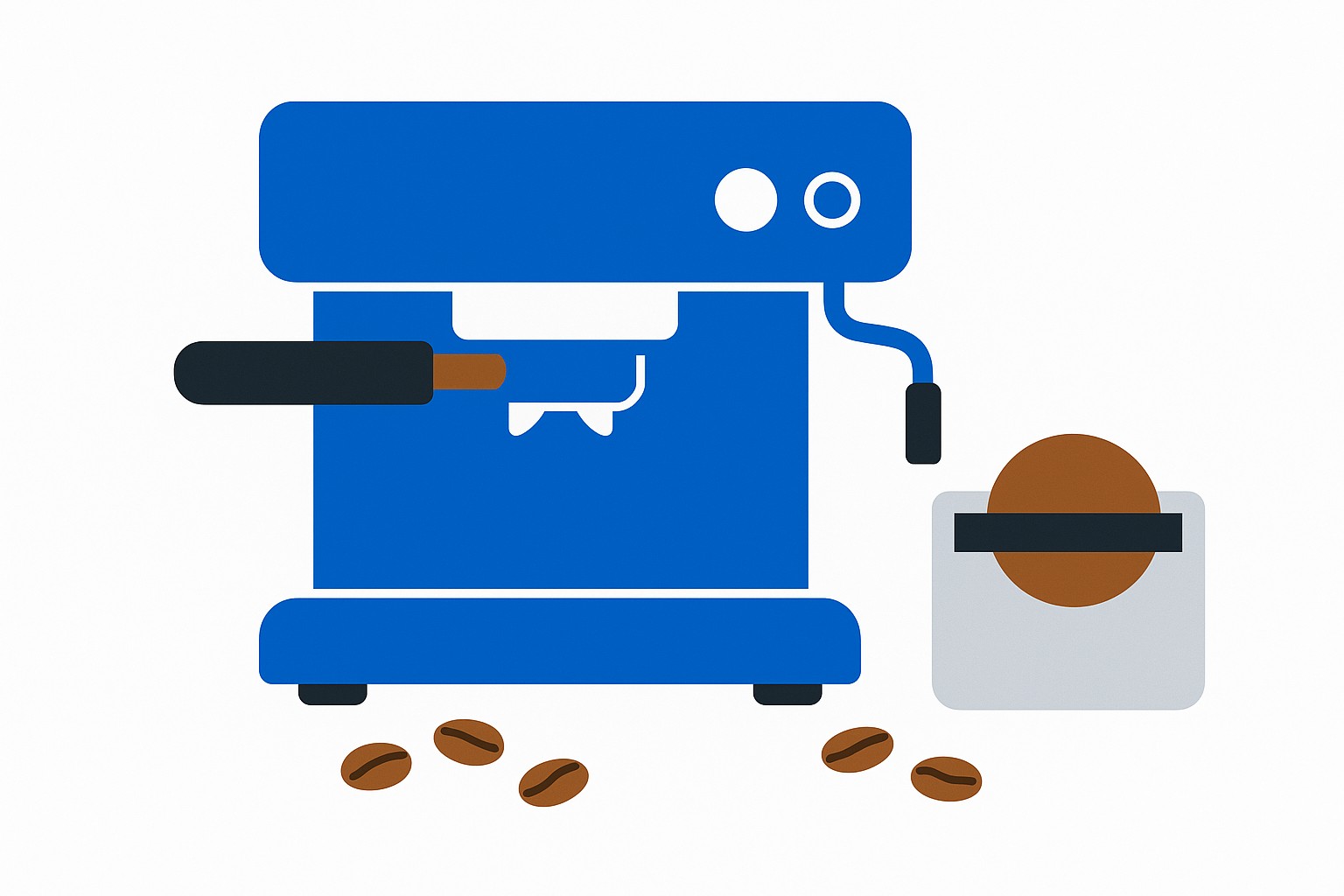
Dialing In: The Espresso Ritual That Wastes Coffee on Purpose — And Now Costs More Than Ever at $4.41-a-Pound Arabica
Every café throws away ground coffee and pulled shots every morning before service even starts — it's called dialing in, and it's unavoidable. With arabica futures hitting an all-time record in 2025, that daily waste is worth more than it's ever been.
July 12, 2026
Fondue isn't an ancient Swiss tradition. It's a 1930s ad campaign that worked too well.
Melted cheese in a shared pot reads as timeless Alpine tradition. The documented record says otherwise: fondue started as a lowland dish most of Switzerland had never tasted, and only became 'the' national dish after a legal cheese cartel spent five decades manufacturing that identity on purpose.
July 12, 2026
When Public Health Stops Counting: Own Your HACCP Data Now
Public health surveillance has real gaps — and when it misses something, your operation pays the price. Here is why your own HACCP data is now your most important line of defence.
July 12, 2026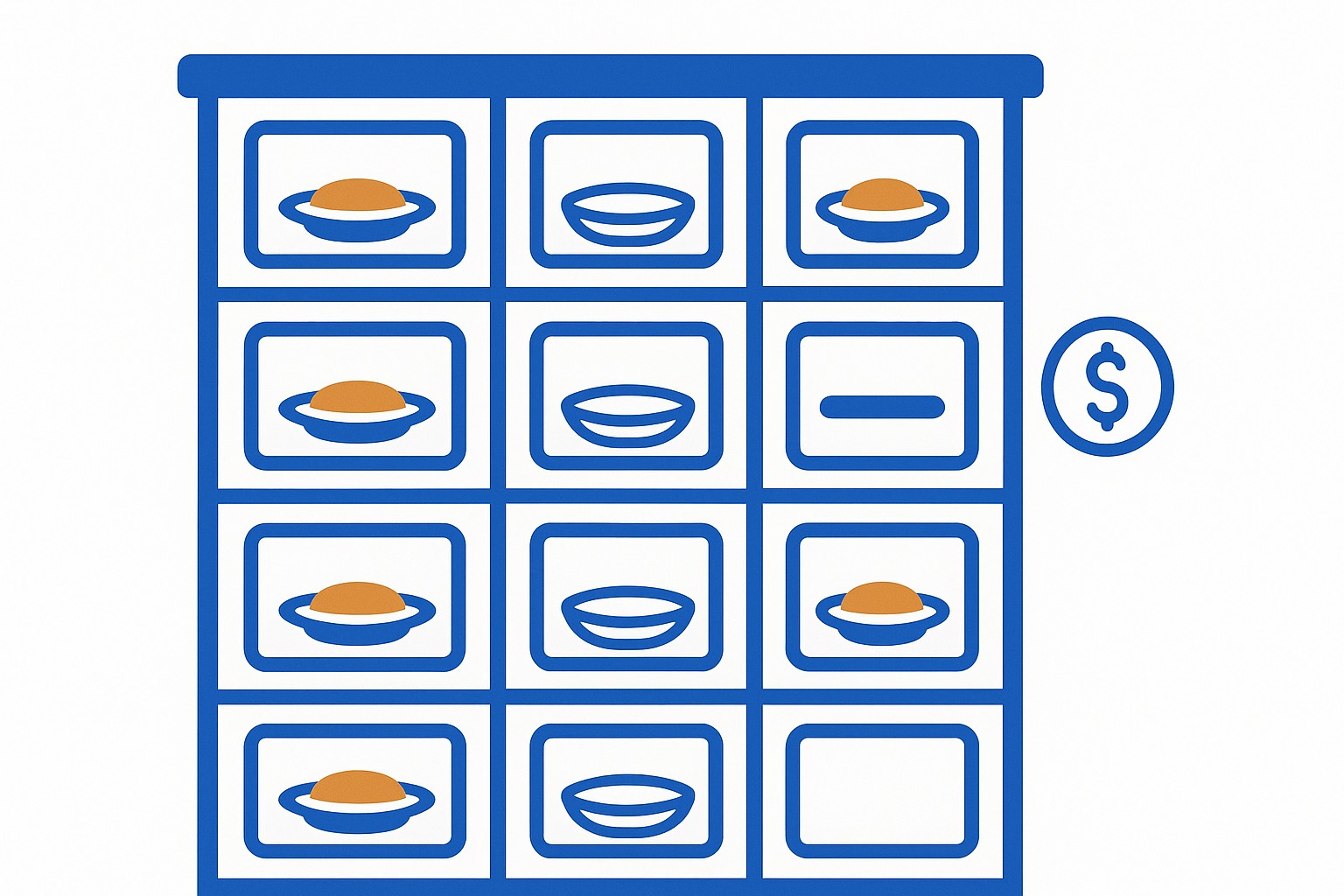
The self-service "automat" restaurant is usually credited to 1900s America. It was actually invented in Berlin in 1895 — seven years before Horn & Hardart even saw the machine.
Three German food-service stories that all turn out to be about the same thing: standardizing a format so volume takes care of itself. A royal brewery that kept the public out for 239 years, a coin-operated restaurant Germany invented and America later licensed, and one Berlin sausage stand's disputed postwar improvisation.
July 12, 2026
A 10-ounce rocks glass, 4 ounces of ice: the honest math on how much drink you're actually pouring
Ice isn't background noise in a glass — it can displace up to 40% of a rocks glass before a drop of spirit goes in. Here's the real math on volume, dilution, and what that means for pour cost.
July 12, 2026
Nutri-Score 2024: A Survival Guide for European Food Manufacturers
The revised Nutri-Score algorithm is tougher, and European manufacturers need to act fast to stay competitive. Here is how to understand the changes and use the right tools to adapt without losing sleep.
July 12, 2026
Persia built refrigerators in the desert 2,400 years before electricity, invented the technique behind paella and biryani, and gave the word 'candy' to the entire English language
A dome-shaped ice house that freezes water in the open desert using nothing but architecture. A rice technique that spread from Spain to Afghanistan under one empire. A Sanskrit word for a lump of sugar that became 'candy' by way of Persian, Arabic, and French.
July 12, 2026
Pour cost 101: why 20% is the bar industry's favorite number — and why a single ounce mistake can wreck it
Pour cost is food cost's beverage twin, but a bartender's hand is the portion-control device — and the UK legally locks it down while the US doesn't. Here's the math, the targets, and the regulatory gap.
July 12, 2026
Profitability #1 — Food cost fundamentals: theoretical vs actual, and where the gap hides
Two food cost reports for the same kitchen, the same week — 29% and 32.5% — and neither one is wrong. Theoretical and actual food cost measure two different things by design. What each number actually calculates, what gap size is normal, and the real (non-accounting) reasons it grows.
July 12, 2026
Profitability #2 — Menu engineering: let margin and popularity redesign your menu
A $30 steak at 30% food cost makes $21 profit. A $10 pasta at 20% food cost makes $8. The pasta looks better on a food-cost report and worse on the bank statement. The 1982 framework that classifies every dish as a Star, Plowhorse, Puzzle or Dog, what actually changes what diners order (and what's an eye-tracking myth), and how to run the analysis on numbers you can trust.
July 12, 2026
Profitability #7 — Benchmarking across sites: find your best kitchen and clone it
In 1990s Vietnam, aid workers found the fix for child malnutrition already living in the village — a few families who'd solved it with the same poverty and the same rice. The same method later cut MRSA infections 65% across 152 US hospitals. Multi-site restaurant groups have their own version of this problem: the best kitchen in the group already knows something the rest don't. Finding it — and why the comparison only works if every site is measuring the same six numbers this series has covered — is the last piece.
July 12, 2026
Profitability #6 — Portioning and standardization: same plate, same cost, every time
In 1897, a Pittsburgh hotel porter patented the tool that still runs professional kitchens: the standardized scoop. 128 years later, most kitchens still don't use it to its full purpose. Why trained people are measurably bad at eyeballing portions, the real math behind a few grams of drift, and why standardization is what makes every other number in this series actually true.
July 12, 2026
Profitability #5 — Waste is margin: the 7:1 business case for waste discipline
114 restaurants across 12 countries spent under $20,000 each on waste tracking and got $7 back for every $1 spent — 75% recouped the investment within a year. The real Champions 12.3 restaurant study (not the more commonly quoted $14:1 figure from a different one), why most kitchens are measuring the wrong half of their waste, and what actually produces the ROI.
July 12, 2026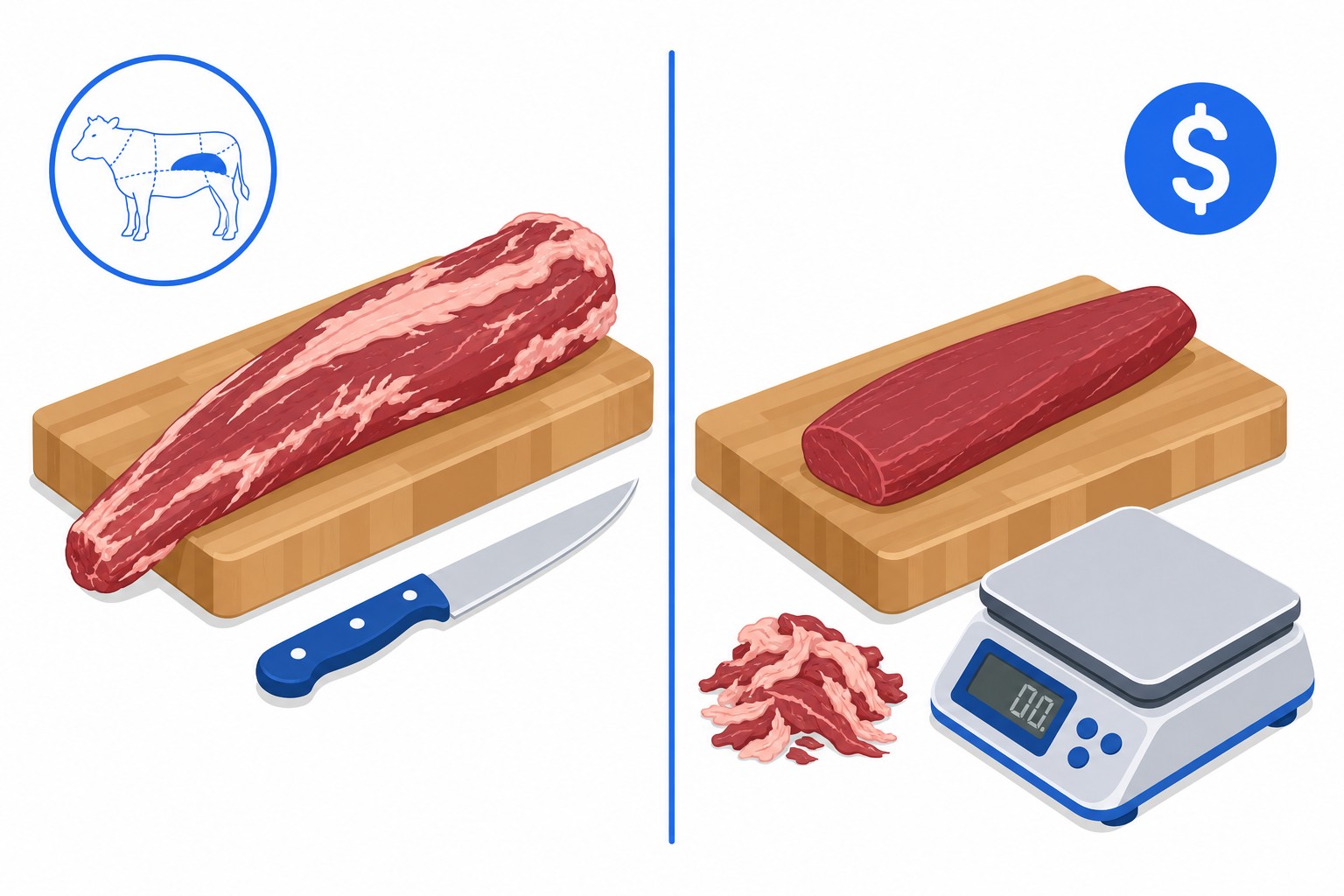
Profitability #3 — Yields and cooking losses: the margin you never measured
A beef tenderloin invoiced at $23/kg actually costs $32.66/kg once trim loss is accounted for — 42% more than the price on the delivery note. Yield loss happens twice, not once: once in the trim, once in the pan. What as-purchased and edible-portion actually mean, real trim and cooking-loss numbers, and why a recipe costed on invoice price is quietly wrong before service even starts.
July 12, 2026
When McDonald's opened near Rome's Spanish Steps in 1986, the protesters showed up with bowls of penne pasta instead of picket signs. That protest built a movement now active in more than 100 countries.
Slow Food didn't start as an organization or a manifesto — it started as a journalist handing out pasta to strangers on a Roman piazza. Within three years it had a founding document signed in Paris; within four decades it had a university, a global farmer network, and a succession plan that outlived its own founder.
July 12, 2026
Sodium Reformulation Deadlines: What Food Operations Must Do Now
FDA targets and WHO benchmarks are tightening the pressure on sodium reduction across the food industry. Here is what professional kitchens and food manufacturers need to know to stay compliant and ahead of the curve.
July 12, 2026
In 1812, Napoleon imported a Bavarian soup recipe to stop hungry crowds from rioting at his palace gates. In 1985, a French comedian read his own tax bill and built something that now feeds 161 million meals a year.
Two very different moments of French crisis feeding, 173 years apart: an emperor importing a scientist's cheap-soup formula to keep the peace, and a comedian doing the math on a tax check and launching what's now one of France's largest charities. Neither story needs a myth to bust — both check out exactly as told.
July 12, 2026
Staff Meals Done Right: Morale, Fairness and Controlled Cost
Staff meals are often an afterthought, but getting them right pays dividends in morale, retention and budget control. Here is how structured F&B management transforms staff feeding into a genuine operational asset.
July 12, 2026
Onboarding in a Documented Kitchen: Productive in Days, Not Months
High staff turnover is a constant challenge in foodservice operations. This post explains how a well-documented kitchen — powered by CalcMenu — gets new team members up to speed fast, reducing errors and protecting quality from day one.
July 12, 2026
Better Planning Beats Overtime: Smoothing Kitchen Workload with Production Plans
Uneven kitchen workload drives overtime, waste, and staff burnout. Learn how structured production planning in CalcMenu helps F&B teams work smarter, not harder.
July 12, 2026
Train to Retain: How Staff Competence Builds Loyalty in F&B Operations
Investing in staff training is one of the most effective ways to reduce turnover in food service. This post explores how structured competence-building — supported by the right tools — keeps good people engaged and on the job.
July 12, 2026
Sugar Taxes as Reformulation Engines: Lessons from the UK Levy
The UK soft drinks levy triggered a 46% reduction in sugar across the category — here is what food manufacturers can learn about using fiscal pressure as a product development opportunity.
July 12, 2026
Piles of Ice Age rubble in Ticino have been "breathing" cold air for thousands of years. Farmers built wine cellars into the rock — and by 1928, those cellars had already quietly become restaurants.
No refrigeration, no machinery, no plan — just rockslide debris left over from the last glaciation, doing something Ticino's farmers noticed and built on. The result is a genuinely working piece of passive-cooling architecture that outlived its own original purpose and became one of Switzerland's most distinctive restaurant formats.
July 12, 2026