
The Product Sheet You'll Never Get: Artisan Bakers, Butchers and Juice Makers
Big industrial suppliers hand over a full product data sheet as a matter of routine. The artisan baker, the butcher who makes their own sausages, the pastry chef, the cold-pressed juice producer — the suppliers you actually want on your menu — very often can't, or won't. That gap doesn't excuse you from the allergen data. It just makes getting it harder.
The Sheet That Comes With Every Industrial Case
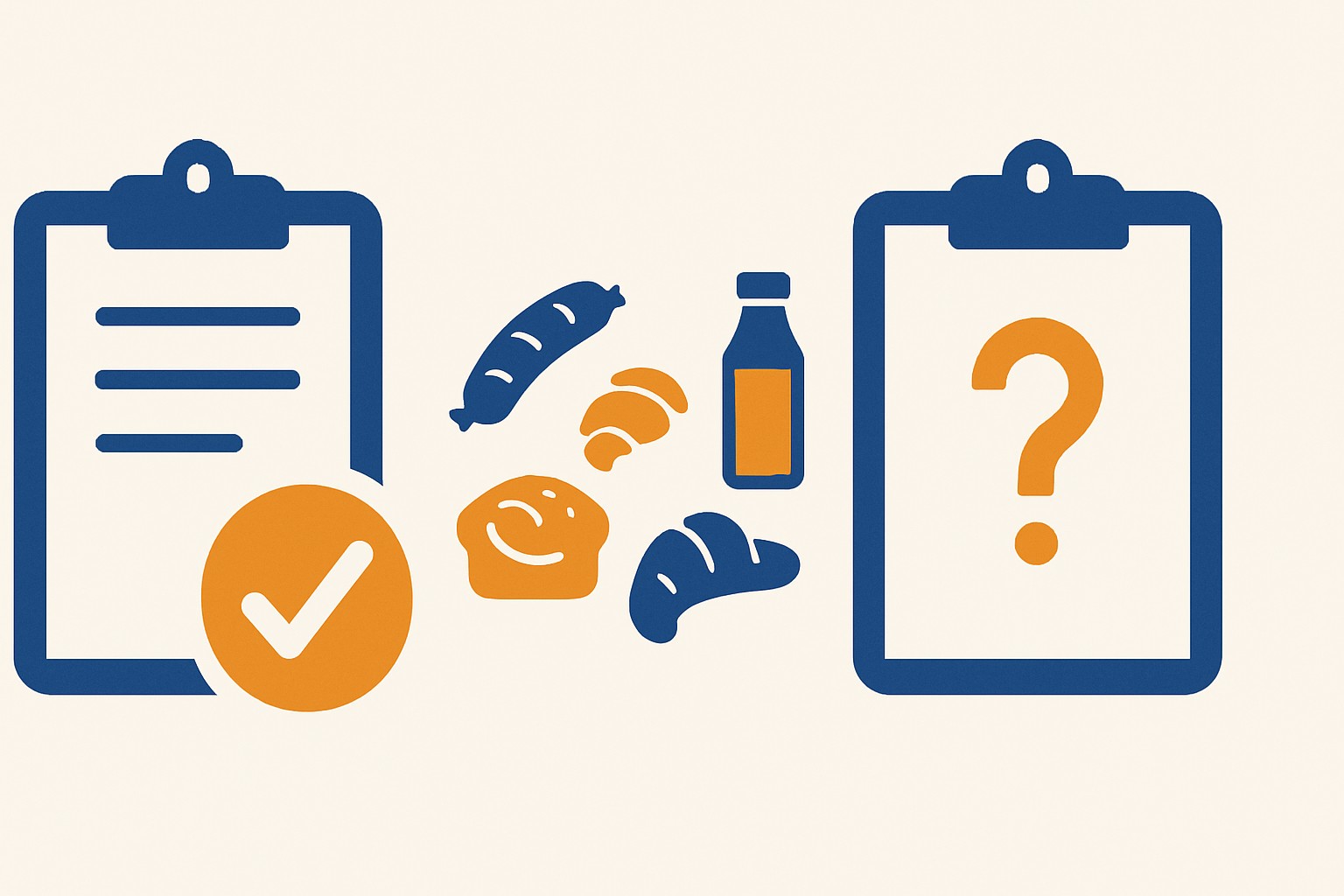
Order a case of anything from a large industrial food supplier and a product data sheet comes with it, unasked: full ingredient list, the 14 EU-regulated allergens clearly flagged, nutritional values per 100 g, batch and shelf-life information. It exists because it’s generated automatically by the supplier’s own ERP and QA systems — printing it costs them nothing.
Ask a local baker for the same thing on their sourdough loaf, or a butcher for their own-recipe sausages, or a pastry chef for their frangipane tart, or a small producer for their cold-pressed juice, and the request often lands as a surprise — sometimes as an imposition. Not because these suppliers are careless. Because the paperwork infrastructure that makes a product sheet a five-second export for a large manufacturer simply doesn’t exist in a kitchen or workshop where the recipe lives in the maker’s hands, adjusted by feel, batch to batch.
Why the Best Suppliers Are Often the Hardest Ones to Document
Bakeries. An artisanal loaf’s flour blend can shift with the harvest and the miller. Shared ovens and benches mean sesame, poppy seed, rye and walnut bread are frequently baked feet apart from a “plain” loaf, with cross-contact that’s real but rarely written down anywhere. Some bakers use soy flour as a dough conditioner — legal, common, and easy to miss on a verbal ingredient rundown.
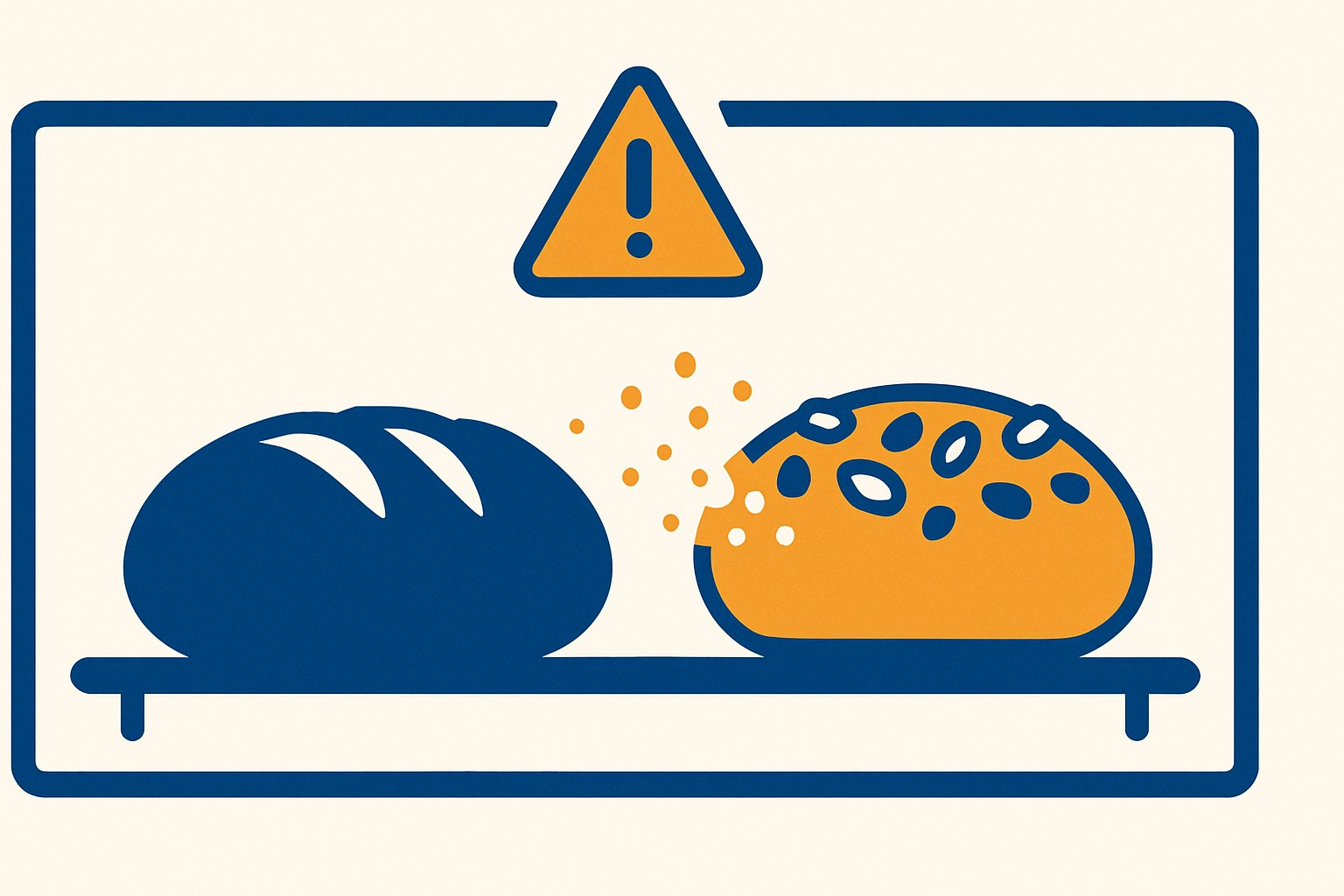 Same shelf, same oven, no wall between them. Cross-contact between a “plain” loaf and a seeded or nut-topped one is real — it’s the written record of it that’s usually missing.
Butchery, and sausages especially. A butcher’s own spice blend is often treated as the recipe — the thing that makes their merguez or their boudin theirs, and not worth spelling out to a customer who might repeat it to a competitor. Beyond the spices, fresh sausages commonly contain ingredients a customer wouldn’t guess from the name on the label: sulphites (E220–228) as a colour-fixing preservative, dried milk powder or soy protein as a binder, breadcrumb or rusk as filler — all of which introduce declarable allergens (sulphites must be declared above 10 mg/kg under EU law) that have nothing to do with the meat itself.
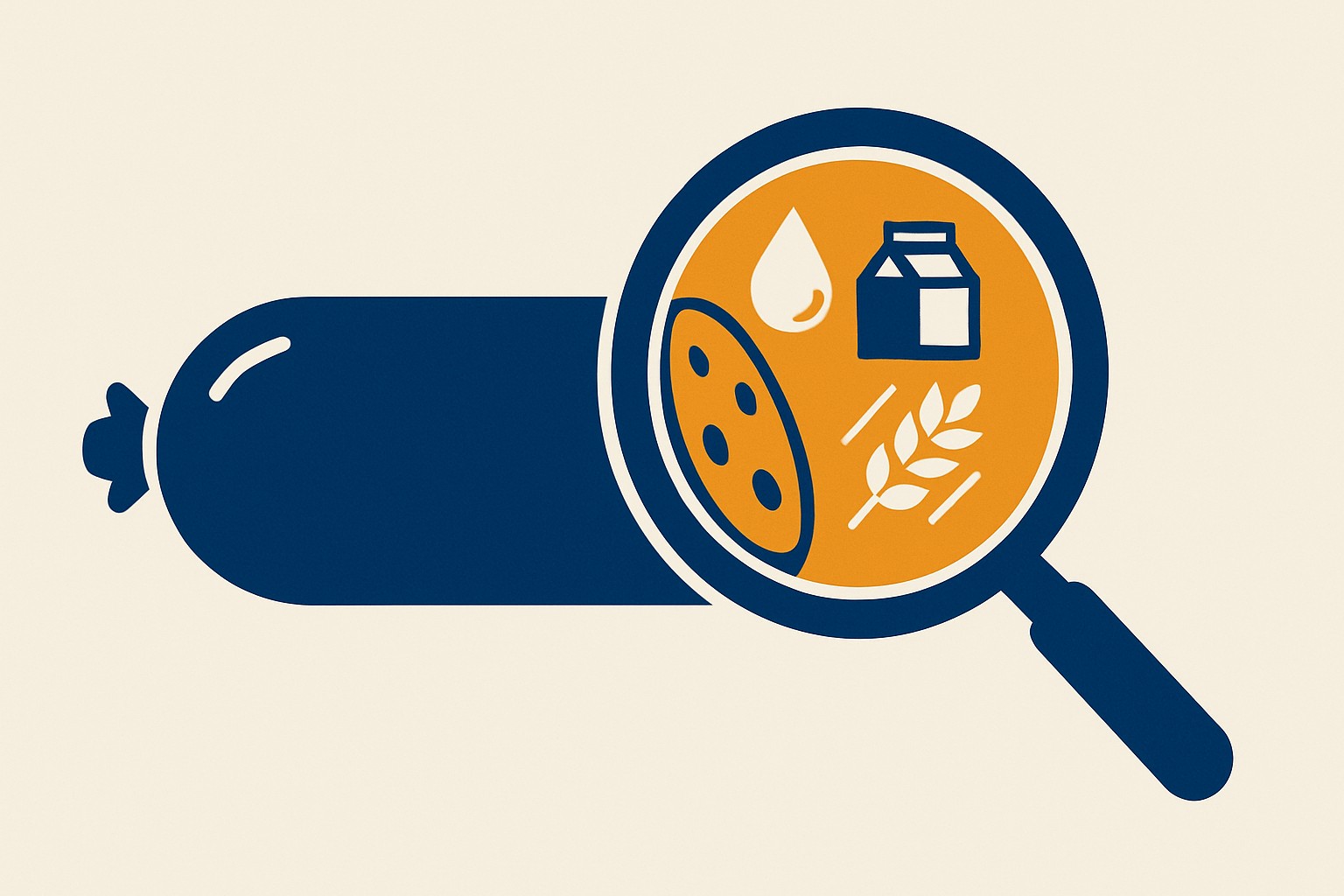 What’s actually in a fresh sausage often has nothing to do with the meat: sulphites, milk-based binders and cereal fillers are common — and none of them are visible from the outside.
Pastry. Eggs, milk, gluten and tree nuts (almond in frangipane, hazelnut in a praline) are the default in most of a pâtissier’s range, but which item touched which surface, and in what order, is exactly the kind of detail a one-person or two-person workshop has no system for tracking.
Artisanal and cold-pressed juices. Small producers rarely carry the nutrition and sugar-content data that institutional buyers need for therapeutic or diabetic menus, and sulphites can still appear as a preservative in some small-batch juices without a formal label to say so.
None of this is a documentation failure to shrug off — it’s a real gap between how these products are actually made and what a professional kitchen is legally and practically expected to know before it serves them.
The Legal Trap: “Small and Local” Is Not the Same as “Exempt”
EU Regulation (EU) No 1169/2011 draws a real distinction that’s easy to get backwards. Annex V of the regulation does exempt small quantities of food supplied directly by the producer to the final consumer or to local retailers from the mandatory full nutrition declaration (energy, fat, sugars and so on). It does not exempt anyone from declaring the 14 mandatory allergens — that obligation applies to non-prepacked food exactly as it applies to a packaged industrial product; only the mechanism for communicating it (a sign, a register, a verbal statement to the customer) is left to individual EU member states to define.
The trap is assuming those two things travel together. A kitchen that reasons “it’s a small local producer, so the paperwork rules don’t really apply” has the nutrition exemption right and the allergen obligation exactly backwards. The allergen duty doesn’t shrink because the supplier is small — if anything, it’s harder to discharge correctly, because the supplier has less infrastructure to help you meet it.
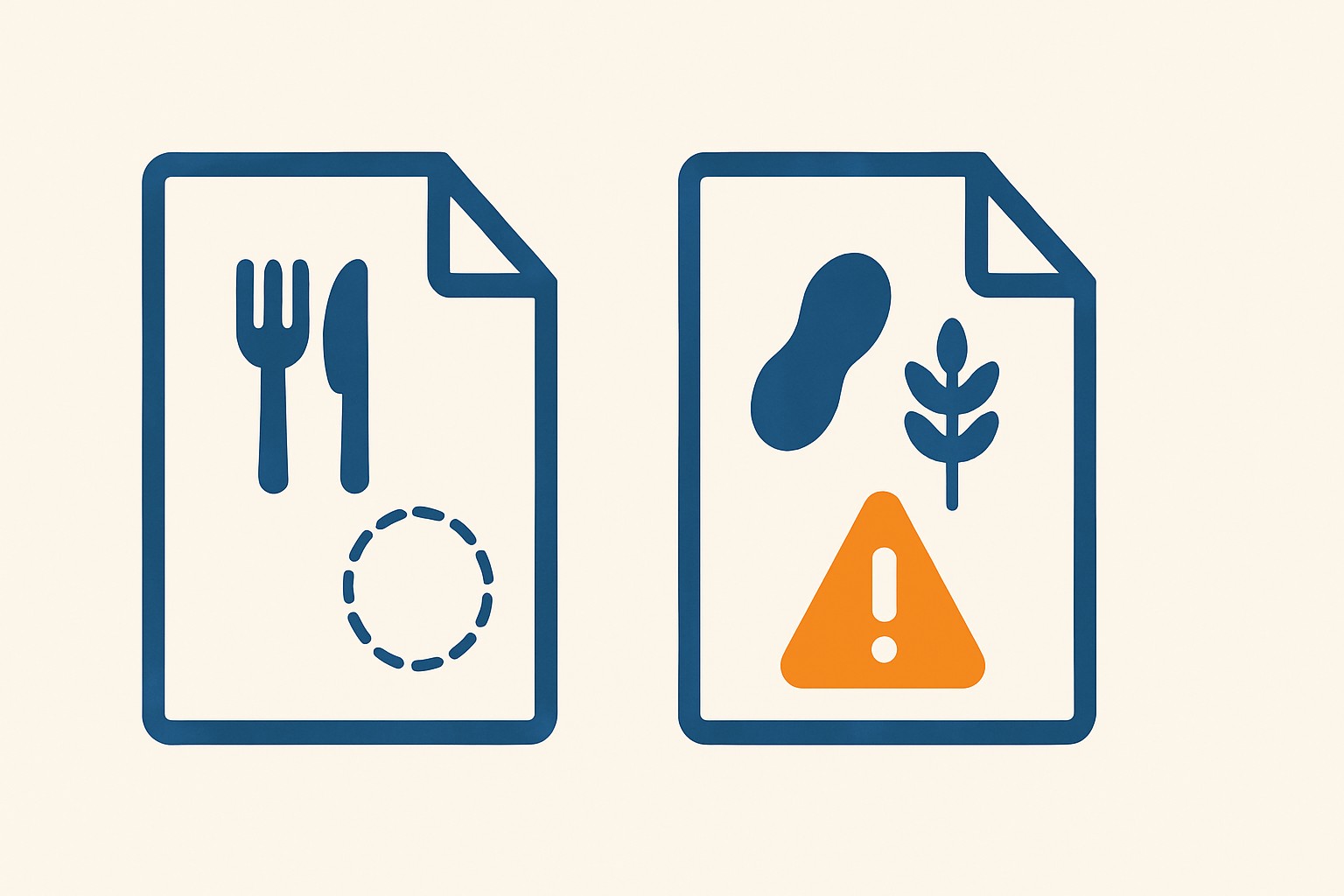 Two different obligations, two different exemption rules. The nutrition panel can be optional for a small direct-sale producer. The allergen list never is.
The Bad Options a Kitchen Ends Up Choosing Between
Faced with a supplier who can’t produce a sheet, a kitchen typically ends up picking one of three unsatisfying paths:
- Quietly skip it. The allergen field stays blank or gets filled with a guess. This is the option that creates real liability exposure the day a guest with a genuine allergy has a reaction.
- Drop the supplier. Switch to an industrial equivalent that comes with paperwork, at the cost of the quality, the local sourcing story, and the premium positioning that made the artisan product worth buying in the first place.
- Blanket “may contain everything” labelling. Safer than guessing, but it erodes trust with every guest who has to avoid a dish unnecessarily because the label hedges on all 14 allergens instead of the two or three that actually apply.
All three are worse than the fourth option, which is simply treating supplier data collection as a structured process rather than waiting for a document that was never going to arrive on its own.
Building the Record the Supplier Can’t Hand You
The fix isn’t a better PDF request — it’s a different intake process. A short, structured allergen questionnaire, walked through with the baker, the butcher or the juice producer directly, covering the 14 regulated allergens and common hidden additions (sulphites, soy-based binders, processing aids), turns a verbal conversation into a documented, dated ingredient record: confirmed with the supplier on this date, by this method, due for re-confirmation at this interval — because small-batch recipes genuinely do drift and a record from eighteen months ago isn’t the same as a current one.
This is exactly the gap BlazeIQ Labels is built to close. Ingredient records in CalcMenu don’t require a supplier-issued sheet to be complete — an artisan ingredient documented through a structured interview carries the same allergen tagging, the same audit trail, and produces the same accurate, auto-calculated label as one imported from an industrial supplier’s PDF. The label your guest reads doesn’t need to know which of those two paths the data came from. It just needs to be right.
Working with artisan suppliers whose documentation doesn’t match your industrial ones? Book a free 15-minute call with our team — no commitment: Schedule a call.
Explore CalcMenu's recipe management software for restaurants, hotels & catering to see how it applies to your kitchen.
Related sectors
Comments
Comments coming soon.