
Blog
Meals, care and kitchen: what we learn in the field
Practical insight into meal management across care homes, psychiatry, rehabilitation and hospitality — no jargon, written for the teams.
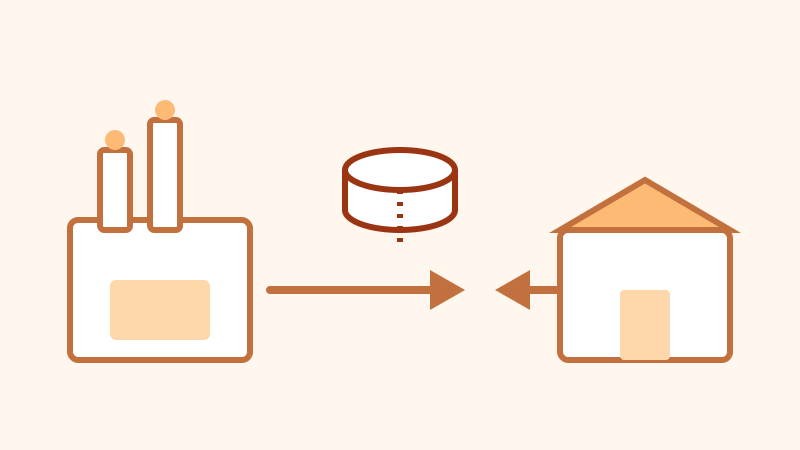
One central plant, two markets: how a bakery chain keeps recipes and Dynamics 365 in sync
A bakery and café group manufactures in one market and sells across the border in a neighbouring one. Here is how a single recipe layer keeps costing, compliance and Microsoft Dynamics 365 aligned across both markets.
July 6, 2026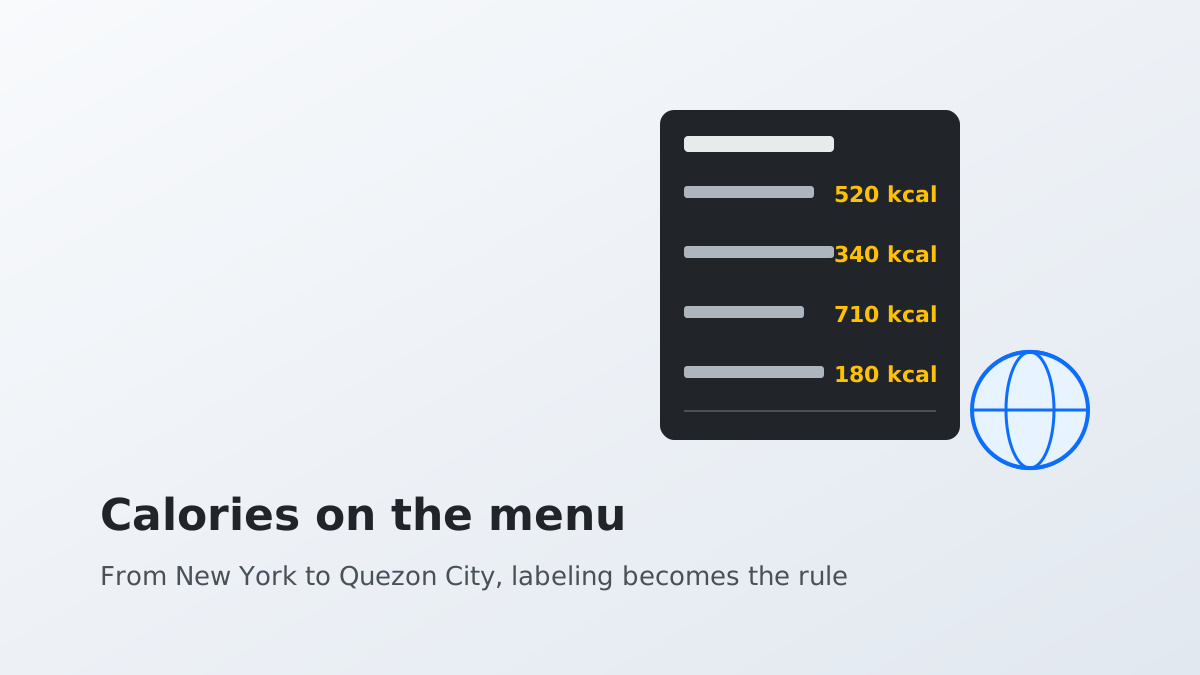
Calories on the menu: how energy labeling went global, from New York to Quezon City
Quezon City just became Southeast Asia's first jurisdiction to mandate calorie counts on restaurant menus — joining the US, England, Australia, Saudi Arabia, India and more. Where menu energy labeling is law, what the evidence says it achieves, and what it demands from your kitchen.
July 6, 2026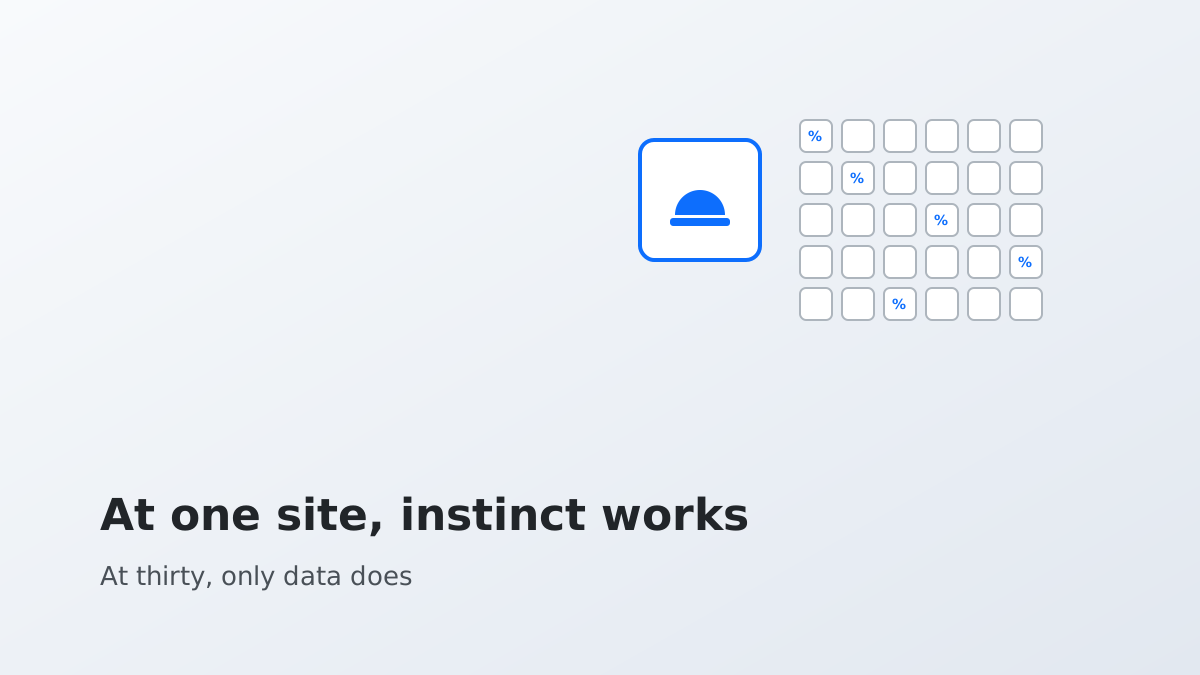
At one restaurant, instinct works. At thirty, only data does
The performance gap in multi-site food operations is no longer cooking skill or purchasing power — it is data literacy. Your ERP knows invoices; it does not know recipes. The gap between what finance sees and what the kitchen does is where margin dies. By Marc Enggist, CEO of EGS.
July 6, 2026
Your screens are beautiful. Is what they display true?
Digital signage transformed how canteens, hotels and campuses show their menus — but most screens still get their content retyped by hand. How CalcMenu feeds your existing signage platform via API or interface — or drives displays directly — so prices, allergens and menus on screen always match the kitchen.
July 6, 2026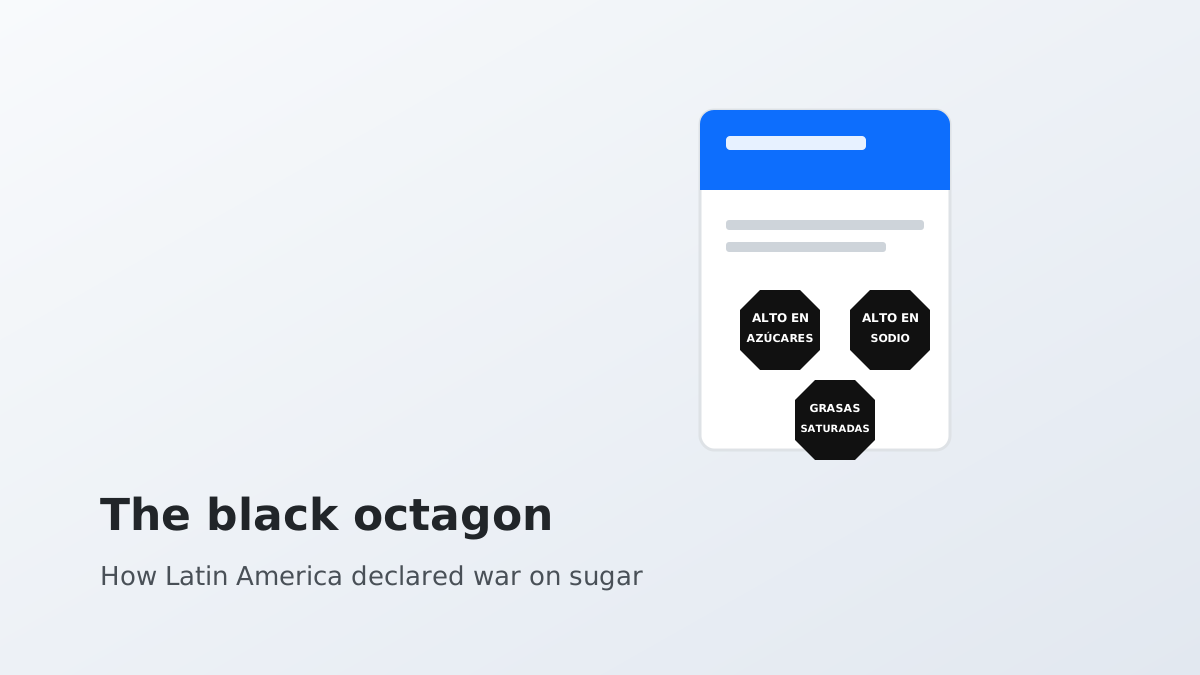
The black octagon: how Latin America declared war on sugar — and what it changed
Chile put black warning seals on high-sugar products in 2016. Ten years later the model covers most of Latin America, purchases of sugary drinks fell measurably, thousands of products were reformulated — and a 2026 Lancet study links the policy to lower child obesity. What the octagon wave means for manufacturers and nutrition brands.
July 6, 2026
Forget mastering fifteen departments. Master three numbers
Career roadmaps for hospitality promise fifteen departments and seventeen KPIs. The best-performing food service groups do something else: they are ruthless about three numbers — recipe cost accuracy, inventory variance, allergen data integrity — and treat everything else as derivative. By Marc Enggist, CEO & Co-Founder, EGS.
July 6, 2026
Mexico NOM-051: what food-service operators must know about warning labels
Mexico's NOM-051 requires black octagon 'EXCESO' seals on packaged foods high in sugars, sodium, saturated fats or calories. With school bans in effect and enforcement tightening, the rule now reaches manufacturers, distributors and the caterers who serve sealed products.
July 6, 2026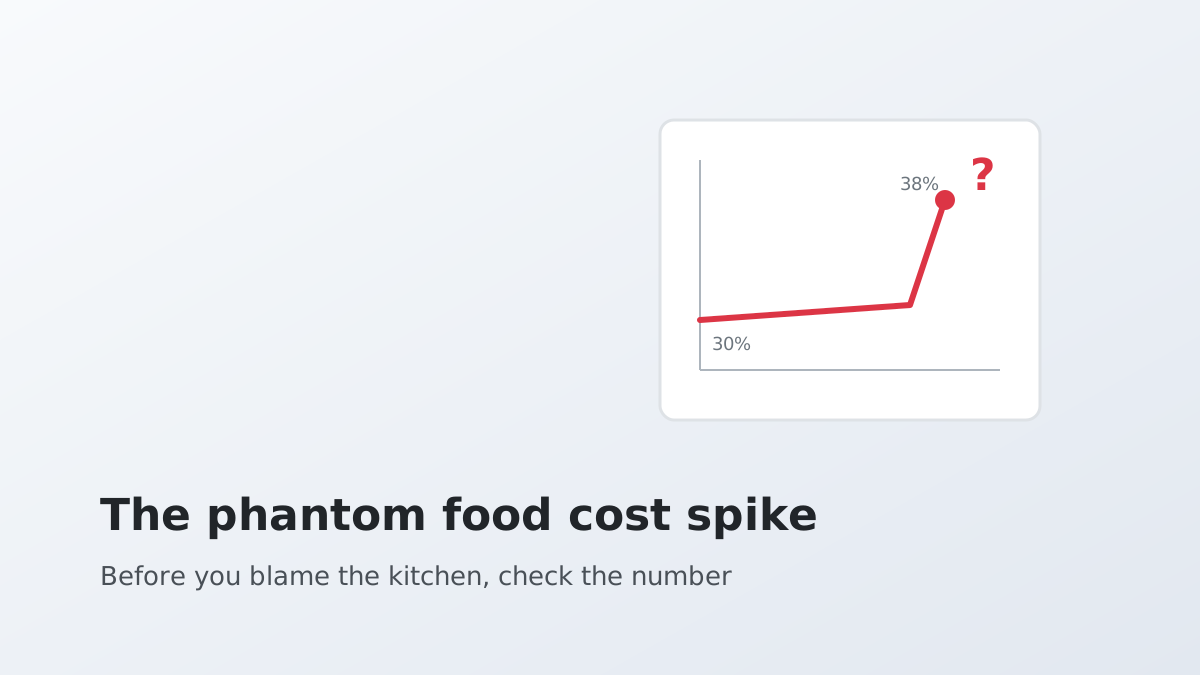
Your food cost jumped 8 points. Before you blame the kitchen, check whether the number is true
Real food cost problems creep. Measurement errors jump. When the percentage moves eight points in one period, the first audit should be of the number itself — period cut-offs, transfers, stock valuation, supplier credits — not of the brigade. By Marc Enggist, CEO of EGS.
July 6, 2026
Portion weight on the menu: from Sofia to your kitchen
In Sofia, Bulgaria, more and more restaurants print the weight of each dish directly on the menu. It is a small transparency gesture that changes purchasing decisions, kitchen costs and regulatory readiness. How portion weight is calculated and why your recipe software should already know it.
July 6, 2026
Operated abroad, answerable at home: US legal exposure for global hospitality groups
A US-headquartered hotel or resort group can end up defending an incident from a property abroad in a US courtroom — and in some areas, facing US regulators for foreign-operations conduct. What is actually true, what is overstated, and why your food-safety documentation is the evidence either way.
July 6, 2026
Banquet layouts and setups: choosing the right one for every event
The ten classic banquet layouts — from round tables to buffet lines and cabaret — when to use each one, and how to keep dish signage in sync when the event menu changes at the last minute.
July 5, 2026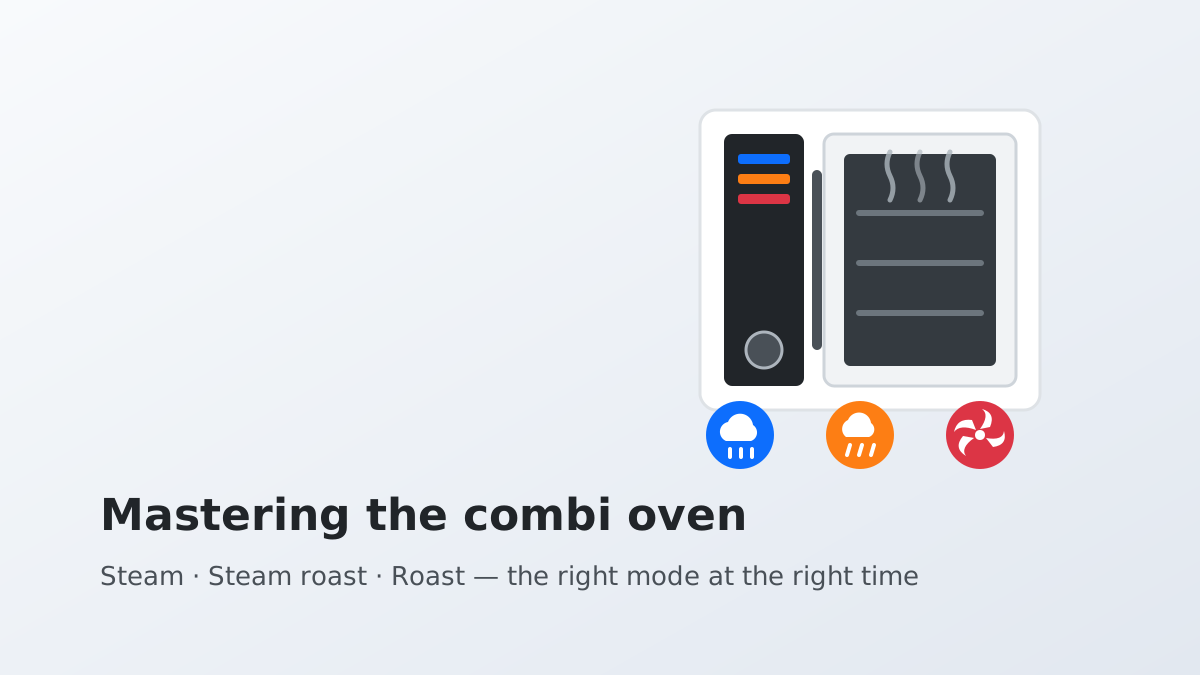
Mastering the combi oven: steam, steam roast and roast, explained
The combi oven is the most versatile machine in a professional kitchen — if the team knows which mode to use when. A practical guide to the three cooking modes, core temperatures for beef, and how to turn one chef's settings into a house standard with CalcMenu.
July 5, 2026
The science of gluten: how two proteins shape every pastry
Gluten is not one ingredient — it is a network built by two wheat proteins, glutenin and gliadin. Understanding how it forms, what develops it and what limits it is the difference between a crisp baguette and a melt-in-the-mouth génoise. Here is the science, and how CalcMenu turns it into repeatable recipes.
July 5, 2026
From paper binders to signed digital SOPs: what Blaze Checks changes
Procedure binders sit in kitchens, but nobody knows who read them. Blaze Checks turns every SOP into a role-based digital procedure with traceable sign-off and evidence attached.
June 29, 2026
HACCP and the unannounced inspection: how Blaze Checks changes the audit
An inspector can arrive at any time. With Blaze Checks, HACCP records, corrective actions and staff sign-offs are captured in real time and instantly exportable.
June 29, 2026
Staff meal reservation: a social lever against food waste
In collective catering, the number of staff meals is uncertain. Social reservation turns this flow into an engagement, planning, and food-waste reduction tool.
June 29, 2026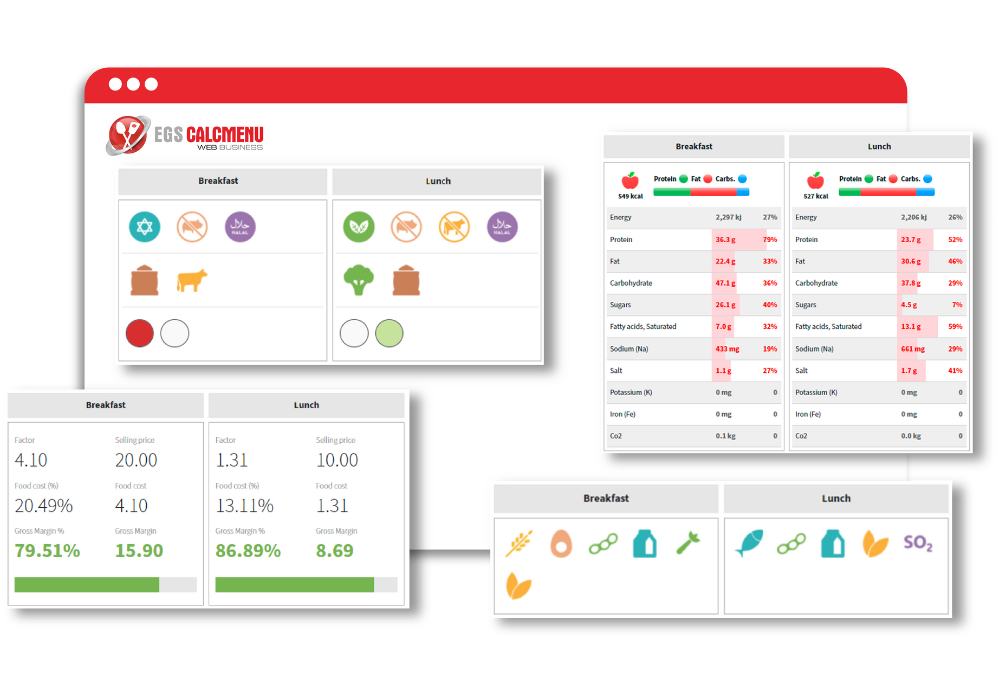
Drug-food interactions in care: how CalcMenu prevents errors before the tray leaves
Some foods can interact dangerously with common medications. Here's how an automatic alert in the kitchen can prevent these incidents.
June 27, 2026
Allergen management in professional kitchens: from ingredient to plate, without gaps
Why manual allergen tracking fails where regulations demand complete traceability, and how CalcMenu builds an ingredient → recipe → menu cascade with no re-entry.
June 27, 2026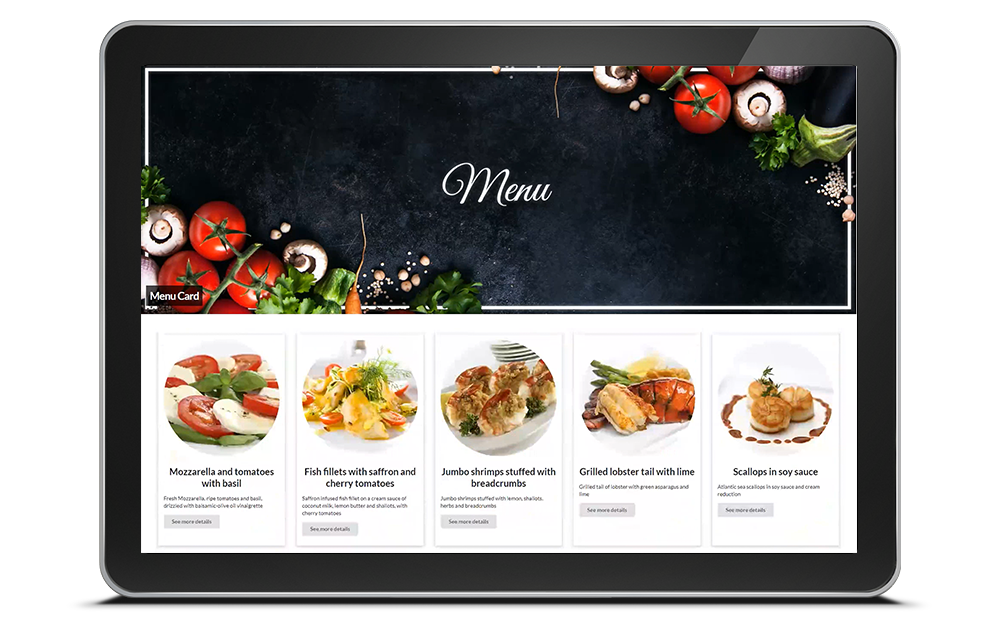
Ingredient pairings in cooking: aroma chemistry explained
Why do chocolate and parmesan pair so well? The answer is in aroma compounds. Here's how flavour science, and CalcMenu FlavorGraph, are revolutionising culinary creativity.
June 27, 2026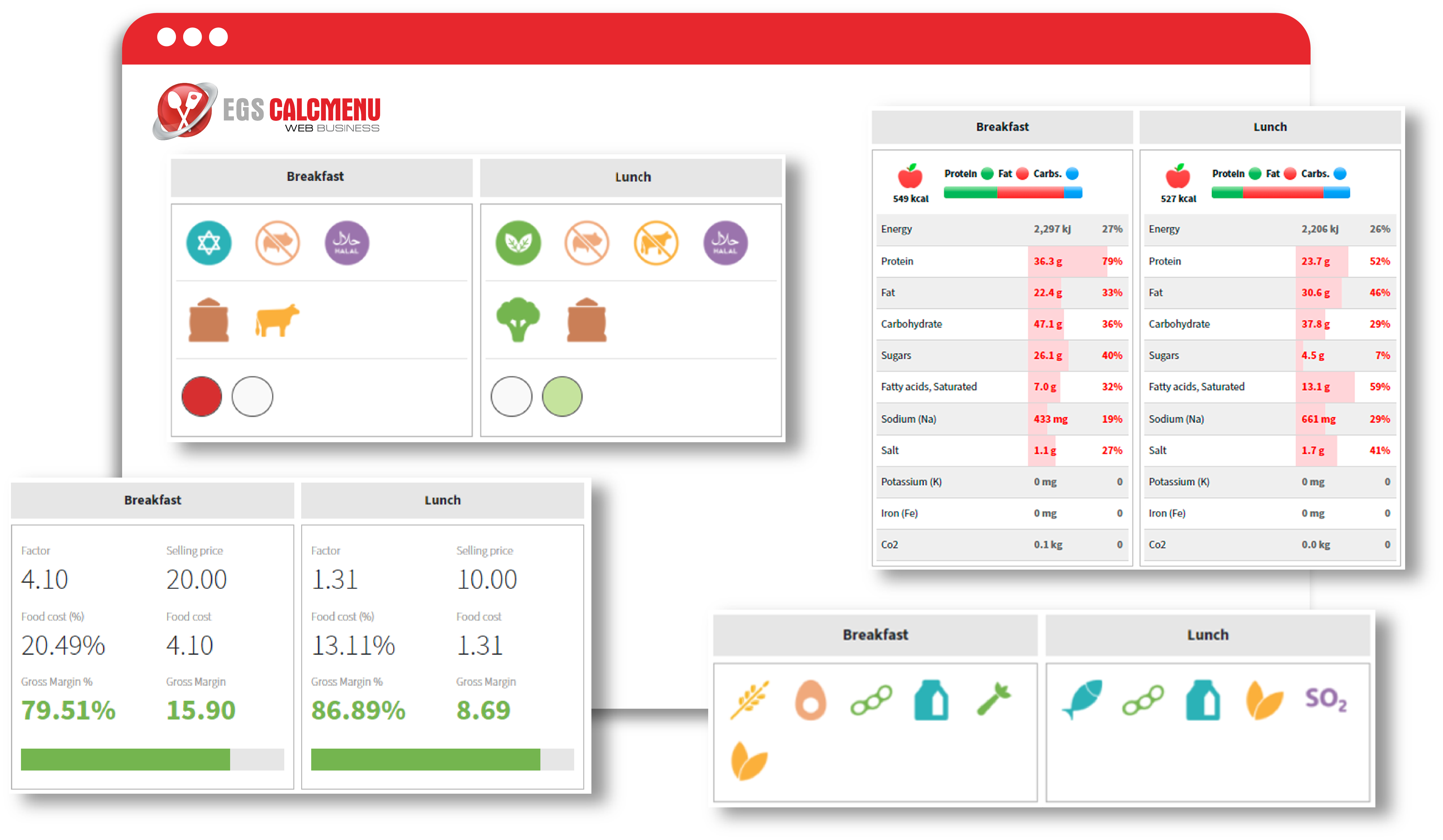
Self-service meal ordering in care homes: how tablets replace Sunday-evening paper lists
In care facilities, manual meal order entry creates errors and stress. Here's how tablet-based self-ordering solves the problem.
June 27, 2026
Eco-Score in foodservice: what it actually changes
How CalcMenu automatically calculates an Eco-Score for every recipe via Agribalyse — and why it is the only tool that combines this with ESL labels and allergen management.
June 27, 2026
Electronic buffet labels: allergens and prices updated in 10 seconds
What e-ink electronic buffet labels are, why they solve the allergen compliance problem when dishes change at the last minute, and how the CalcMenu–ZKONG integration works.
June 27, 2026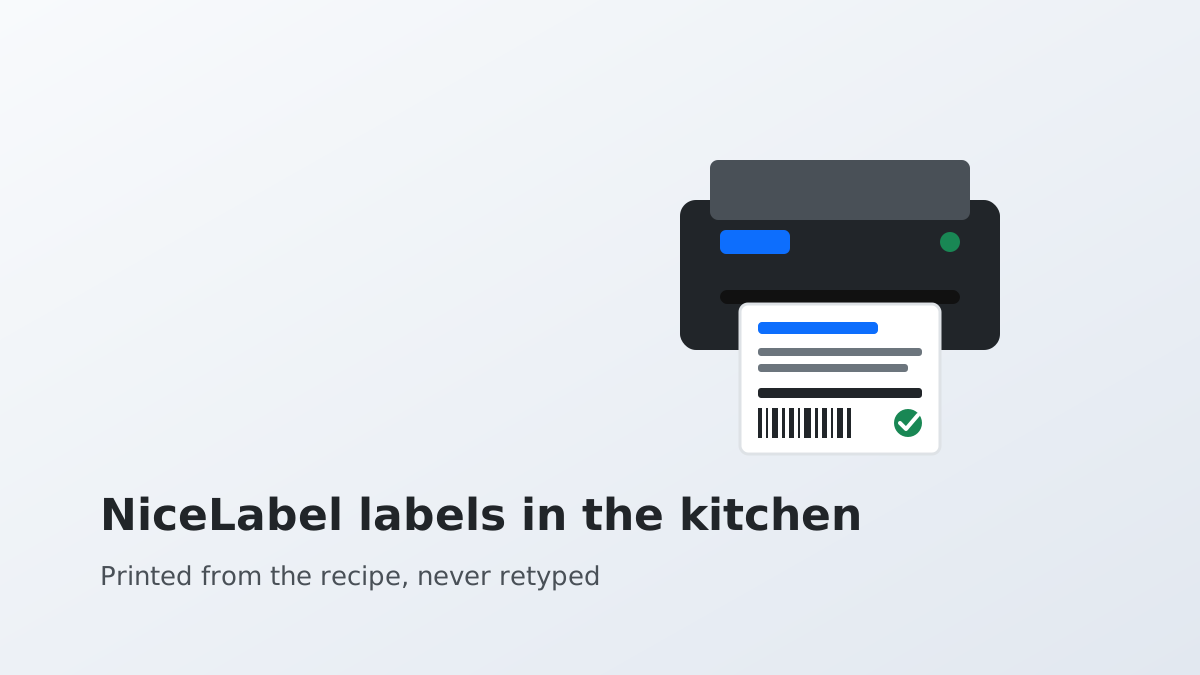
Kitchen labels printed straight from the recipe: zero double-entry with NiceLabel
How the CalcMenu–NiceLabel connector eliminates re-entry on production labels: every recipe change flows immediately to the printed label.
June 27, 2026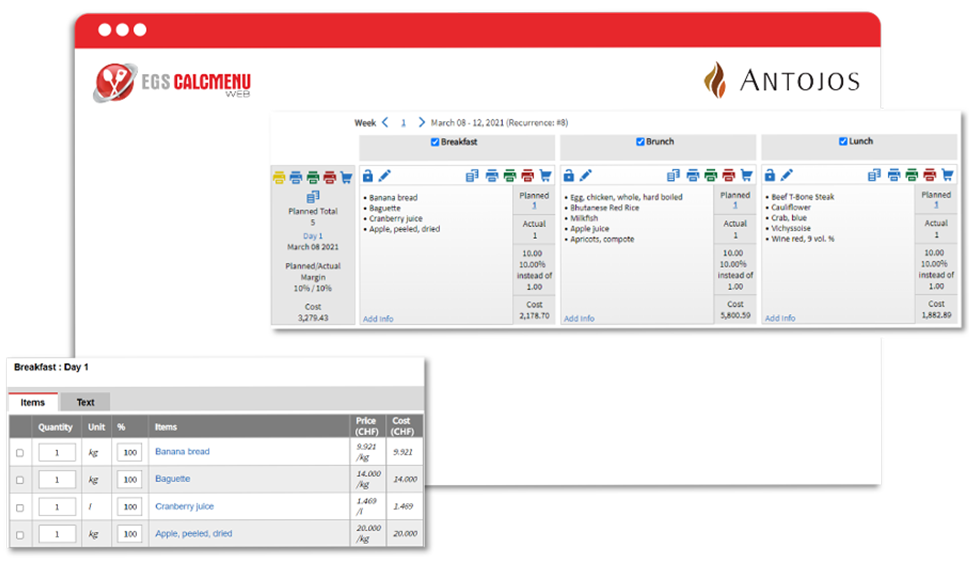
Food cost and kitchen dashboards: from recipe to margin, without spreadsheets
Food cost is the lifeblood of professional kitchens. Here's how to calculate it in real time and manage it without Excel.
June 27, 2026
HACCP done right: what food safety inspectors actually check — in every market
An unannounced inspection happens the same way in Zürich, Berlin, Paris, London, and Dubai: the inspector asks for your HACCP documentation, and the clock starts. What do they actually look at — and what happens when the paper trail falls short?
June 27, 2026
HACCP in the kitchen: inspection-ready, every day
What HACCP actually requires, why paper logs create compliance gaps, and how CalcMenu digitises food safety records so every service is ready for a hygiene inspection.
June 27, 2026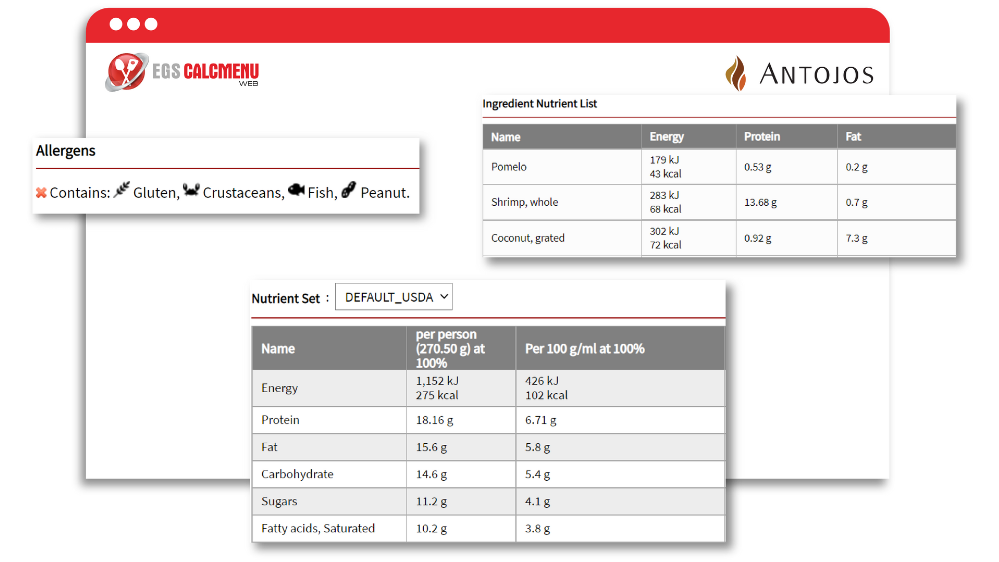
AI in professional kitchens: PDF extraction, Nooko suggestions and compliance alerts
Artificial intelligence isn't reserved for big tech companies. Here's how it transforms the daily operations of professional kitchens.
June 27, 2026 Running 5 kitchens from a single recipe: the multi-site challenge in food service
Consistency across multiple kitchens is one of the most complex challenges in institutional catering and hospitality. Here's how a structured multi-site approach solves it.
June 27, 2026 The family portal in care homes: see what your relative ate, without calling
Is a care home resident eating properly? The CalcMenu family portal answers this question without adding to care staff's workload.
June 27, 2026
RSE and CSRD reporting in food service: how CalcMenu auto-generates GRI 305 data
What CSRD concretely requires in collective catering, why the recipe database is already the sustainability data source, and what CalcMenu's GRI 305 export contains.
June 27, 2026
From clipboard to compliance: digital SOPs in hotel kitchens
Luxury hotels run on written procedures — but when SOPs live in Word documents and ring binders, no one can prove the process was followed. Regulators from Zürich to Dubai to London are asking the same question: can you prove it?
June 27, 2026
What your kitchen staff actually needs from a food safety system
Binders nobody reads. Training sessions nobody remembers. Signature sheets that disappear. Across Europe, the UK, and the Middle East, regulators are tightening the definition of 'trained staff' — and most kitchens cannot prove they meet it.
June 27, 2026
Food safety compliance: pass inspections without stress
Allergens, HACCP and traceability: how a compliance manager can turn inspections into routine with centralised recipe data.
June 19, 2026
Purchasing: anticipate price rises without losing quality
Centralised purchasing, supplier prices and food cost: how a purchasing manager keeps control when costs rise.
June 19, 2026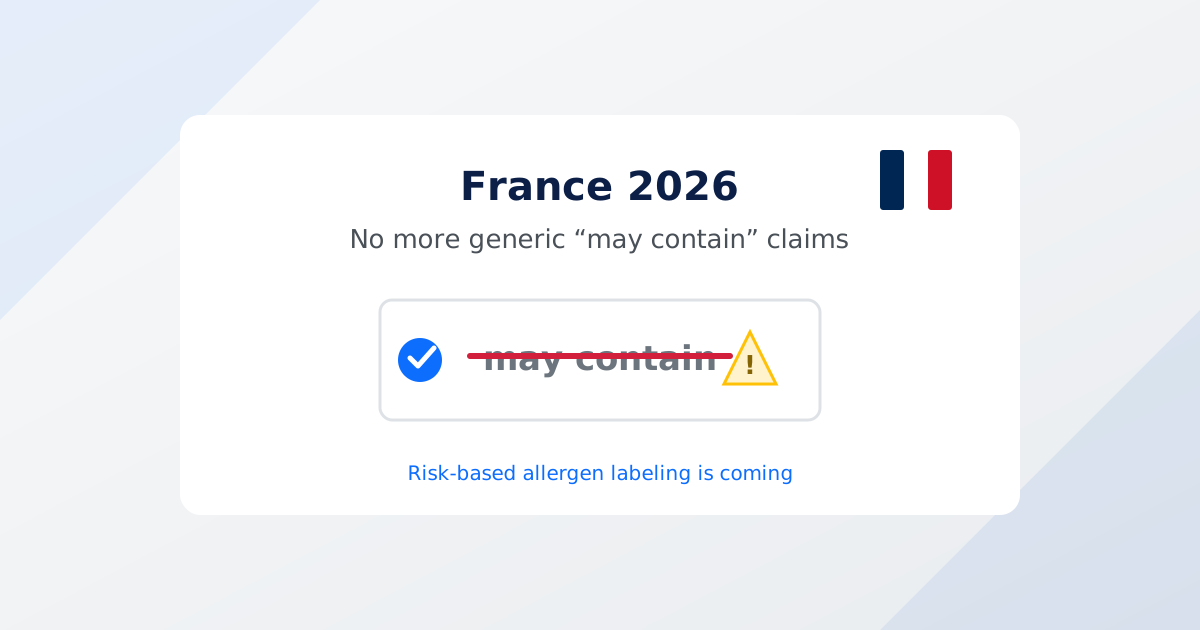
France: 'May contain' labels need justification
Generic 'may contain' claims remain voluntary in France, but the Netherlands requires justified statements from 2026 and EU-wide rules are coming. What's changing, why it matters for foodservice, and how to prepare.
June 19, 2026
Multiple food-service sites: 3 signs to unify
Menus, costs and allergens diverging across sites? Here is how a multi-site director regains control with a single source of truth.
June 19, 2026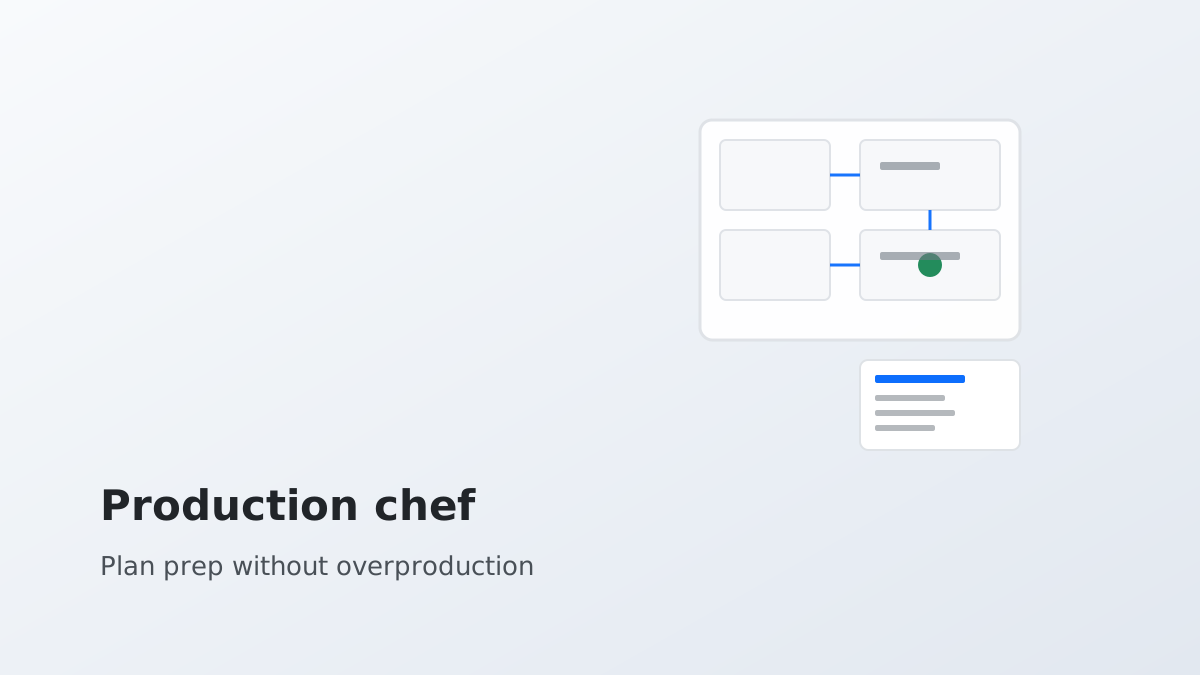
Production chef: plan prep without overproduction
Between sales forecasts, recipe cards and HACCP traceability, the production chef needs a tool that links recipes to service.
June 19, 2026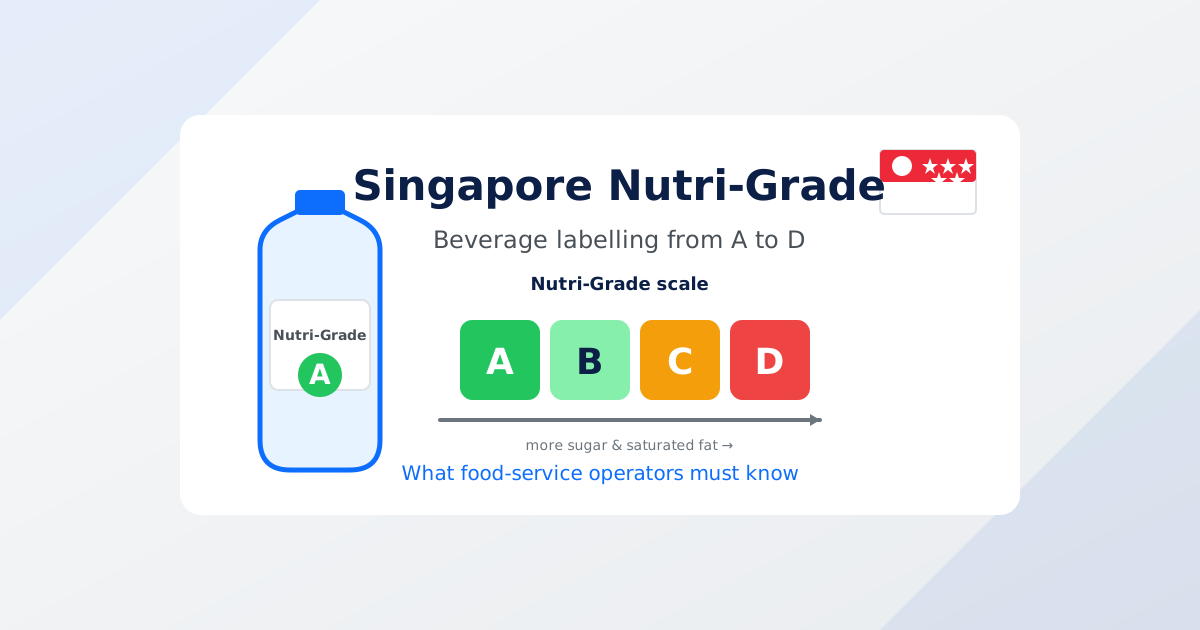
Singapore Nutri-Grade labels: what operators must know
Singapore's Nutri-Grade beverage marking scheme sets strict labelling requirements for pre-packaged and freshly prepared drinks. Here is what food-service operators need to do to stay compliant and avoid penalties.
June 19, 2026
Café & brasserie: a simple recipe card
A café doesn't have the time or resources of a large group. Yet allergen rules apply just the same. Here's what an independent owner actually needs to get started without getting stuck.
June 18, 2026
CalcMenu for IT leaders: 5 questions before approval
Recipe management software touches data, integrations and compliance. Here is what a CIO or CISO checks before giving the green light.
June 18, 2026
Food waste in Europe: the real cost of wasted plates
Swiss, French, German, Italian and Austrian figures show food waste is not only an environmental issue. It is a measurable cost, and the first step to cut it is to measure it.
June 18, 2026
Small restaurants: 5 good reasons not to wait to digitise
Cafés, brasseries and bistros: digitising recipes and allergen labels is no longer only for big chains. Here are the concrete benefits from month one.
June 18, 2026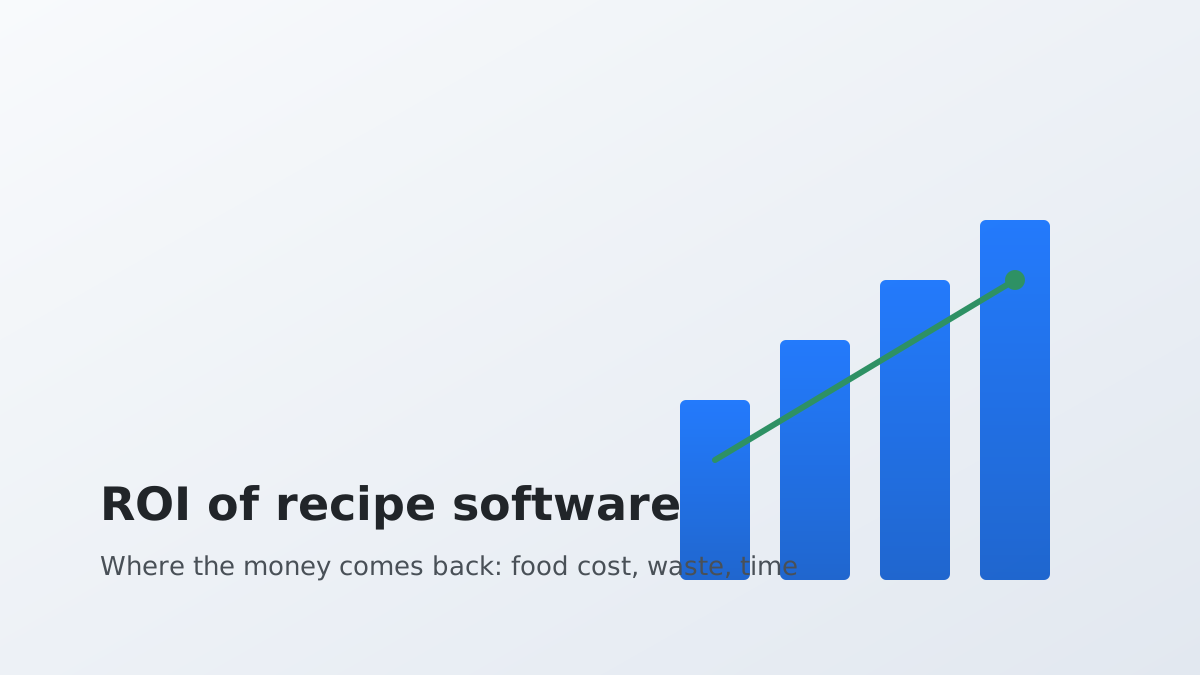
Recipe software ROI: where the money comes back
Cost control, waste reduction and admin time: the three measurable levers a recipe-management system unlocks in under a year.
June 18, 2026
CSR and food service: 3 indicators to automate now
Food waste, carbon footprint and safety compliance: the data your CSR report needs, and how to produce it without manual effort.
June 18, 2026
University dining: allergens, diets and waste on campus
Thousands of students, multiple campus restaurants, varied diets: how a university can secure campus meals without multiplying Excel files.
June 18, 2026
Psychiatric diet changes: how your kitchen stays ahead
In psychiatric care, a patient's dietary needs can change overnight — and the kitchen needs to know immediately. Here's how CalcMenu keeps clinical nutrition and food production perfectly in sync.
June 17, 2026
Meal ordering across psychiatric units — no calls needed
Managing meal orders across several psychiatric units is a daily logistical challenge. Here's how CalcMenu replaces fragmented phone-based workflows with a seamless, digital ordering system built for the realities of mental health care.
June 17, 2026
When kitchen and care speak the same language
In psychiatric clinics, food is far more than nutrition — it's part of the treatment. Here's how CalcMenu helps care teams and kitchen staff work in true sync to improve patient outcomes and reduce operational risk.
June 17, 2026
From handwritten tray cards to automated printing
Handwritten tray cards in hospitals and care homes create unnecessary risk and operational friction. See how CalcMenu automates the entire process to protect patients and free up staff time.
June 17, 2026
Stress-Free HACCP: Stay Audit-Ready Every Single Day
HACCP compliance doesn't have to mean last-minute scrambles before an inspection. Learn how rehabilitation centres and care facilities can stay continuously audit-ready with the right digital tools.
June 17, 2026
Right nutrients for the right rehabilitation patient
Nutritional precision isn't a nice-to-have in rehabilitation — it's a clinical imperative. This post explores how CalcMenu helps rehab centers deliver individualized, compliant, and traceable nutrition at scale.
June 17, 2026
Allergen safety in care homes: one profile, zero risk
In a care home, an undetected allergy can be life-threatening. See how CalcMenu centralises resident dietary profiles to ensure airtight allergen safety at every meal.
June 17, 2026
IDDSI texture levels explained: a guide for care settings
IDDSI provides a globally recognised framework for managing food and drink textures for people with dysphagia. This guide breaks down all 8 levels and shows how CalcMenu makes compliance straightforward in hospitals, care homes and rehabilitation centres.
June 17, 2026
Care home meal management: from paper to digital
How a care home moves from paper sheets to a connected system — diets, allergens, tray cards — without adding to the workload of carers or the kitchen.
June 16, 2026