
FSMA Rule 204 traceability: what a real audit trail actually needs
FDA pushed FSMA 204's compliance date back to July 2028 — but it's already showing up as a requirement in US supplier contracts today. Here's what the Food Traceability Rule actually asks for, and why a lot number alone doesn't cover it.
The deadline moved, the requirement didn’t go away
FDA’s Food Traceability Rule (FSMA 204) originally had a compliance date of January 20, 2026. In March 2025, FDA delayed it by 30 months, and Congress’s Continuing Appropriations Act of 2026 directed FDA not to enforce it before July 20, 2028. That’s a real, meaningful delay — but it hasn’t stopped FSMA 204 from showing up as a contractual requirement well ahead of the enforcement date. Large buyers and distributors are already asking suppliers to demonstrate traceability readiness, because the rule requires coordination across the whole supply chain to work at all — if your downstream partners expect it, “the compliance date isn’t until 2028” isn’t a complete answer.
What the rule actually requires
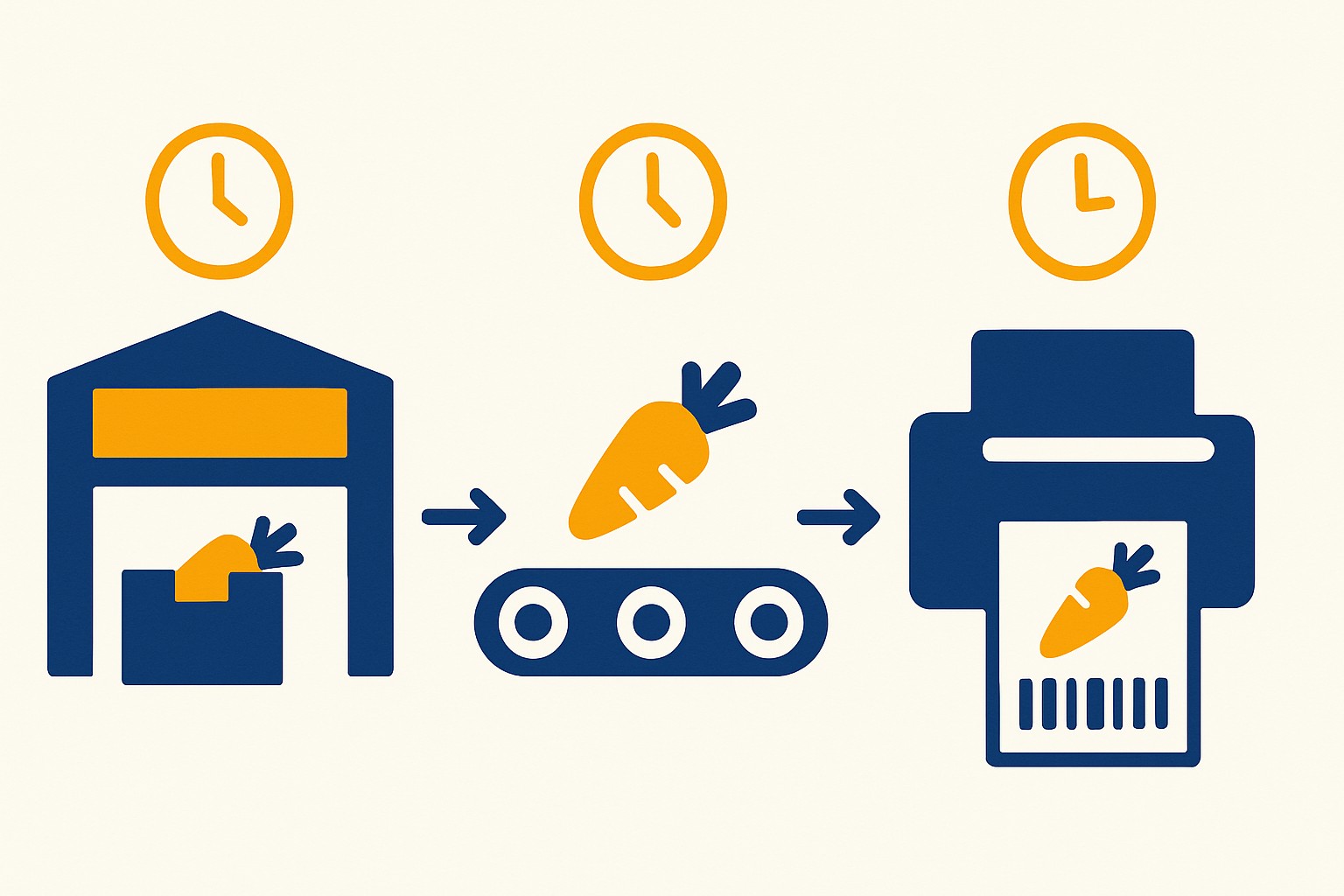
FSMA 204 applies to foods on FDA’s Food Traceability List — a defined set of higher-risk categories. For those foods, it requires businesses to keep specific records at defined points in the supply chain, known as Critical Tracking Events (harvesting, cooling, initial packing, shipping, receiving, transformation), and to capture a consistent set of Key Data Elements at each one — things like the traceability lot code, quantity, date, and the parties involved. The point isn’t just “know your lot number.” It’s being able to produce a clear, connected record of where a specific batch of food has been, at every step, within 24 hours of an FDA request.
Why a lot number alone doesn’t cover it
A lot number tells you what — this specific batch. It doesn’t tell you where it’s been, who touched it, or when each step happened — which is exactly what a Critical Tracking Event record is supposed to capture. A system that assigns a lot number at production but has no connected record of receiving, transformation, and shipping events for that lot has the label, not the audit trail. That gap is common precisely because a lot number is easy to bolt onto an existing process, while a genuinely connected event record across every step requires the system to be built around traceability from the start, not added to it afterward.
What already exists, not what’s planned
This is one case where we’re not describing a roadmap item. CalcMenu already logs who printed a label, when, at which outlet, and for which item, on every single print — an event-level record, not just a static lot number. Combined with lot tracking through production, that’s the connected chain of custody a real traceability audit asks for, working today.
If FSMA 204 is already appearing in your supplier contracts — even years ahead of the enforcement date — it’s worth checking whether your current system produces a connected event trail or just a lot number. With Traceability, that trail already exists; it doesn’t need to be built for the 2028 deadline to be useful now.
Book a 15-minute call to see what your traceability record actually looks like today: Book now
Explore CalcMenu's recipe management software for professional kitchens to see how it applies to your kitchen.
Comments
Comments coming soon.