
New York's A6558A/S5381 allergen law, explained for delis, in-store bakeries and grab-and-go
New York is the first US state to require written allergen notification on food prepacked for direct sale on premises — the deli case, the in-store bakery shelf, the grab-and-go fridge. Here's exactly who it covers, what it requires, and what November 2026 actually means for your business.
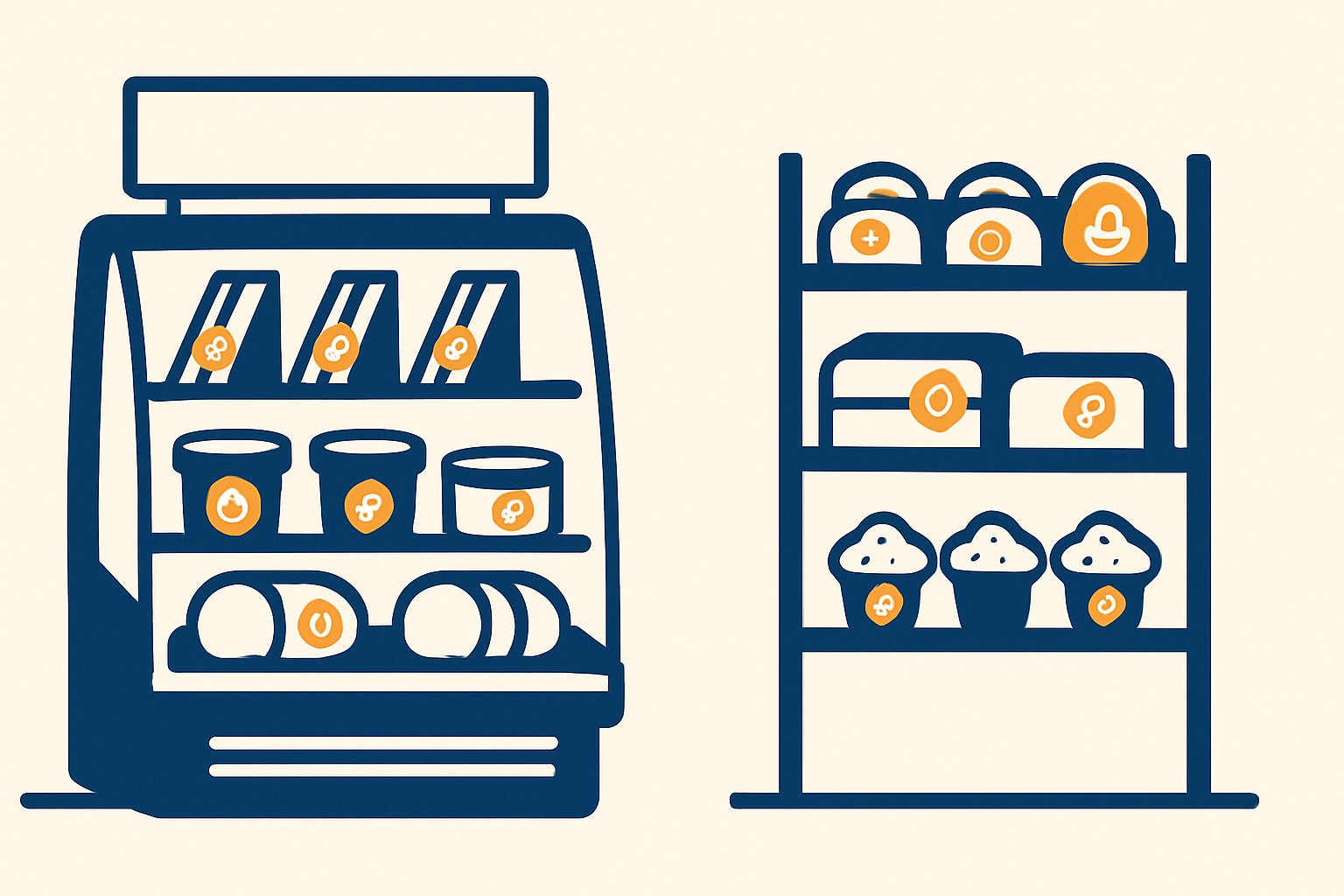
The gap this law closes
Under existing federal rules, packaged food you buy off a supermarket shelf has to declare its major allergens. But walk up to a deli counter, an in-store bakery case, or a grab-and-go fridge, buy something that was wrapped in-house that same morning, and the allergen information often isn’t there at all — because it was never “packaged” in the regulatory sense, just prepared and wrapped on premises. New York’s A6558A/S5381 closes that gap. It’s the first US state law requiring written allergen notification specifically on food that’s prepacked for direct sale on the premises where it’s made.
Who it actually covers
The law targets exactly the businesses that operate in that gap:
- Delis — pre-wrapped sandwiches, salads, and prepared sides
- In-store bakeries — pastries, bread, and cakes wrapped before display
- Cafés and restaurant grab-and-go — anything pre-packaged for a customer to pick up rather than made to order at the counter
- Hotel outlets — grab-and-go and in-room items prepared on site
If your business wraps food on premises before a customer picks it up, this law is written for you specifically — not for imported packaged goods, which already had allergen rules.
What it requires
Written allergen notification covering the nine FDA major allergens: milk, eggs, fish, crustacean shellfish, tree nuts, peanuts, wheat, soybeans, and sesame (sesame was added as the ninth in 2023 under the FASTER Act). The notification has to be written and has to be there at the point of sale — not “ask a staff member,” which is how a lot of grab-and-go and deli operations have handled allergens up to now.
The date that matters
Effective November 2026. For a transactional business — a deli, a single-location bakery — that’s a real, near-term compliance deadline. For a multi-site enterprise account, the more realistic read is that this is the start of a 9–18 month buying cycle, not a date you scramble to hit. Either way, “we’ll handle it when an inspector asks” stops being a workable answer once the law is in effect.
What this actually takes to do right
The honest version: getting allergen data onto a wrapped sandwich or pastry label isn’t hard if the data already exists somewhere reliable. It’s hard when it lives in someone’s head, in a supplier’s PDF nobody re-reads after a recipe changes, or nowhere at all. CalcMenu calculates the nine FDA allergens directly from your recipe’s ingredients — not from a manual checklist that goes stale the moment a supplier substitutes an ingredient. That’s the difference between “allergen info exists because someone remembered to write it down” and “allergen info exists because it’s recalculated every time the recipe does.”
With Allergens & Traceability, the nine FDA allergens roll up from your recipes automatically — no manual checklist to keep re-checking every time a recipe or a supplier changes.
Book a 15-minute call to see how it works for your menu: Book now
Explore CalcMenu's recipe management software for professional kitchens to see how it applies to your kitchen.
Comments
Comments coming soon.