
A Salmonella outbreak traced to a hazelnut-nougat spread shows exactly why batch traceability can't be an afterthought
A German manufacturer's spring 2026 recall of its Nudossi hazelnut-nougat spread was linked by the Robert Koch Institute to a Salmonella Bochum outbreak — around 40 cases, mostly children under 15, with one death in an older adult. The case is a clean, current example of what batch-level traceability is actually for: knowing exactly which lots to pull, the moment contamination is confirmed.
The recall
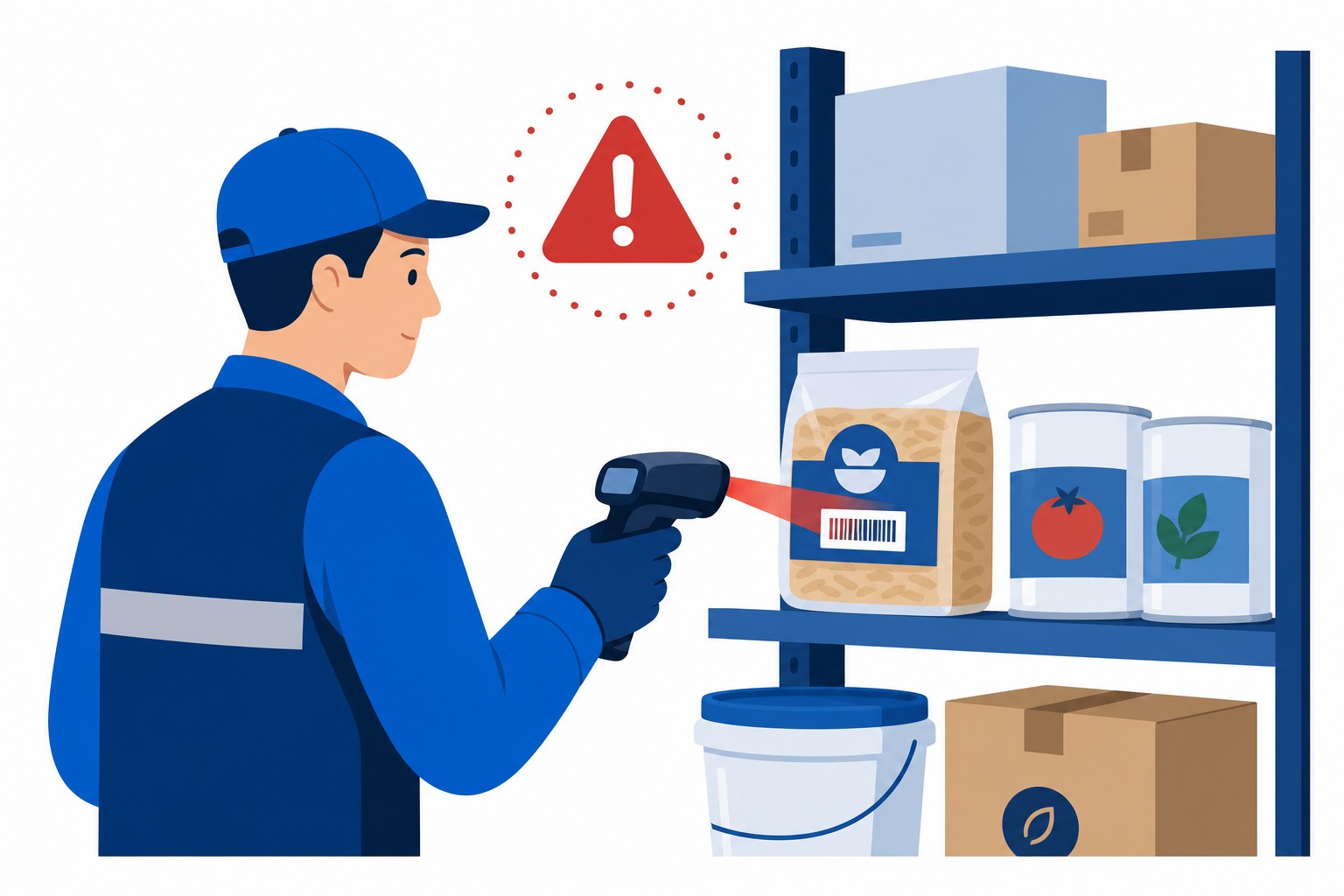
In April 2026, Sächsische und Dresdner Back- und Süßwaren GmbH recalled 300g jars of its Nudossi hazelnut-nougat spread (a specific GTIN, best-before dates in August–September 2026) after internal quality control detected Salmonella, traced to a contaminated raw ingredient. The company’s own notice went through Germany’s official recall portal, lebensmittelwarnung.de, naming the exact product code and best-before window affected.
The outbreak it connects to
The Robert Koch Institute subsequently linked the product to a Salmonella Bochum outbreak — around 40 confirmed cases, concentrated heavily among children under 15, spread across several German states, with one death reported in a person over 60. The timeline matters here: internal QC caught the contamination and the company issued a public recall with a specific, traceable product identifier before the outbreak’s full scope was even established by public health authorities — which is close to the ideal sequence, not the failure mode this kind of story often represents.
Why the specific product code is the whole story
The detail that makes this case actually useful, rather than just another recall headline, is precision: a single GTIN, a specific best-before range, one production run. That precision is what lets a downstream buyer — a distributor, a hospital kitchen, a hotel pastry section — check their own stock against one exact identifier instead of pulling every jar of a product line off every shelf out of caution. The gap between “we think it might be from this batch” and “it is confirmed to be this exact batch” is the entire difference between a fast, contained recall and a slow, expensive, reputationally costly one.
What this means for a kitchen’s own batch discipline
Most professional kitchens receive, store, and use ingredients well upstream of a supplier’s own recall notice reaching them directly — which means the kitchen’s own batch records are what actually determine how fast it can respond when a recall notice does land.
- Batch-level receiving records matter more than shelf-life dates alone — knowing which delivery, which lot number, and which dishes it went into is what makes a recall actionable rather than just alarming.
- A recall response measured in minutes, not days, depends entirely on whether that batch data already exists in a searchable form before the recall happens — not on scrambling to reconstruct it afterward.
- EU system connectivity isn’t optional for any operation sourcing across borders, since a recall notice issued in one country needs to reach every kitchen using that batch, regardless of which country received it.
CalcMenu can’t prevent contamination at a supplier’s own facility. Blaze Trace can make sure that when a recall notice like this one lands, your kitchen already knows — in seconds, not hours — exactly which batches, which dishes, and which service dates are affected.
Need batch-level traceability that’s ready before the next recall notice, not after? Book a free 15-minute call with our team — no commitment: Schedule a call.
Sources
Explore CalcMenu's recipe management software for restaurants, hotels & catering to see how it applies to your kitchen.
Related sectors
Comments
Comments coming soon.