
Langham turned 390kg of orange peels into a marmalade and rendered Wagyu fat into kitchen tallow. That's not sustainability theatre — it's food cost work with better marketing
Langham Hospitality Group's group-wide upcycling programme — breakfast-juice peels into compote, fish trimmings into a permanent burger, Wagyu fat into house tallow — is a genuine case study in what happens when waste tracking becomes visible enough to turn into a menu decision. By Marc Enggist, CEO of EGS.
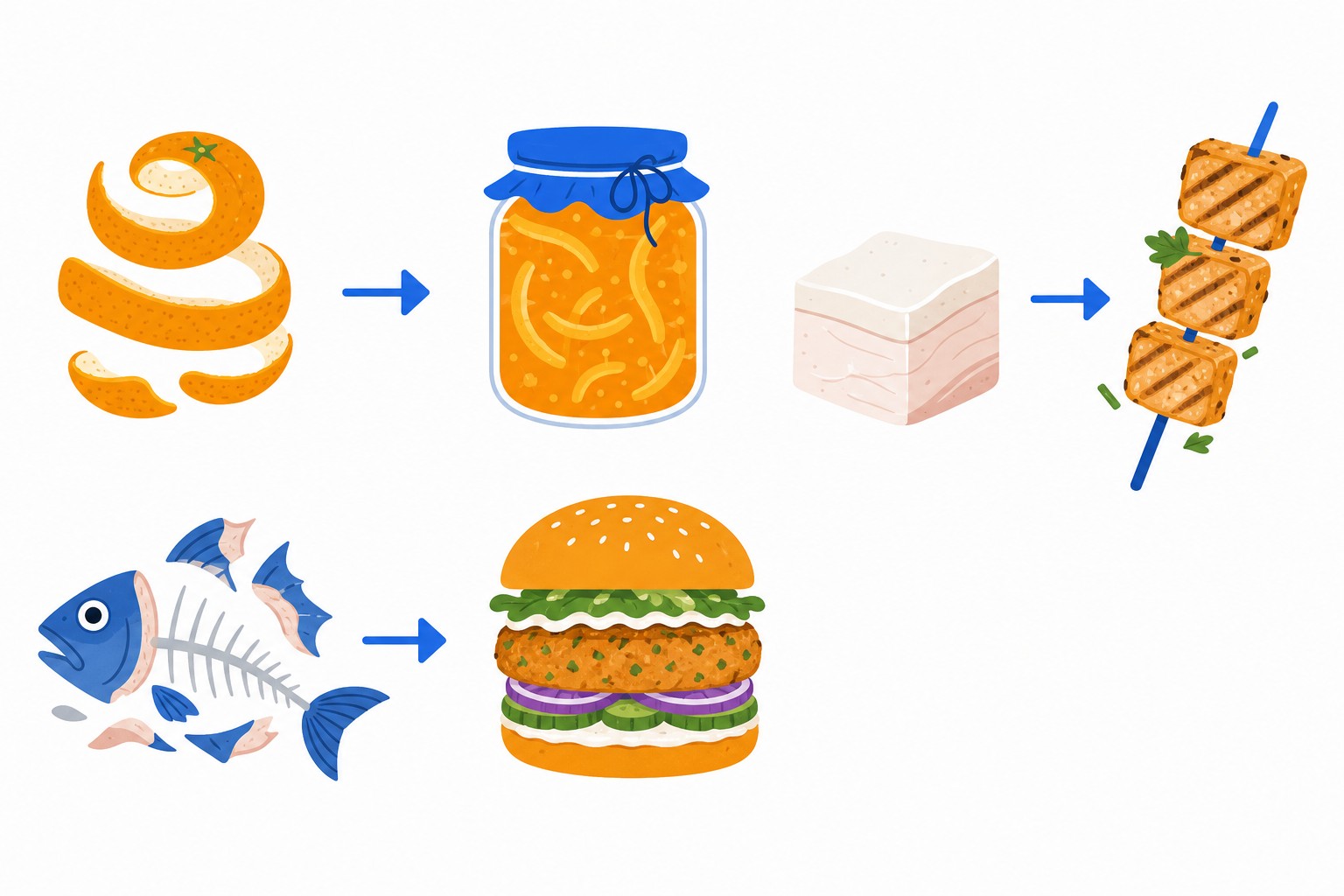
Langham Hospitality Group announced last week that it has rolled a food-upcycling programme across its hotel portfolio — not a pilot at one flagship property, a coordinated approach across multiple brands and countries. The specifics are worth sitting with, because they’re unusually concrete for a sustainability announcement: Cordis Auckland diverts roughly 390kg of orange peel and pulp a year from its breakfast juice service into a marmalade compote served with yogurt. The Langham, Boston built a permanent menu item — the Coastal Catch Burger — entirely from cod and salmon trimmings, using about 220kg of fish annually that would otherwise be discarded. The Langham, Gold Coast turns Wagyu beef trimmings into Japanese-style kushiyaki skewers and renders the trimmed fat into house-made kitchen tallow. The Langham, Jakarta converts premium meat trimmings into breakfast sausages. Eaton HK’s bar infuses Lillet with excess citrus peel and flavours rum with used espresso grounds. CEO Bob van den Oord’s framing was direct: “Sustainability becomes most meaningful when embedded into everyday decisions we make, including how we source, prepare and serve food.”
Why this is a food cost story before it’s a sustainability story
Every one of those products started as a cost the kitchen was already absorbing. The orange peels, the fish trimmings, the Wagyu fat — these weren’t sourced specially. They were byproducts of dishes already on the menu, generated every single service, and until someone decided to do something with them, they were simply waste-hauling volume: a cost with no offsetting revenue line. What Langham actually did wasn’t invent new ingredients. It made an existing, recurring input visible enough to become a menu decision — and then built the discipline to repeat that decision at scale, across multiple properties, consistently enough to report a specific annual kilogram figure for each one.
That specificity is the tell. “We reduced food waste” is a compliance sentence. “390kg of orange peel a year, diverted into a compote we can name and put a price against” is an operational fact — which means somebody was actually measuring the input before they decided what to do with it.
The gap between “we should use scraps” and doing it
Most kitchens already know, in the abstract, that trim and byproduct represent real value. Almost none of them can answer, without a special project, exactly how many kilograms of a given trimming a site produces in a normal month, or what it would cost to formalize a use for it versus just paying to haul it away. That answer requires the same infrastructure as any other recipe decision: a yield percentage on the primary cut, a documented byproduct quantity, and a real cost basis for what that byproduct is worth as an ingredient in something else rather than as waste volume.
This is precisely the gap between a single clever chef noticing an opportunity once, and a hospitality group running it as standing practice across a portfolio. Langham’s programme isn’t described as one property’s initiative that others heard about — it’s presented as group-wide, systematic, and reportable in specific figures per property. That only happens when the underlying data — yields, trim weights, what’s actually coming off the primary cut — is tracked consistently enough that “here’s what we could do with this” becomes an answerable question rather than a one-off discovery.
What this means for your own kitchen’s numbers
You don’t need a Langham-scale portfolio to apply the same logic. The question worth asking of your own recipes is simple: for every dish that generates a byproduct — trim, peel, bones, fat, stems, whey — do you actually know the weight and the cost, or is it folded invisibly into the food cost of the primary dish with nobody looking at it separately?
- Yield and trim data captured at the recipe level, not estimated once and forgotten, so a byproduct’s real volume is a number you can act on, not a guess.
- Cost visibility on the byproduct itself, so “make something from the trim” is a decision with a real cost-benefit, not a vague good intention.
- Consistency across every site, the same discipline Langham applied — one property’s clever idea only becomes a group asset when the data behind it travels to every kitchen that generates the same trim.
CalcMenu can’t invent your marmalade or your kushiyaki skewer. It can make sure the yield and cost data behind every recipe is precise enough that when a byproduct opportunity exists, you’re the one who notices it — not the waste hauler’s invoice.
Want to see what your own kitchen’s trim and byproduct data actually looks like once it’s tracked properly? Book a free 15-minute call with our team — no commitment: Schedule a call.
Related reading
- Food waste reduction in professional kitchens: the three-stage framework for purchasing, preparation, and production
- Profitability #5 — Waste is margin: the 7:1 business case for waste discipline
- Your food cost jumped 8 points. Before you blame the kitchen, check whether the number is true
Sources
Explore CalcMenu's recipe management software for professional kitchens to see how it applies to your kitchen.
Comments
Comments coming soon.