
Pad Thai is Thailand's national dish because a military government officially declared it one in the early 1940s — part of a broad nation-building campaign, built from a dish that came straight out of Bangkok's Chinese street-food stalls
Before the 1930s, fried noodles in Thailand were understood as a Chinese dish. Prime Minister Plaek Phibunsongkhram changed the country's name from Siam to Thailand in 1939, then built a noodle dish into his nation-building campaign — partly to stretch a wartime rice shortage, partly to give the new national identity a food of its own. The dish's original name literally translates to "Thai-style Chinese stir-fried noodles."
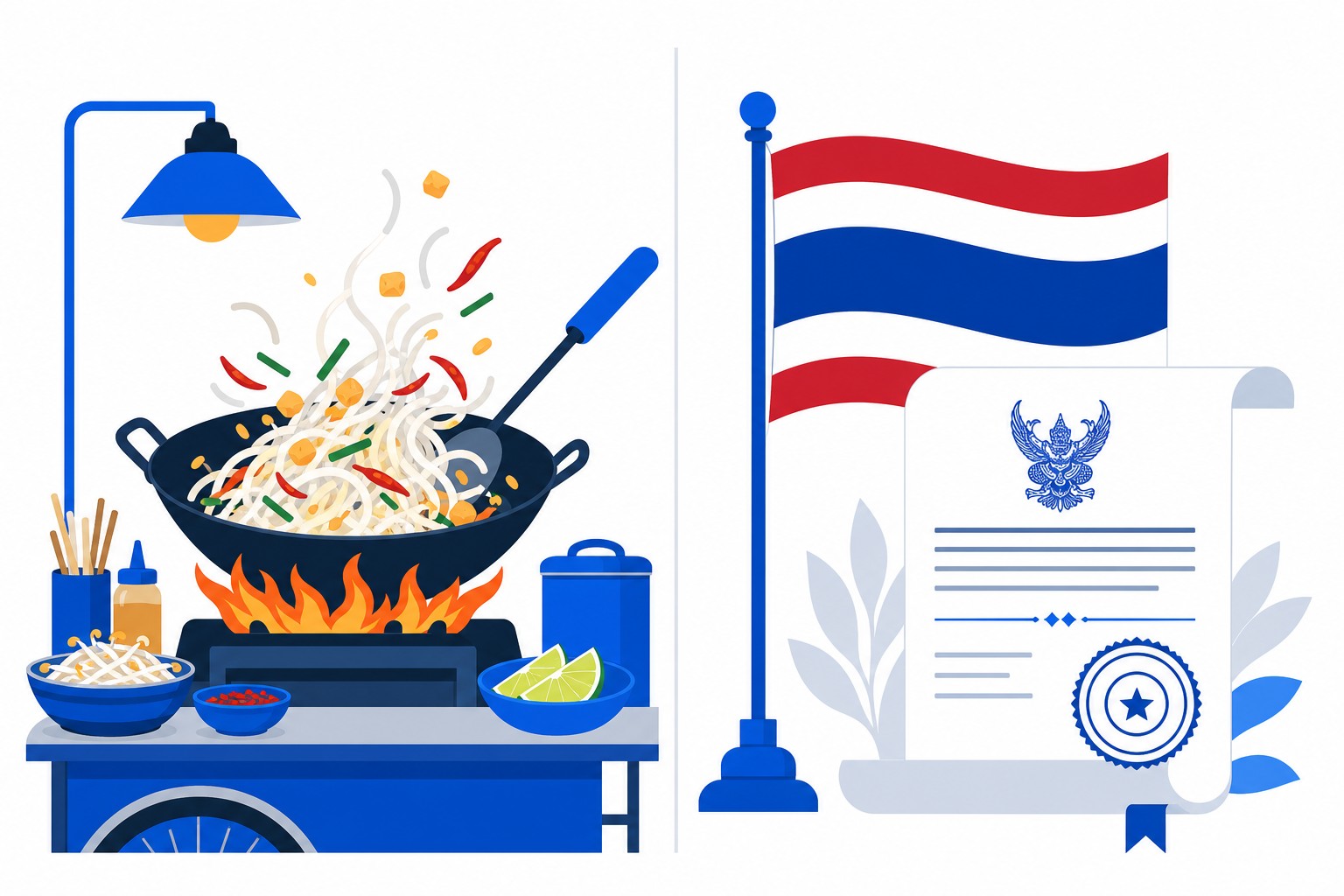
Thailand’s national dish is younger than most people’s grandparents
Pad Thai reads as ancient — the kind of dish that feels like it must predate the country’s written history. It doesn’t. Before the 1930s, fried noodles in Thailand were understood as Chinese food, prepared by and for the country’s large ethnic Chinese population, not something a Thai household would have called its own. Pad Thai as a defined, standardized, nationally promoted dish is a 20th-century political invention, and the paper trail for that invention is unusually well documented.
The renaming that set the stage
On 23 June 1939 — the seventh anniversary of the revolution that ended absolute monarchy — Prime Minister Plaek Phibunsongkhram (“Phibun”), a nationalist military strongman, formally renamed the country from Siam to Thailand. It wasn’t a cosmetic change. It opened a broader nation-building project known as the Rattha Niyom, or Thai Cultural Mandates: twelve decrees over the following years requiring citizens to salute the flag, know the national anthem, speak only standard Central Thai instead of regional languages, and wear Western-style clothing in public — a general push toward a single, unified national identity that touched every community in the country, including its substantial ethnic Chinese population.
A noodle dish became state policy
Here’s where it gets specific enough to be genuinely surprising: the Phibun government distributed a standardized recipe for pad Thai to street vendors, promoting it as the new national dish, under the slogan roughly translating to “noodles are your lunch.” Part of the logic was practical — the early 1940s brought wartime hardship and flooding-driven rice shortages, and rice noodles stretch the rice supply further than serving rice alone, since one bowl of rice can be converted into roughly two bowls of noodles. But the deeper logic was identity engineering: manufacturing a dish Thai citizens could point to as unmistakably, patriotically their own, at the exact moment the state was investing heavily in building a single, unified national identity.
The name gives away where it actually came from
The detail that makes the irony impossible to miss is linguistic. Pad Thai’s original, fuller name — kway teow pad Thai — translates roughly to “Thai-style stir-fried Chinese rice-noodles.” That’s an unusual thing for a dish to be called if it were genuinely, natively Thai in origin. Most food historians now agree the dish’s actual roots sit in Bangkok’s Chinese immigrant hawker-noodle scene — the stir-fried rice-noodle format Chinese cooks had been making for their own communities for generations before the state adopted, standardized, and rebranded it as a national symbol.
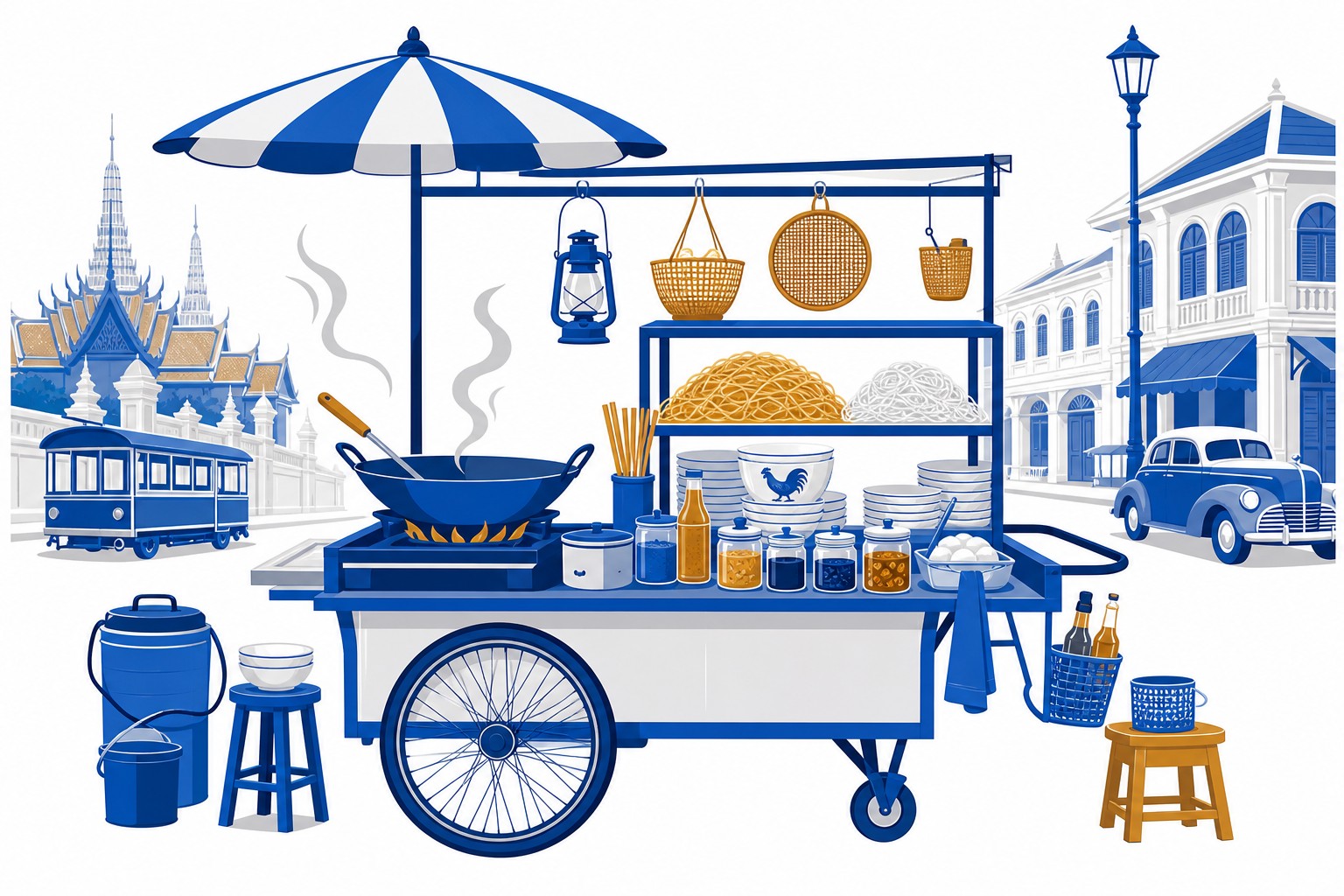 The Bangkok hawker-cart scene pad Thai actually came out of — Chinese immigrant street cooks, not a Thai royal kitchen.
What actually happened next
The campaign worked, in the sense that matters most: pad Thai spread from a government-issued street-vendor recipe into a dish nearly every Thai person now considers unambiguously theirs, and eventually into one of the most internationally recognized “Thai” foods on Earth. That’s not a story of failure or fraud — it’s a genuinely common pattern in national-dish history, where a state-sponsored standardization campaign takes a dish already circulating informally and turns it into an official symbol, the same way a 19th-century priest formalized the modern spa hot-cold ritual, or a Depression-era jeweler’s slicing machine turned sliced bread into an American default. What’s unusual about pad Thai is how well-documented and deliberate the political motive behind the campaign actually was.
What this means if a “national dish” is on your menu
Every country’s “national dish” carries some version of this same complexity — a formalized, often politically shaped version of something that existed more messily beforehand. That’s not a reason to avoid serving it; it’s a reason to get the story right if you’re telling it to guests.
- Separate the marketing story from the technical recipe — a dish’s origin story and its actual costed, documented recipe are two different systems, and only one of them should be treated loosely.
- Recipe consistency for dishes with a strong “authenticity” expectation, since guests who’ve researched a dish’s real history tend to notice inconsistency faster.
- Honest sourcing when a menu leans on a national or cultural identity story — it holds up better under a curious guest’s questions.
CalcMenu can’t settle whether pad Thai counts as authentically Thai — Thai historians have been having that argument since the 1940s. It can make sure your kitchen’s version is costed and documented with the same rigor as everything else on the menu.
Want your menu’s recipes documented as precisely as their stories deserve? Book a free 15-minute call with our team — no commitment: Schedule a call.
Related reading
- The Turkish hammam isn’t independent — it’s a direct descendant of the Roman bath
- A jeweler who never baked a loaf in his life invented sliced bread
Sources
- A Brief History of Pad Thai — Mental Floss
- The Oddly Autocratic Roots of Pad Thai — Atlas Obscura
- Pad thai — Wikipedia
- Siam Becomes Thailand — History Today
- Pad Thai lessons from Thailand, a slightly fuzzy origin story — Andrea Nguyen
Explore CalcMenu's recipe management software for restaurants, hotels & catering to see how it applies to your kitchen.
Related sectors
Comments
Comments coming soon.