
Freddie Mercury was born on Zanzibar — the 'Spice Island' whose centuries of Omani, Indian, African and Arab trade connections are still traceable in a bowl of pilau today
Zanzibar earned the nickname "Spice Island" through a genuinely long Indian Ocean trading history, deepened when Oman's Sultanate moved its capital to Stone Town in the 1830s and built a major clove economy there. Like most 19th-century plantation economies of that era, it also has a difficult, well-documented chapter involving forced labor — a shared history across many trading nations of the time, not unique to any one culture, and worth understanding honestly rather than skipped over. What it left behind is a genuinely rich, still-living food culture: pilau, biryani, urojo, and a night market that's still serving today.
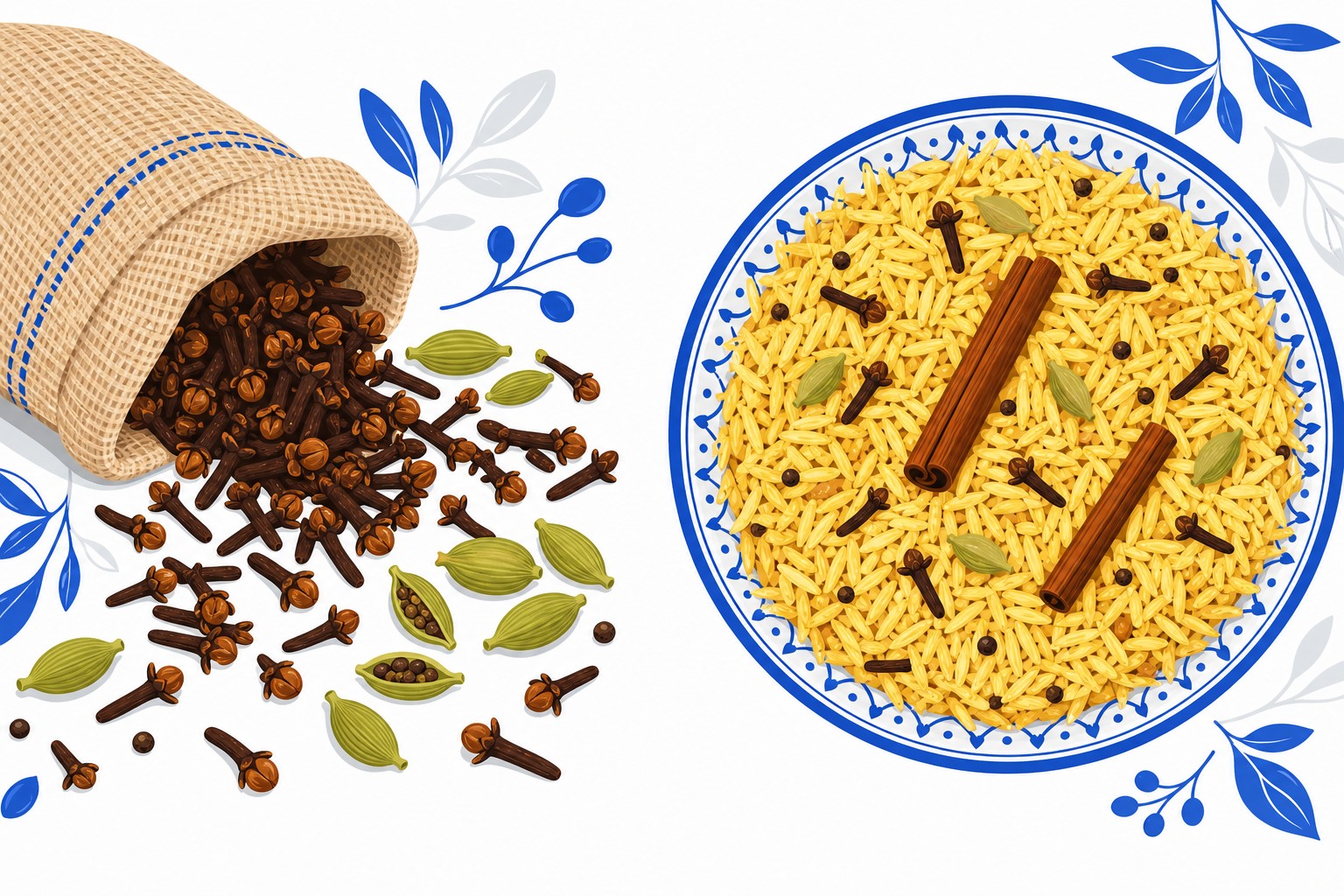
The island one of music’s most famous voices was born on
Farrokh Bulsara — the world would later know him as Freddie Mercury — was born in 1946 in Stone Town, on the island of Zanzibar, off the coast of what’s now Tanzania. That’s a genuinely surprising fact on its own, but it’s also a starting point into a much larger, more consequential history: Zanzibar’s nickname, “the Spice Island,” and the specific, difficult history behind how it earned that name.
An island connected to Oman by centuries of trade, not just geography
Zanzibar’s ties to Oman run deep and predate the 19th century by a long way — the two have been linked by Indian Ocean trade since at least the 17th century, when Omani naval power helped push Portuguese forces out of the East African coast. That relationship deepened in the 1830s and 1840s, when Sultan Said bin Sultan moved his court from Muscat to Stone Town, making Zanzibar the effective seat of Omani governance for a period. Under his rule, the island developed a major clove plantation economy, and by the mid-19th century Zanzibar had become the world’s leading producer of cloves — a genuine agricultural and commercial achievement that shaped the island’s identity for generations.
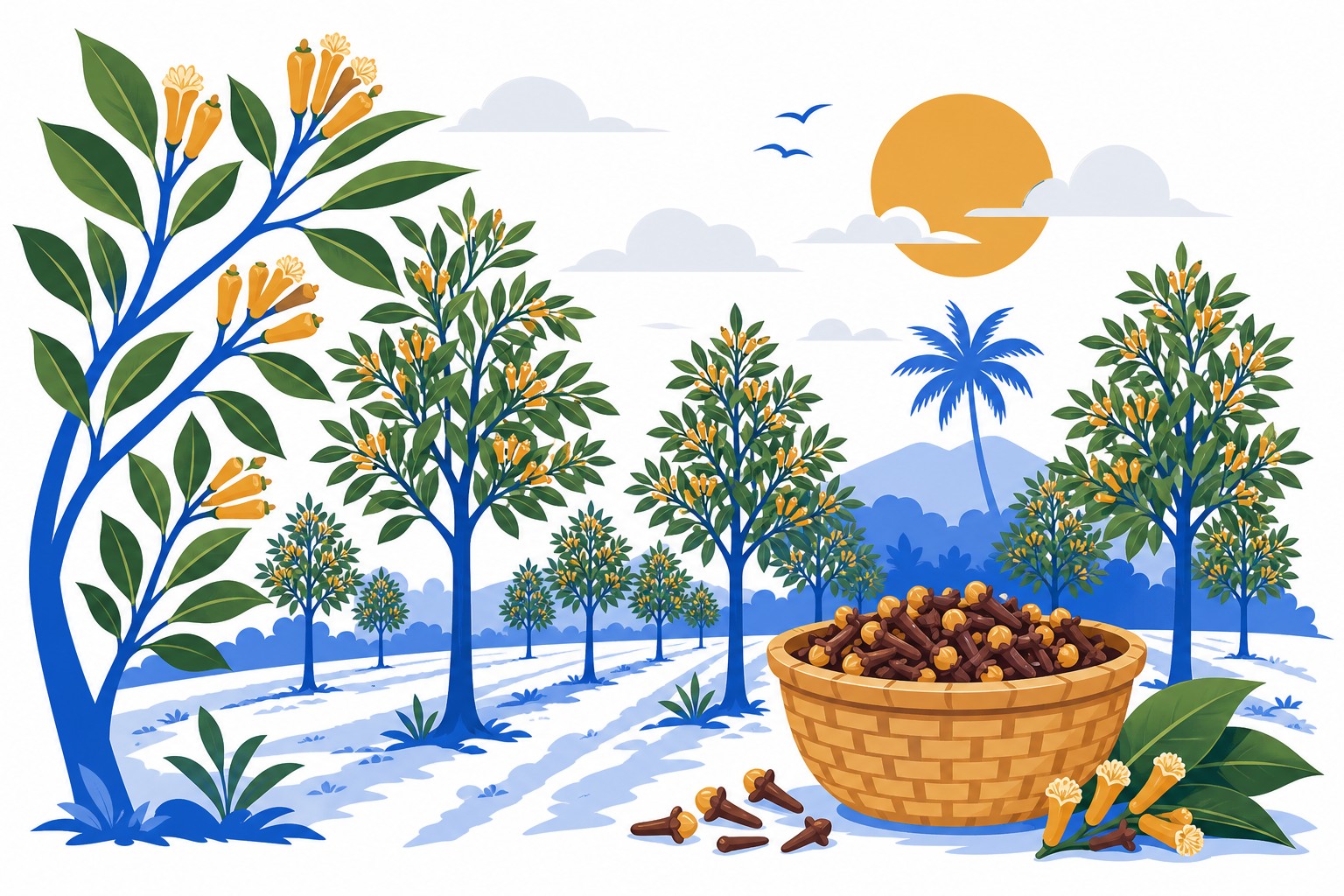 Zanzibar’s clove plantations made it the world’s leading clove producer by the mid-19th century.
A difficult chapter, honestly told — and not unique to one place or people
Like most large plantation economies of the 19th century, Zanzibar’s clove and coconut estates relied heavily on forced labor, a practice tragically common across many trading powers and regions in that era, from the Indian Ocean world to the Americas. Historical estimates suggest enslaved people made up a very large share of the archipelago’s population at the plantation system’s peak, with labor drawn from weeding, picking, drying, and stemming cloves and coconuts. Zanzibar’s port was also a significant hub in the wider East African and Indian Ocean trading network of the period. This history involved many participants across the region — African, Arab, Indian, and European traders and intermediaries alike — and it’s worth naming honestly rather than glossing over, in the same way this blog has covered difficult chapters in other regions’ food histories. It’s also worth noting the trade was formally abolished under British pressure on the Sultanate in 1873, and that the Zanzibar and Oman of today are, understandably, very different places from the 19th-century political systems this history describes.
The food carries the same layered history as the politics
Zanzibar’s cuisine reads, on a menu, like a straightforward “exotic spice island” pitch. It’s actually a direct, traceable record of exactly which trade routes and which populations passed through the island. Pilau — rice cooked directly in spiced meat broth so every grain absorbs the seasoning — uses a spice base heavy on cloves, cardamom, cinnamon, black pepper, and cumin that arrived with the long history of Omani trade connections to the island. Biryani came through a related but separate channel, Arab and Indian trading routes together, and the Zanzibari version is more layered and richer in spice and fat than everyday pilau, reflecting that distinct Indian Ocean trading lineage. Urojo — also called “Zanzibar Mix” — is a tangy, flour-thickened street soup flavored with mango and lemon, a dish that belongs to Zanzibar specifically rather than to any one of the cultures that fed into it.
A living street-food scene, not a museum piece
None of this is historical reenactment — it’s a real, current street-food economy. Forodhani Gardens, a waterfront park in Stone Town, turns into a full night market every evening around 6pm: dozens of vendors grilling seafood and mishkaki skewers, ladling urojo, pressing sugarcane juice, and cooking Zanzibar pizza — a modern, distinctly Zanzibari stuffed-flatbread street food that didn’t exist a century ago and is itself proof this food culture is still actively evolving, not frozen in a colonial-era recipe book.
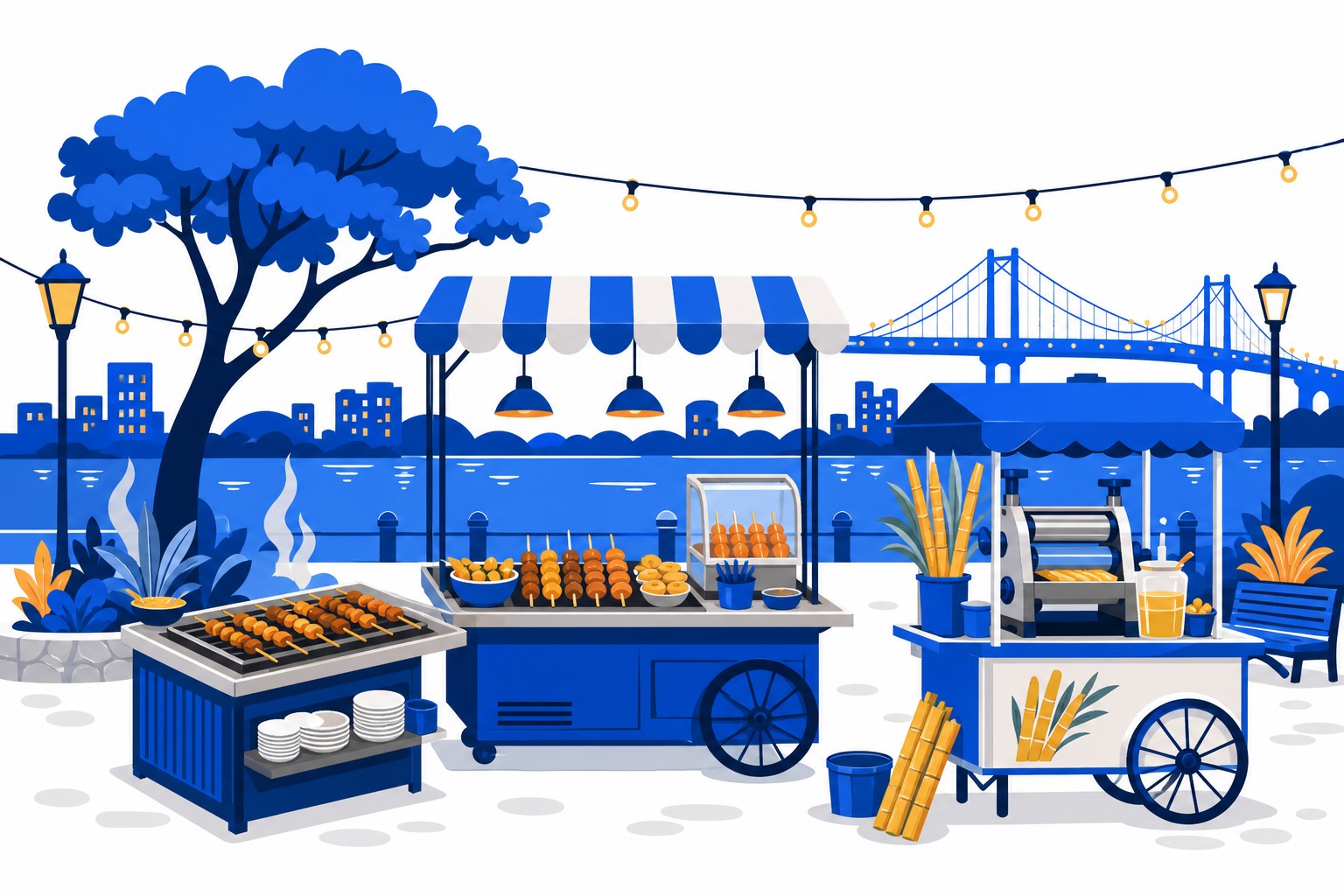 Forodhani Gardens turns into a full night market every evening — a living street-food economy, not a historical reenactment.
Why this history is worth telling with care
A lot of spice-island marketing flattens Zanzibar’s story into “exotic aromas, ancient trade routes” — pleasant, vague, and thin on substance. The fuller story is more interesting precisely because it’s more textured: a genuine trading and governance relationship with Oman, a plantation economy that built real wealth and also had a difficult labor history shared with many economies of that era, and a food culture that’s a direct, edible record of every group whose trade passed through the island — African, Arab, Indian, and Portuguese influences all genuinely present on the same plate. None of that requires blame aimed at any one culture or country to tell honestly; it requires simply not skipping the complicated parts to get to the pilau recipe.
What this means for a spice-forward or heritage-driven menu
If cloves, cardamom, or a “spice island” story feature on your menu, the operational lesson from Zanzibar’s own history is a practical one: spices are commodities with real price volatility and sourcing complexity, exactly as they were when they built an entire island’s export economy in the 19th century.
- Real cost tracking on specialty spices, since clove, cardamom, and saffron-tier ingredients carry meaningfully different price volatility than a standard pantry item.
- Recipe precision for spice-blend dishes, where a pilau masala’s exact ratio is the difference between the dish and a generic curry.
- Honest sourcing and history, especially for a menu leaning on a spice-trade or heritage narrative — guests increasingly expect the real version, not the brochure version.
CalcMenu can’t rebuild Zanzibar’s spice-trade supply chains. It can make sure the spice-heavy dishes on your menu are costed and documented with the same precision the actual historical trade required.
Running a kitchen with spice-forward or heritage-driven dishes on the menu? Book a free 15-minute call with our team — no commitment: Schedule a call.
Related reading
- The vegetables empires were built on: onion and garlic across cuisines and time
- The Manila galleon connected Mexico and the Philippines for 250 years
Sources
- Sultanate of Zanzibar — Wikipedia
- Slavery in Zanzibar — Wikipedia
- Sultanate of Zanzibar (1856–1964) — BlackPast.org
- The Fascinating History of Zanzibar’s Spice Trade — Usoke Explorers
- Zanzibar Swahili Cuisine: A Guide to the Island’s Best Dishes — Pongwe
- Forodhani Night Food Market: Zanzibar’s Best Street Food — Third Culture Nellie
- Swahili Food in Zanzibar — Magical Tanzania
Explore CalcMenu's recipe management software for restaurants, hotels & catering to see how it applies to your kitchen.
Related sectors
Comments
Comments coming soon.