
Onion and Garlic: The Only Two Ingredients Every Cuisine on Earth Agreed On
From Egyptian pyramid rations to India's onion export bans, onion and garlic are the rare ingredients that unrelated cuisines converged on independently — and their modern price swings can move your food cost more than an ingredient this cheap per kilo has any right to.
1,600 Talents of Silver for Onions: The Oldest Food-Cost Complaint on Record
According to the Greek historian Herodotus, writing around 450 BCE after visiting Egypt, an inscription near the Great Pyramid recorded that 1,600 talents of silver had been spent on radishes, onions and garlic to feed the workers who built it. Modern Egyptologists are skeptical of the claim itself — most agree Herodotus was likely misled by an interpreter, or that the inscription he was shown was actually a list of offerings to the dead pharaoh, not a payroll record. But the detail that stuck, true or not, is telling: even a garbled, twenty-five-century-old story about a construction project assumes that onions and garlic were expensive enough, and central enough to the workers’ diet, to be worth writing down.
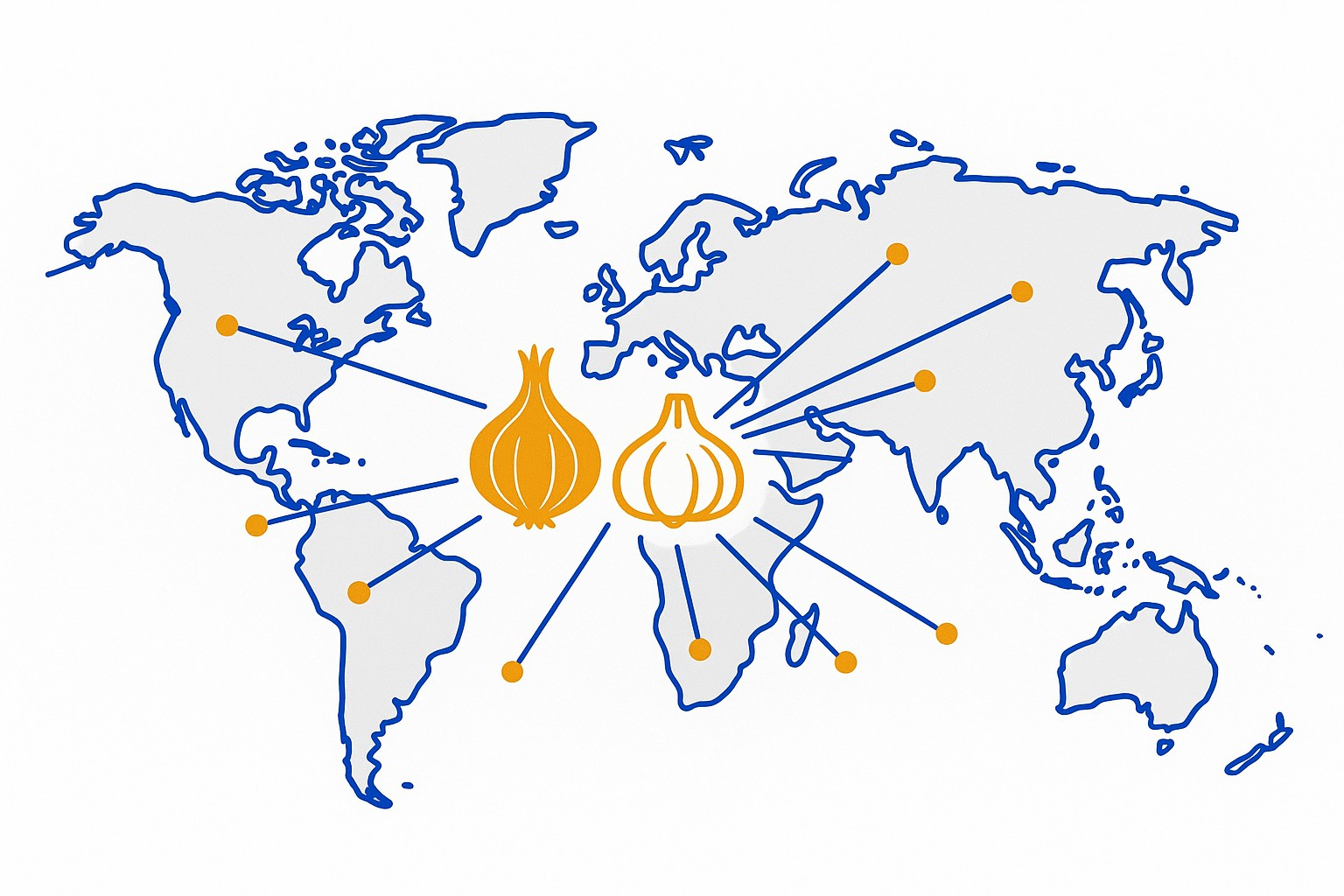
That instinct — that these two vegetables belong in the story of how you feed a large number of people — turns out to be one of the most consistent threads in food history. No trade guild, no royal monopoly and no marketing campaign ever pushed onion and garlic onto the world’s cutting boards. They got there independently, in cuisines that had no contact with each other, because they solved the same problem everywhere: how do you make food taste like something, cheaply, using a crop that survives a bad season and a long journey?
Rome: Garlic as Marching Fuel
Roman military logistics ran on grain — legionaries received a set ration of wheat, supplemented with lentils, bacon, cheese and vinegar-water known as posca. Garlic and onions were part of the vegetables available to soldiers when campaigning near cultivated land, alongside leeks, cabbage and turnips, prized because a small amount of garlic, oil or cheese turned a monotonous grain ration into something edible. Roman writers treated garlic less as a delicacy and more as functional food: it traveled well, kept for months without refrigeration, and did more for a bland ration than almost anything else a soldier could carry or forage. That combination — shelf life plus flavor payoff per gram — is the same reason it survives in every professional kitchen’s prep station today.
Medieval Europe: The Vegetable That Never Became a Luxury
Here is the contrast that makes onion and garlic historically unusual. By the late medieval period, Western Europe was importing an estimated 1,000 tonnes of pepper a year from Asia, alongside nutmeg, cloves and saffron — spices so valuable that owning them signaled wealth the way owning gold or fine cloth did. Nobility built entire banquets around showing off how heavily a dish could be spiced, precisely because the spice itself was the expensive part.
Onions took the opposite path. They grew reliably in northern European climates, kept through winter in a root cellar without any preservation technology, and appeared in nearly every peasant meal alongside turnips, carrots and parsnips — while the same nobility eating pepper-laden feasts also ate onions, just without bragging about it. Unlike pepper, nutmeg or saffron, onion never had a scarcity story to exploit: it grew wherever you planted it, so it never crossed over from staple to luxury. That is precisely why it survived every regime, war and trade-route collapse in European food history without interruption — it was never dependent on a supply chain anyone could blockade.
Independently Invented, Everywhere: The Universal Aromatic Base
The strongest evidence that onion and garlic solve a genuinely universal cooking problem is that unrelated culinary traditions arrived at nearly identical answers without copying each other:
- France — mirepoix: onion, carrot and celery, diced and sweated in fat, named after the 18th-century Duke of Mirepoix.
- Italy — soffritto: the same onion-carrot-celery trio, cooked in olive oil until it largely dissolves into the dish.
- Spain and Latin America — sofrito: onion and garlic built out with tomato and peppers, cooked longer and wetter than its Italian cousin.
- Louisiana — the Cajun and Creole “holy trinity”: onion, celery and green bell pepper, a direct adaptation of French mirepoix to what actually grew in the Mississippi Delta.
- India — tadka (tarka): whole and ground spices, often with onion and garlic, bloomed in hot ghee or oil as the flavor base poured over a finished dish.
- China and much of East and Southeast Asia — garlic, scallion and ginger, hit hard and fast in a smoking wok before anything else goes in.
None of these traditions had a trade body coordinating them. Mirepoix and soffritto share a root through French and Italian court cooking, but Cajun trinity, Indian tadka and Chinese stir-fry aromatics developed on separate continents with no shared supply chain. The convergence is functional, not cultural: onion and garlic release flavor compounds when they hit hot fat that nothing else in the pantry replicates as cheaply, which is why kitchens with zero contact with each other kept landing on the same move.
2023–2024: When Onions and Garlic Became Front-Page News
The idea that onion and garlic are “cheap” ingredients is a modern assumption, and recent years have repeatedly broken it.
India treats onion price spikes as a recurring political event, not an anomaly. Rising onion prices are widely credited with helping tip the 1980 election against the sitting government, and were cited as a factor in the BJP’s 1998 Delhi and Rajasthan state election losses when retail prices hit ₹40-50/kg. In November 2010, unseasonal rain in Maharashtra’s Nashik region — India’s key growing area — pushed prices from ₹35 to ₹88 per kilogram in a single week. By December 2019, prices in some cities crossed ₹200/kg. Most recently, India banned onion exports outright from December 8, 2023, to protect domestic supply after an estimated 20% drop in kharif-season production; the ban briefly pushed domestic retail prices down about 40%, from ₹42.2/kg to ₹24.5/kg by March 2024. The government then extended the ban indefinitely just weeks before a general election, triggering farmer protests, before lifting it on May 4, 2024 and replacing it with a $550-per-tonne minimum export price.
The Philippines had its own onion shock in January 2023: red and white onions retailed as high as 600-700 pesos per kilogram (roughly $10.88-$12.80) — by some comparisons two to three times the price of chicken and 25-50% above pork or beef. The cause was a combination of typhoon crop damage, delayed import approvals, and suspected hoarding and smuggling, and it became a genuine cost-of-living story: a staple that home cooks and restaurant kitchens alike had never budgeted as a luxury item suddenly was one.
China’s dominance of global garlic makes it the single point of failure for the world’s supply. China grows roughly 76-77% of the world’s garlic and accounts for a similar share of global exports — over 2.6 million tonnes in 2024 alone, up more than 16% year-on-year, with average export prices up over 40% for the year. Because garlic stores for over a year and production is geographically concentrated in a handful of Shandong and Jiangsu counties, it is unusually prone to speculative hoarding: in the 2009-2010 season, a phenomenon Chinese media nicknamed “suan ni hen” (“garlic ruthlessly strikes back”) saw a 20kg bag of garlic that cost 2-3 yuan in 2008 sell for around 200 yuan by 2010 — a roughly seventy-fold increase driven by a shrinking planted area, H1N1-linked panic buying, and speculative capital piling into an easily-stored commodity.
What This Means for Your Food Cost
Onion and garlic are almost never the headline ingredient on a menu — nobody prices a dish by its onion content the way they price it by the protein. That is exactly the problem. Because they appear in a majority of your prep recipes — stocks, sauces, marinades, braises, soffritto-based bases, stir-fries — a price move in either one doesn’t touch one dish’s food cost. It touches dozens of them at once, silently, because nobody is watching a five-cent ingredient the way they watch the ribeye.
The format question compounds this. Fresh onion and garlic are cheapest per kilo but carry real labor cost (peeling, dicing) and real waste risk — both spoil quickly once cut, and whole bulbs sprout or soften in storage faster than most kitchens realize. Frozen diced onion and pre-peeled garlic cut labor and reduce spoilage but usually cost more per usable kilo and can shift yield and flavor intensity. Dehydrated and powdered forms are shelf-stable and eliminate prep waste almost entirely, but the substitution ratio against fresh is not 1:1, and getting that ratio wrong either underseasons a recipe or quietly inflates the cost per portion. None of these formats is universally “right” — the correct choice depends on volume, storage capacity and how much you’re paying kitchen labor to peel and chop, and that answer changes as fresh prices swing the way they did in India and the Philippines.
How CalcMenu Helps
- Base-aromatic costing across every recipe — because onion and garlic sit in most of your prep, not just finished dishes, CalcMenu tracks their cost contribution at the recipe level so a price move shows up as a cost change everywhere it actually applies, not just where you’d think to look.
- Format substitution costing — compare fresh, frozen and dehydrated/powder formats side by side, including realistic substitution ratios, so the labor-versus-ingredient-cost tradeoff is a calculation, not a guess.
- Multi-site price consistency — if one site is paying more for garlic than another, or has switched supplier or format, that gap is visible instead of buried in separate spreadsheets.
- Live supplier price updates — when a price shock like China’s 2024 export price jump or India’s export ban hits your supplier’s invoice, the impact flows into every affected recipe’s cost automatically.
- Yield and waste tracking — because both ingredients spoil fast once cut, tracking actual usable yield against purchased weight surfaces the shrinkage that a per-kilo purchase price alone never shows.
Want to see what this actually costs on your menu? Book a free 15-minute call with our team — no commitment: Schedule a call.
Related reading
- Vanilla’s 300-year monopoly and single-region supply show the same concentrated-source price risk, at a far more extreme multiple
- The potato and tomato carry the identical weather-and-single-region exposure that keeps hitting onion and garlic prices
- Tabasco and Angostura bitters show how a tiny per-serving dose can still carry outsized supply-chain risk
- Herodotus’s inscription about onions and garlic on the Great Pyramid sits inside a much bigger ancient-Egyptian food story
Sources
- Herodotus and the Pyramids — Brain Baking
- How Accurate is Herodotus’ Description of Egypt? — Herodotus Helpline
- What We Really Know About the Great Pyramid of Giza & Its Builder — TheCollector
- What Did Roman Soldiers Eat? Food, Rations and Army Diet — UNRV
- Food in Roman army — Imperium Romanum
- Spices and Their Costs in Medieval Europe — University of Toronto
- The Medieval Spice Trade — Newberry Library Digital Collections for the Classroom
- 20 Foods People Ate During the Middle Ages — HistorySnob
- Global Aromatic Bases: From Mirepoix to Sofrito to the Holy Trinity — Escoffier
- Learning Cajun Cooking: Mirepoix vs. The Trinity — Casual Gourmet
- History Shows Why No Politician Wants To Mess With the Onion — The Quint
- 2010 Indian onion crisis — Wikipedia
- Know your onions: Buyers left teary eyed as prices surge to Rs 200 a kilo — Business Standard, December 2019
- Govt removes restrictions on onion exports, sets minimum export price of $550 per MT — Business Today, May 2024
- Upset over onion export ban, this Maharashtra taluka has shut doors to Lok Sabha campaigning — Down To Earth
- ‘It’s like gold’: Onions now cost more than meat in the Philippines — NPR, January 2023
- Eye-watering onion prices make Philippine staple a luxury — Philstar, January 2023
- In the Philippines, Onions Are Now Too Cheap — TIME
- Garlic production in China — Wikipedia
- China renews garlic export record, strengthening monopoly in the global market — EastFruit
- Speculators blamed for garlic price hikes in China — China Daily, May 2010
- Speculation in garlic causes wild price fluctuation — China.org.cn
- Review of garlic market in 2024: high prices and strong exports — Tridge
- China’s garlic production and exports expected to remain stable in 2025 — EastFruit
- Did You Know The Ancient Egyptians Might Have Worshiped Onions? — Sweetish Hill
Explore CalcMenu's recipe management software for restaurants, hotels & catering to see how it applies to your kitchen.
Related sectors
Comments
Comments coming soon.