
A Seville brewery has trained over 17,000 young chefs and waiters since 1995 — with an 80% job-placement rate, using its own beer factory as the classroom
Cruzcampo is the beer nearly every Sevillano drinks, not a culinary school. But its foundation has quietly built one of Andalusia's largest hospitality training operations inside the brewery's own historic factory: real public-facing restaurant service as the classroom, a three-month internship at a recognized restaurant, and — for its scholarship track — an 80% employment rate on graduation.
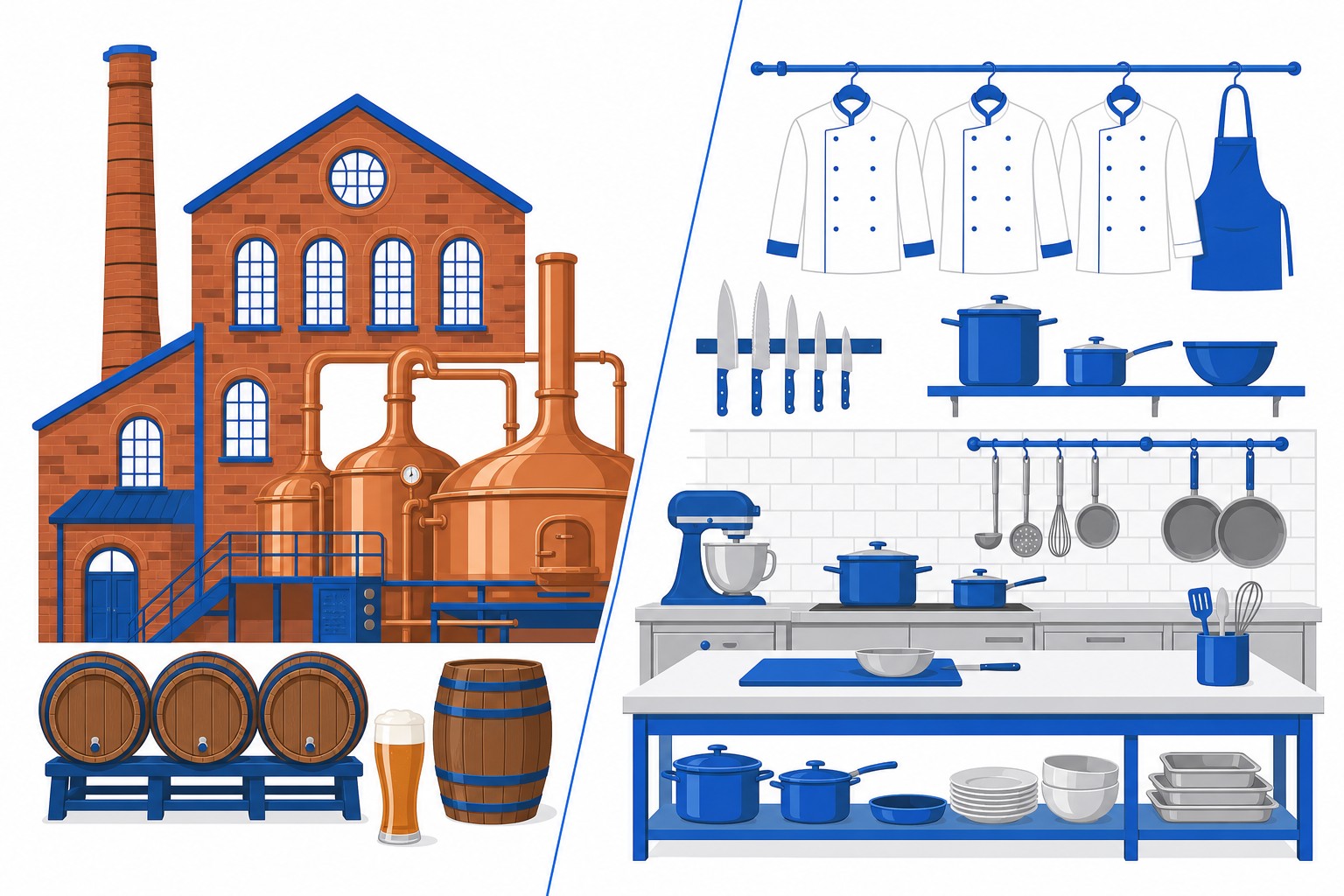
A brewery, not a culinary institute
Cruzcampo is the beer most associated with Seville and, more broadly, Andalusia — the drink of the Feria de Abril, the default order in most tapas bars in the region. What’s far less known outside Spain: Fundación Cruzcampo, the company’s foundation, runs a genuine hospitality training school inside the brewery’s own original factory, and it has been doing so since 1995.
Why a beer company runs a chef school
Fundación Cruzcampo was established to support economic and social development across Andalusia, one of Spain’s regions with persistently high youth unemployment — 30.6% at the end of 2021 alone. Rather than run a generic jobs program, the foundation built its flagship effort around the industry its own product depends on: hospitality. The Escuela de Hostelería trains young people, many without prior experience or formal qualifications, as cooks and dining-service staff, aiming them directly at an industry that’s chronically short of trained entry-level workers.
The classroom is a real restaurant service, not a simulation
The school operates out of Factoría Cruzcampo, the brand’s original factory building, which the foundation converted into what’s described as Spain’s first social-purpose microbrewery when it reopened in 2021. A newer facility, Torre Cruzcampo, opened in 2024 and now handles over 3,000 students a year. The teaching method is deliberately not classroom-only: every class is run as a real service, open to the public, led by working industry professionals — students are cooking and serving actual paying guests while still in training. After the course, students complete a three-month internship at a nationally recognized restaurant, with a genuine path to being hired at the end of it.
 Each class at the Escuela de Hostelería is run as an actual public-facing restaurant service, not a closed classroom exercise.
The numbers, thirty years in
By its 30th anniversary in 2025, the foundation reported nearly €50 million invested and over 17,000 students trained through the Escuela de Hostelería, with more than 100,000 people served as direct or indirect beneficiaries across its wider programs. Its scholarship track, Talento Cruzcampo — now in its sixth edition — reports an 80% employment rate on completion, with more than half of those graduates landing jobs specifically in high-end gastronomy restaurants. An earlier, broader figure from 2021–2022 cited a 90% employment rate for the school generally; the two numbers likely reflect different tracks or measurement windows rather than a contradiction, but either way the placement rate is high for a program specifically built around young people who started with no formal qualifications. One concrete example of the school’s project-based work: a 2021–2022 partnership with the Seville Chamber of Commerce, under Spain’s national PICE youth-employment program, put 200 young people aged 16–29 through 1,050 hours of training across eight courses — kitchen assistant, waiter assistant, basic bakery/pastry, catering service, and cleaning assistant roles. The foundation was awarded Andalusia’s regional Medal of Andalusia in 2022 for its social and economic contribution.
 Graduates complete a three-month internship at a recognized restaurant — the final step before, in many cases, being hired outright.
Why this is more than a CSR line item
Plenty of large food-and-beverage companies fund hospitality scholarships or sponsor culinary competitions as brand marketing. What makes this one worth noting is the structural alignment: Cruzcampo’s own business depends on a functioning restaurant and bar sector in Andalusia, and the region’s hospitality industry depends on a steady supply of trained entry-level staff. Instead of a one-off donation, the foundation built permanent physical infrastructure (a working microbrewery converted into a training site, then a purpose-built tower), a real service-based curriculum, and a direct internship-to-hire pipeline — closer to an actual vocational institution than a marketing initiative, running for three decades and counting.
What this means for hospitality operators thinking about their own hiring pipeline
Kitchen and service staffing is one of the most persistent cost and reliability problems in the industry, and a program like this is a reminder that the solution isn’t always more recruiting spend — sometimes it’s building the pipeline itself.
- Entry-level training partnerships are a genuine staffing lever, not just a CSR gesture — a documented internship-to-hire pipeline reduces the recruiting and onboarding cost of every hire that comes through it.
- Real-service training beats classroom-only training for actual job readiness, since new hires trained this way arrive already used to live service pressure.
- Workforce costs deserve the same rigor as ingredient costs — labor is usually a restaurant’s largest line item, and a hiring pipeline that actually reduces turnover changes the real cost structure more than almost any other single lever.
CalcMenu doesn’t run a hospitality school. It can make sure that once a kitchen is staffed, every dish coming out of it is costed with the same discipline this school puts into training the people who cook it.
Building or refining a hospitality hiring and training pipeline? Book a free 15-minute call with our team — no commitment: Schedule a call.
Related reading
- Tapas has at least three King Alfonso origin legends — and the real explanation is a lot less romantic
- Pintxos have an exact, documented birthplace and decade — a 1930s San Sebastián bar, not a medieval legend
- A Cistercian monastery’s octopus tribute surplus became Spain’s biggest single-dish food festival
Sources
- Escuela de Hostelería — Fundación Cruzcampo
- Fundación Cruzcampo y Cámara de Comercio de Sevilla, unidos para combatir el paro juvenil
- Fundación Cruzcampo celebra sus 30 años brindando por la gente, la hostelería y la cultura cervecera — eldiario.es
- Fundación Cruzcampo cumple 30 años: 50 millones para formar a 17.000 alumnos en Hostelería — El Economista
Explore CalcMenu's recipe management software for restaurants, hotels & catering to see how it applies to your kitchen.
Related sectors
Comments
Comments coming soon.