
Pintxos have an exact birthplace, an exact decade, and a name that means 'stabbed' — everything tapas' origin story doesn't have
While tapas' origin is stuck between at least two competing royal legends, pintxos has the opposite problem: an unusually precise, well-documented modern origin story, traced to a specific 1930s San Sebastián bar, a bread-and-toothpick format invented to solve one practical problem. The name itself comes from the Spanish verb for "to pierce" — the toothpick is the whole point, not decoration.
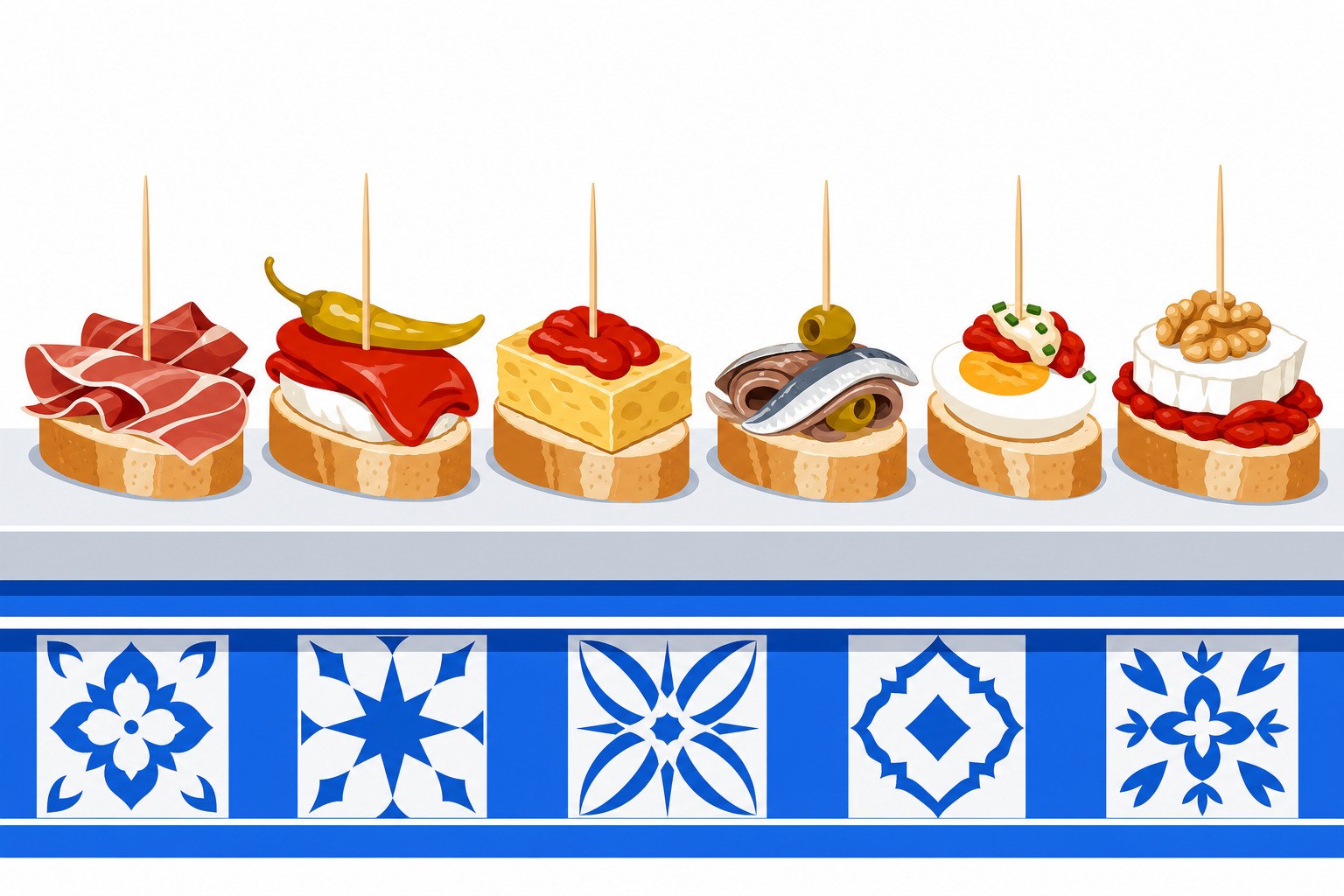
A name that describes its own mechanism
Pintxo (also spelled pincho) comes directly from the Spanish verb pinchar — to pierce or stab. That’s not a stylistic flourish; it’s a literal description of the format: a slice of bread topped with one or more ingredients, held together by a toothpick or small skewer so the whole thing survives being picked up and eaten standing at a bar. The toothpick isn’t garnish. It’s structural, and it’s the reason the dish has this name at all.
An unusually precise origin, for a food tradition
Unlike tapas — whose origin is genuinely contested between at least two mutually exclusive royal legends and a far more mundane practical explanation — pintxos has a specific, well-documented modern birthplace: San Sebastián, in Spain’s Basque Country, in the 1930s. The commonly cited account traces the format to La Espiga, a San Sebastián bar that began serving a slice of bread with ingredients on top, held in place by a toothpick specifically so the toppings wouldn’t slide off. The toothpick itself picked up two names early on — pincho (skewer) and, more colorfully, banderilla, after the barbed stick used in bullfighting, driven into a bull’s back — a very Basque, very specific piece of cultural borrowing that tapas’ origin story has no equivalent of.
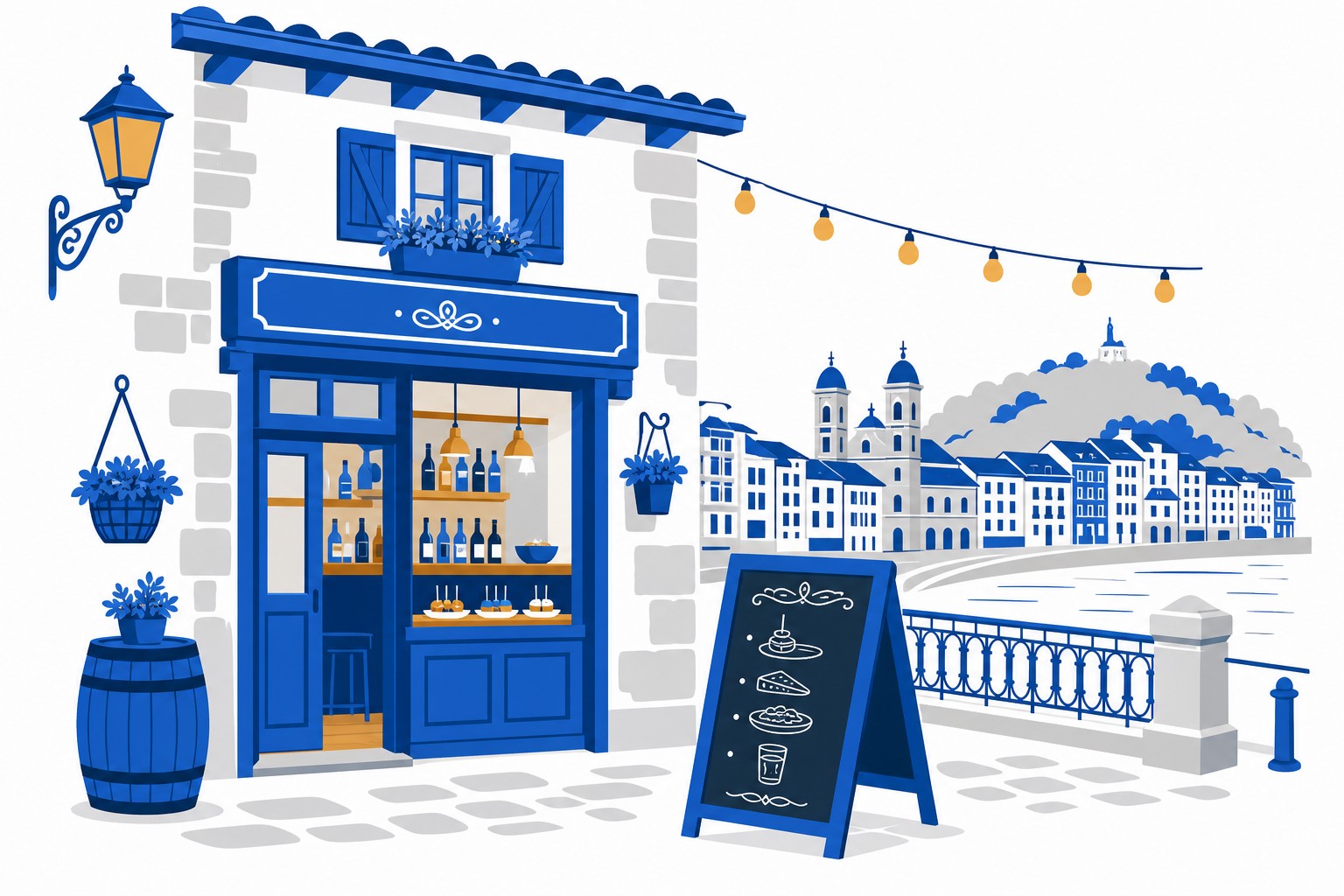 San Sebastián — where the pintxo format traces to one specific bar in the 1930s, not a centuries-old legend.
Regional, not just stylistic
San Sebastián and Bilbao remain the undisputed centers of pintxo culture today, and the regional distinction from tapas isn’t just about the toothpick. In the rest of Spain, tapas are frequently offered free with a drink order — a holdover from the “cover the glass” practical origin covered in this blog’s companion piece on tapas. In the Basque tradition, pintxos are individually ordered and paid for, typically displayed along the bar for customers to choose from directly, and eaten in one or two bites rather than shared communally the way a tapas plate often is. The two traditions solve a similar problem — small food, paired with a drink, meant to be sociable — through genuinely different formats, different economics, and, as it turns out, completely different origin timelines.
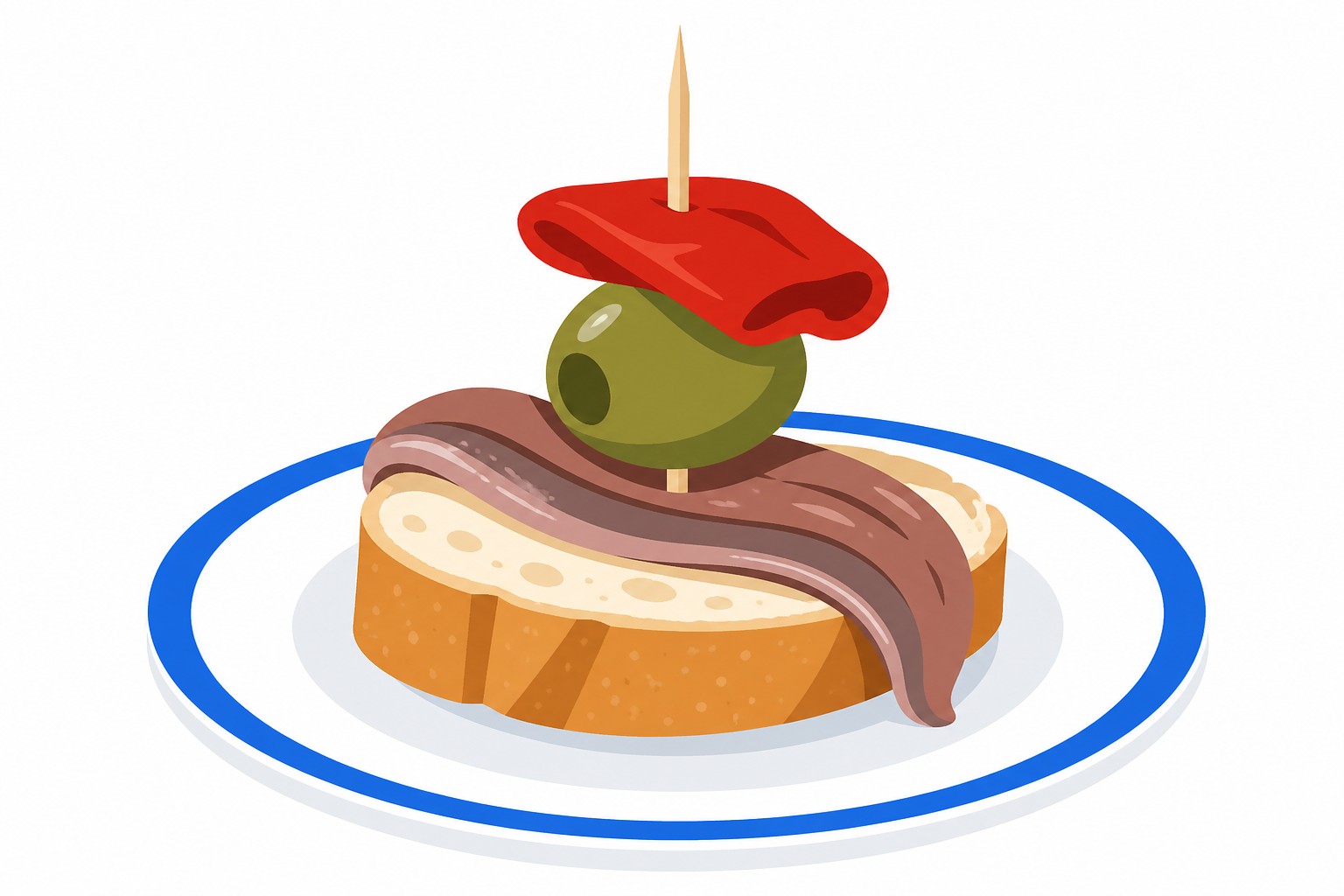 The toothpick isn’t decoration — it’s the structural detail that gives the pintxo its name.
Two Spanish small-plate traditions, four centuries apart in how old their stories claim to be
Line the two up and the contrast is almost too neat: tapas’ earliest legend reaches back to the 13th century and still can’t produce a single agreed-upon origin, while pintxos’ actual history is barely a century old and is tied to one specific bar in one specific decade. Older doesn’t always mean better documented — sometimes the opposite is true, and the more recent tradition is the one with the paper trail.
What this means for a pintxos or small-plates program
If pintxos or a Basque-style bar format is part of your concept, the operational lesson is the same one tapas’ post makes from the other direction: a well-documented origin story is worth using accurately, and the format’s actual mechanics — individual ordering, bar display, per-item pricing — have real costing implications.
- Per-item costing, not per-plate — pintxos’ individually-ordered format means every single item needs its own accurate cost and price, not a blended average.
- Display-driven waste planning, since bar-top display formats have different spoilage and turnover dynamics than made-to-order tapas.
- Recipe consistency at very small scale, where a single ingredient’s cost swing matters proportionally more on a one-bite item than on a full plate.
CalcMenu can’t recreate La Espiga’s original 1930s recipe. It can make sure every pintxo on your bar is costed as precisely as its own toothpick holds it together.
Running a pintxos or Basque-style small-plates bar? Book a free 15-minute call with our team — no commitment: Schedule a call.
Related reading
- A Seville brewery has trained over 17,000 young chefs and waiters since 1995 — with an 80% job-placement rate
- A Cistercian monastery’s octopus tribute surplus became Spain’s biggest single-dish food festival — the same order shaped Galicia’s wine terraces and its strangest delicacy too
- Tapas has at least three King Alfonso origin legends — and the real explanation is a lot less romantic
- The Manila galleon connected Mexico and the Philippines for 250 years
Sources
- Basque Pintxos versus Galician Tapas — Euskal Kazeta
- Pintxos: the Tapas of the Basque Country — Butterfield & Robinson
- The Pintxo and the Tapa — San Sebastian Pintxos Tours
- What’s The Difference Between Tapas And Pintxos? — Tasting Table
- Pintxos vs tapas: know the difference — Catalonia Hotels & Resorts
Explore CalcMenu's recipe management software for restaurants, hotels & catering to see how it applies to your kitchen.
Related sectors
Comments
Comments coming soon.