
A crumb cake from the villages around Mainz travelled to the Volga with 18th-century colonists, endured a difficult chapter of 20th-century displacement, and came home two centuries later under the exact same name
Riwwelkuche — a yeast-dough streusel cake tied to the Palatinate's centuries-old Kerwe village fairs — isn't just a regional coffee-table tradition around Mainz. Catherine the Great's 1760s settlers carried it to the Volga, where the community that kept baking it lived through a genuinely hard 20th century, and came back to Germany with the Russlanddeutsche resettlers of the 1990s, still called by its original name.
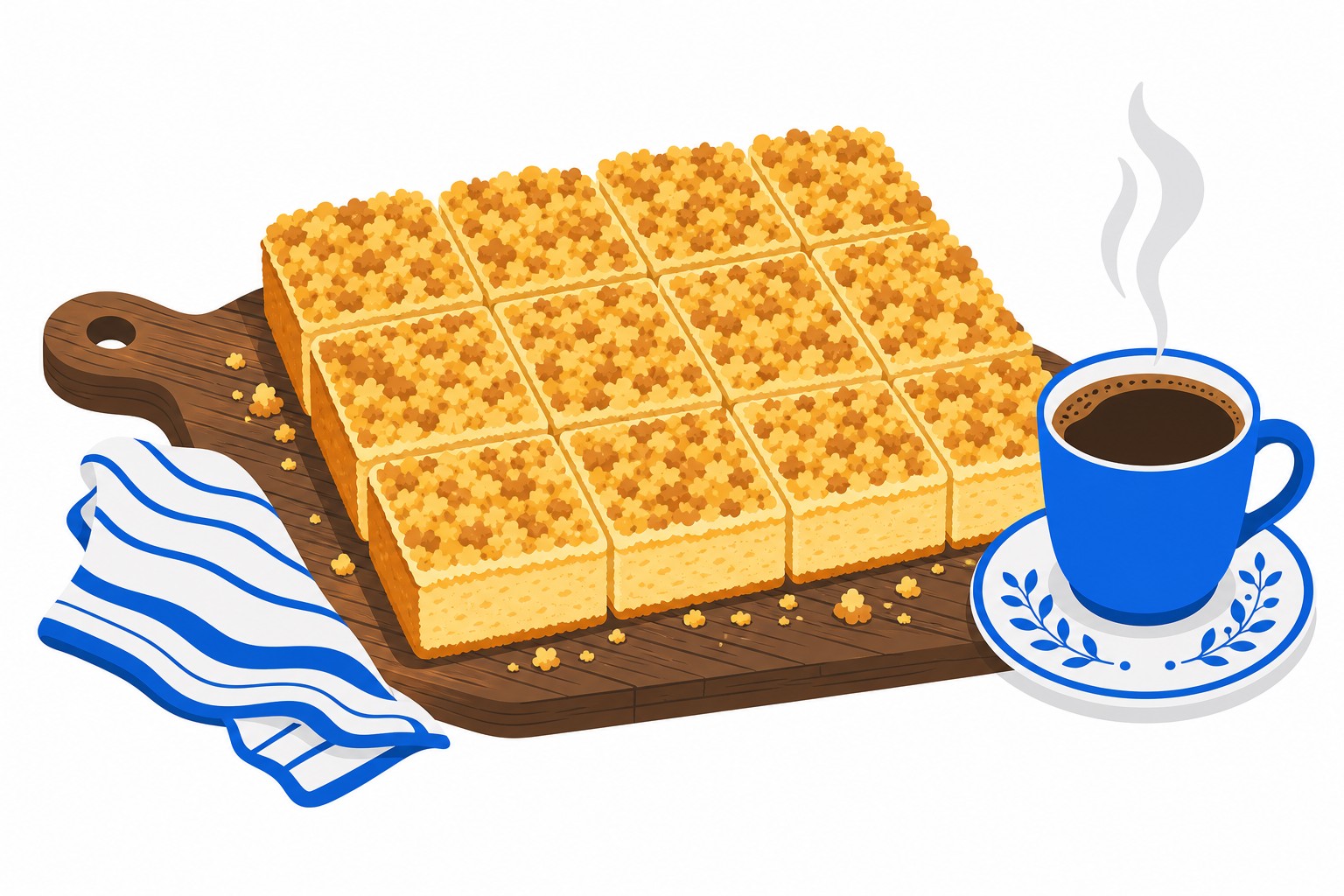
The tradition is real, and it has a name most people outside the region have never heard
The German “pie and coffee” instinct isn’t folklore — it’s a specific, genuine regional institution called Riwwelkuche (also spelled Ribbelkuchen or Rivvelkuche, depending on the village), a flat yeast-dough sheet cake topped with Streusel — a crumbly mix of butter, sugar, and flour, sometimes with plums, apples, or apricots baked in. It belongs to the Palatinate (Pfalz) and Rheinhessen regions of Rhineland-Palatinate, the state whose capital is Mainz, and it sits at the center of the broader German Kaffee und Kuchen — coffee and cake — ritual, an afternoon institution that traces back to coffee’s arrival in Germany in the 17th century.
Tied to a specific, centuries-old festival
Riwwelkuche isn’t generic bakery-shelf cake — it’s specifically associated with Kerwe, the Palatinate’s village church-consecration fair, derived from the medieval word Kirchweih. Kerwe has been a fixed date on the village calendar for centuries; until the 1920s, it was, alongside Christmas, the most important festival of the year in many Palatinate villages. Over 50 Kerwe festivals still run annually across the region between May and November, many of them in wine villages where the fair doubles as a Weinfest — a wine festival — and Riwwelkuche is one of the standing festival foods alongside bratwurst and crepes. Some towns run dedicated Riwwelkuchefeste built entirely around the cake itself.
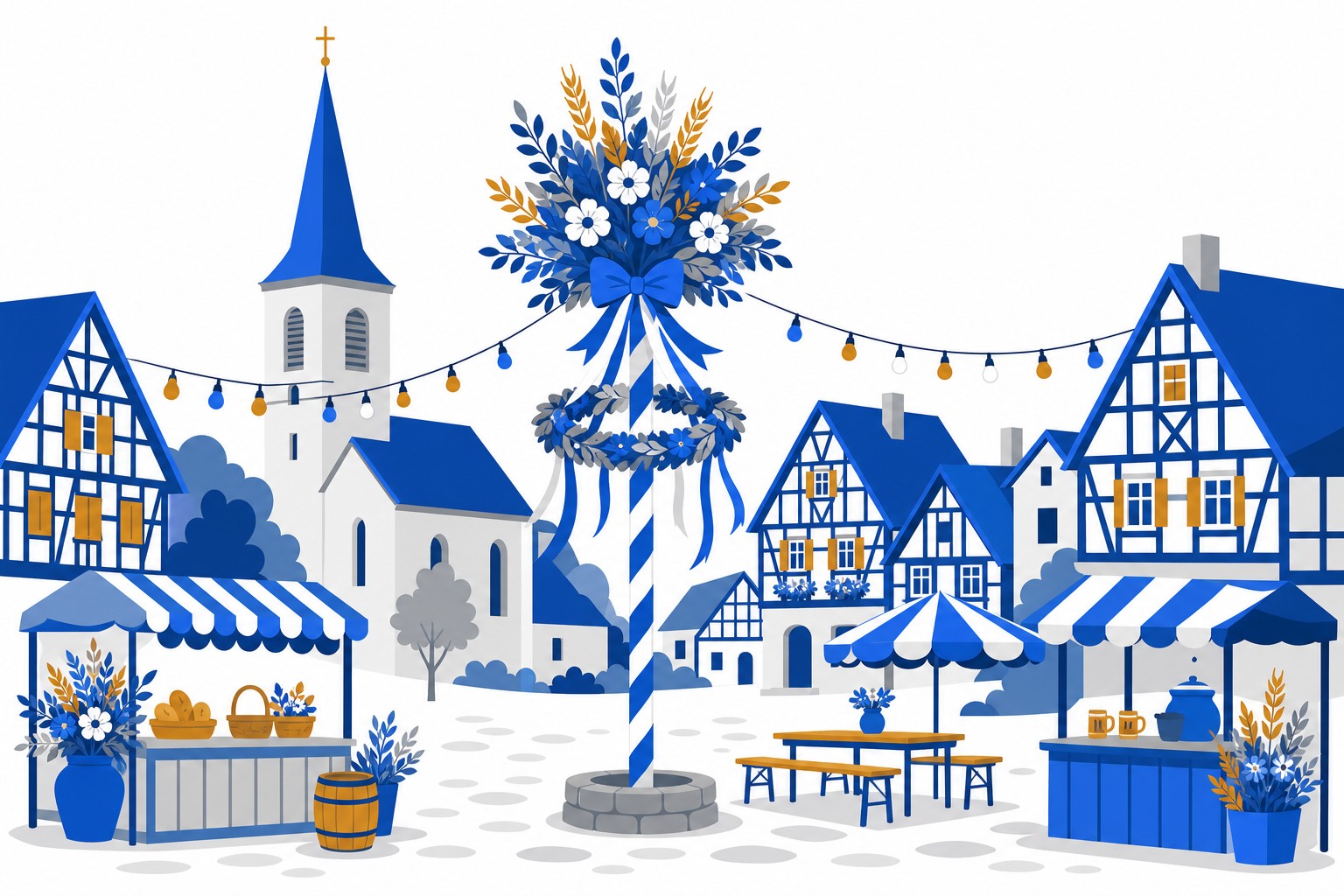 Kerwe — the Palatinate’s village church-fair tradition Riwwelkuche belongs to, a fixed date on the calendar for centuries.
Then it traveled two thousand kilometers east
Here’s the part that turns a nice regional food tradition into a genuinely remarkable migration story. Between 1763 and 1767, Catherine the Great invited German settlers — many specifically from the Palatinate, Hesse, and the Rhineland — to colonize the lower Volga region of the Russian Empire. An estimated 104 villages were founded by these Wolgadeutsche (Volga Germans), and they carried their regional foodways with them, Riwwelkuche included, into a homeland thousands of kilometers from where the recipe originated.
A cake that outlasted a genuinely hard century
The 20th century was difficult for that community, in ways shared by many displaced populations across that era of European and Soviet history. Roughly 400,000 Volga Germans were relocated to Siberia and Central Asia in 1941 amid the upheaval of wartime policy, with many drawn into labor-army camps under harsh conditions. Through relocation and decades of life inside the Soviet Union, Riwwelkuchen — the community kept the German name — remained a standing part of Russian-German home baking, reportedly considered essential at Christmas specifically. It became, in a very literal sense, a portable marker of an identity that endured through genuine hardship.
And then it came home, to a homeland most of them had never lived in
Beginning in the late 1980s as the Soviet Union opened up and then collapsed, the majority of the remaining Volga German community — the Russlanddeutsche resettlers, or Aussiedler — migrated to Germany, a country most of them had never set foot in, carrying a two-century-old regional dialect, cultural identity, and food tradition with them. Riwwelkuchen came back to the country it left in the 1760s, under the same name, baked by descendants of people who’d never lived in Germany, arriving in a country that had kept baking its own regional version the entire time.
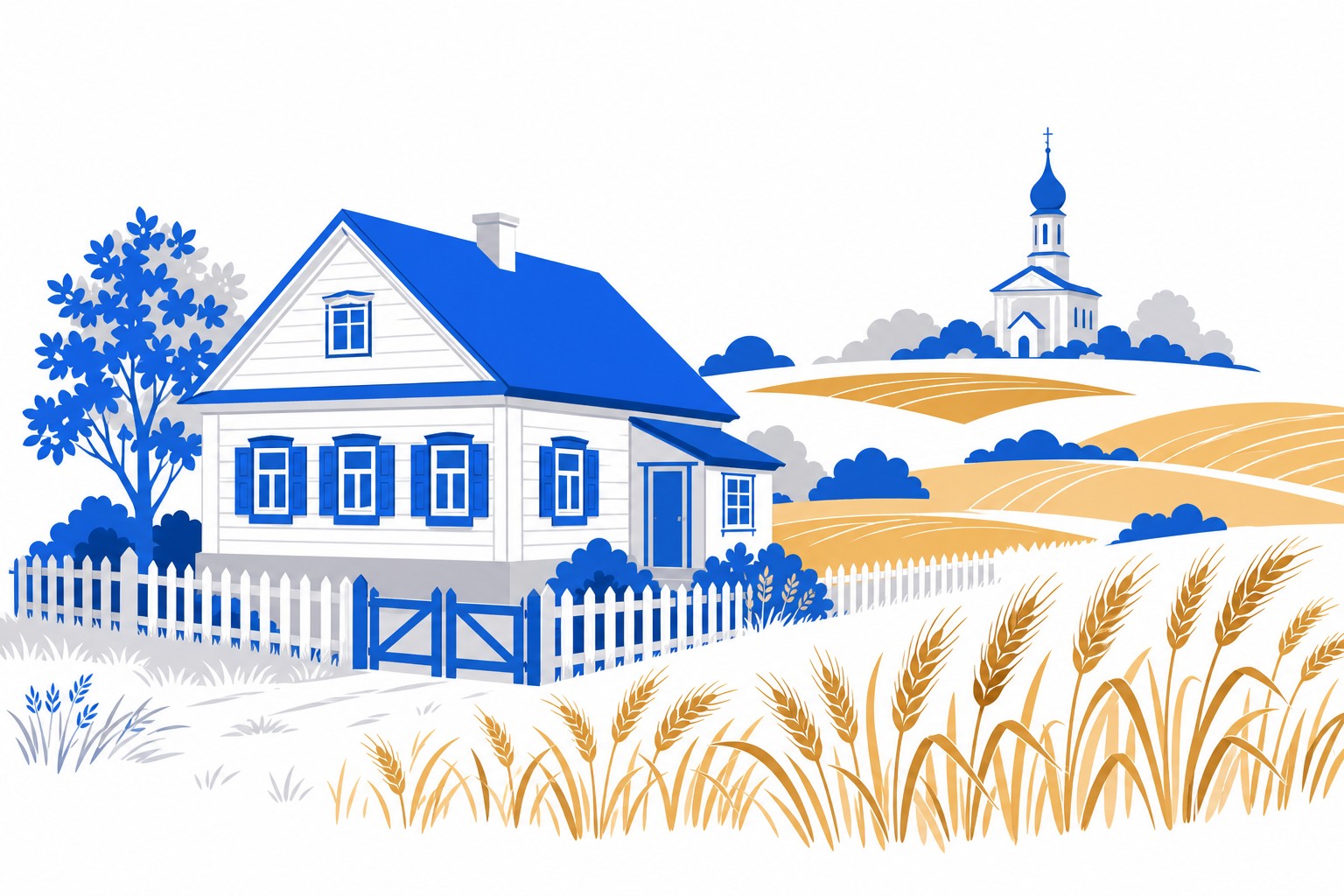 A Volga German village, two thousand kilometers from the Palatinate — where Riwwelkuchen survived a genuinely difficult chapter of the community’s 20th century.
Two Riwwelkuche traditions, one name, worth knowing as one story
What makes this genuinely interesting rather than just a nice coincidence is that both threads are still alive today, independently: Palatinate villages around Mainz still bake Riwwelkuche for Kerwe every summer and autumn, exactly as they have for generations, while Russlanddeutsche communities across Germany bake their own version at Christmas, carrying a parallel two-century history inside the same name. Most people encountering either version have no idea the other one exists.
What this means for a menu built around a regional or heritage recipe
Whether it’s a genuinely centuries-old regional dish or one carried home by a resettled community, the operational lesson is the one this series keeps returning to: a recipe’s history and its cost structure are two separate systems, and the story only holds up if the numbers behind it are just as solid.
- Recipe-level documentation for yeast-dough and streusel ratios, where small variations genuinely change the result and the cost.
- Seasonal and festival-driven demand planning, since a dish this tied to a specific fair calendar sees real, predictable demand spikes worth planning for.
- Honest sourcing when a dish carries a real migration story — Riwwelkuche’s actual history is more interesting than any invented one would be.
CalcMenu can’t settle whether the “real” Riwwelkuche is the Palatinate version or the Russlanddeutsche one — both communities have a genuine claim. It can make sure whichever version is on your menu is costed and documented with the same rigor as everything else on it.
Running a kitchen or café with a regional or heritage recipe on the menu? Book a free 15-minute call with our team — no commitment: Schedule a call.
Related reading
- In 1982, a third of every restaurant in the Netherlands served Indonesian food under a Chinese sign
- Your grandparents didn’t have a zero-waste kitchen because they were virtuous
Sources
- Kaffee und Kuchen: The history behind a very German tradition — The Local Germany
- Kerwe in der Pfalz – Alle Kirchweihfeste & Termine — Pfalzfeste
- Bräuche und Feste im Jahreslauf: Die Kerwe — Pfalzgeschichte
- Pälzer Riwwelkuche (Pfälzer Streuselkuchen) — Dr. Oetker
- Von „Riwweln” und „Streuseln” — SV 1911 Traisa
- Wolgadeutsche — Wikipedia (DE)
- Wer sind die Russlanddeutschen? — Bundeszentrale für politische Bildung
- Riwwelkuchen gibt es immer — vitamin de
- Schwarzbrot und Riwwelkuchen – Eine deutsche Bäckerei in Sibirien — rusdeutsch.eu
Explore CalcMenu's recipe management software for restaurants, hotels & catering to see how it applies to your kitchen.
Related sectors
Comments
Comments coming soon.