
A Swiss cheese cartel invented fondue as the country's 'national dish' in the 1930s to offload a surplus — Fribourg's Gruyère-and-Vacherin 'moitié-moitié' is the one regional variant that never fit the marketing formula
Cheese fondue reads as the most obviously 'traditional' Swiss dish there is. For over two centuries it was actually a minor, regional, French-speaking Swiss specialty — until a government-backed cheese cartel needed to get rid of a production surplus in the 1930s and manufactured it into a national symbol almost from scratch. Fribourg's own half-Gruyère, half-Vacherin Fribourgeois version sits slightly outside that story, built from the canton's own cheese rather than the cartel's homogenized formula.
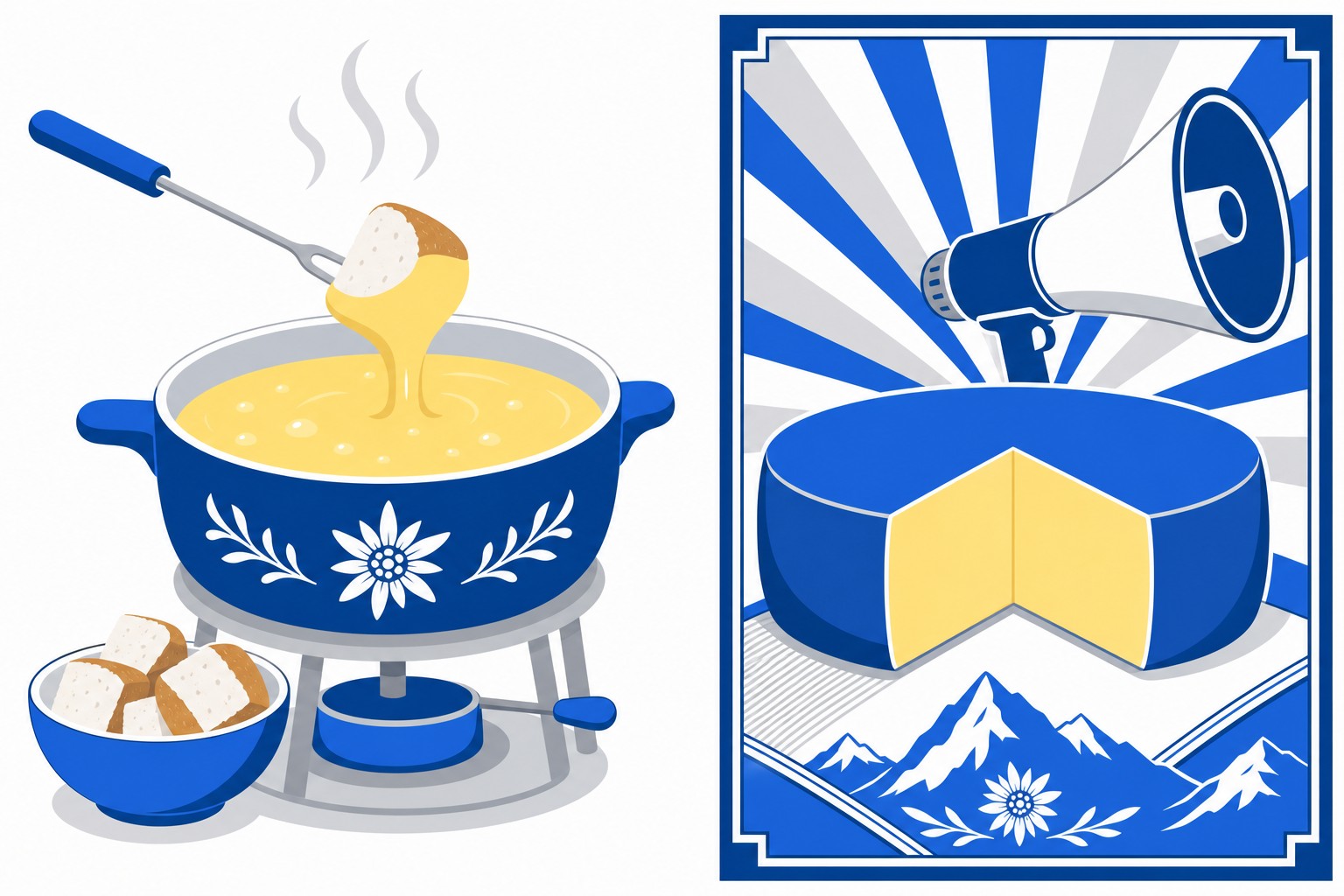
The most “Swiss” dish there is was, for two centuries, a minor regional one
Cheese fondue is about as close to a universal shorthand for “Switzerland” as food gets. The actual history is far less tidy: the first modern written recipe appears in a 1699 Zurich cookbook, and for more than two hundred years afterward, fondue stayed exactly what that origin suggests — a regional specialty, known mostly in French-speaking Switzerland, nowhere near a national dish. What changed that wasn’t a chef, a festival, or organic popularity. It was a cheese cartel with a surplus problem.
The surplus that needed solving
Switzerland stayed neutral through the First World War, but its major cheese-export markets across the rest of Europe did not come out of that war in any shape to keep buying. Production kept running ahead of what the country’s own population could realistically eat. In 1914, with government backing, the Swiss Cheese Union (Schweizerische Käseunion AG) was formed to manage the problem — and it became a genuine cartel, controlling milk prices, dictating how much cheese producers could make, and, remarkably, narrowing the country’s cheese diversity from well over 1,000 traditional local varieties down to roughly seven officially sanctioned types, dominated by Gruyère and Emmental.
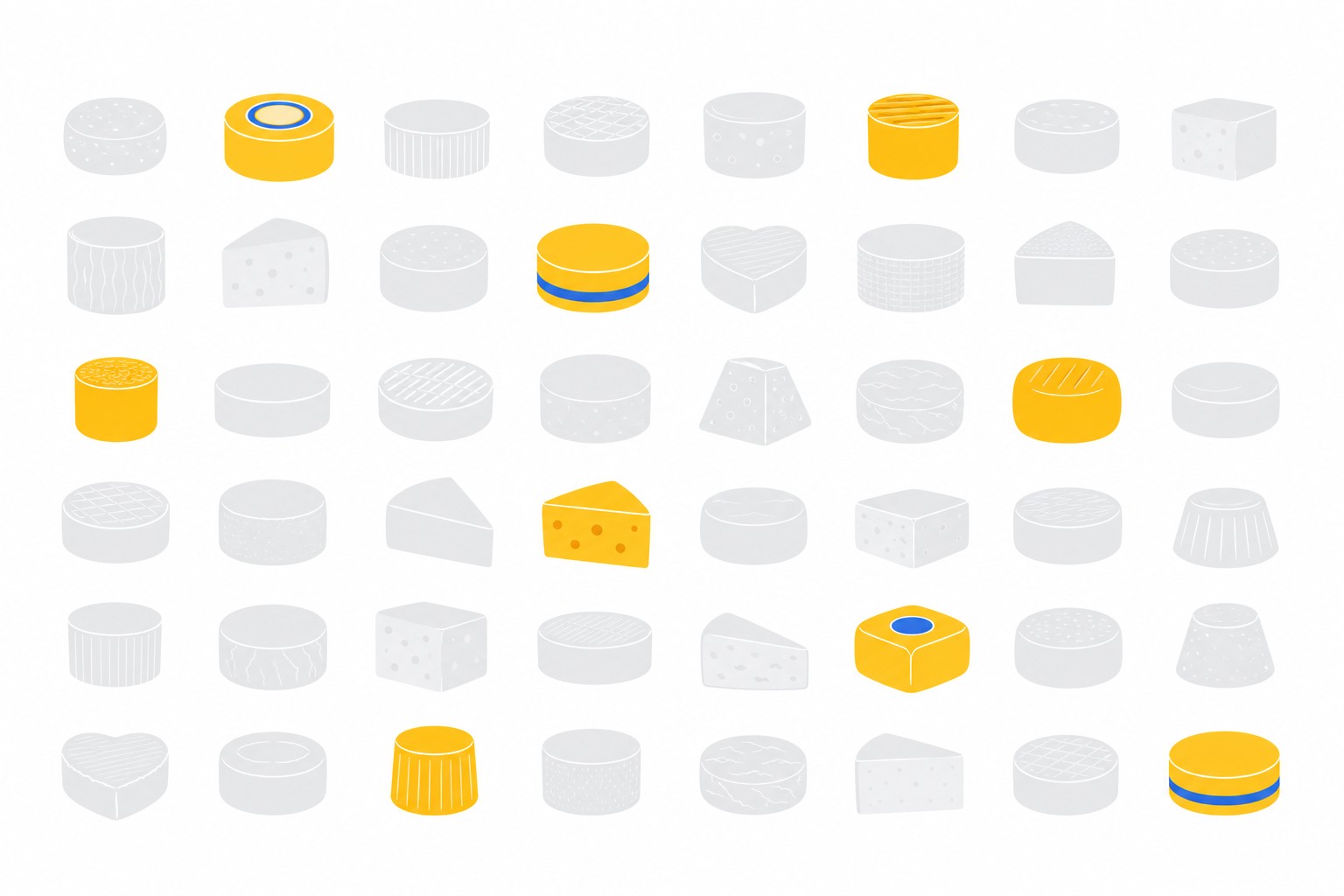 The Swiss Cheese Union didn’t just sell cheese — it narrowed the country’s cheese diversity from over a thousand traditional varieties down to roughly seven approved types.
Manufacturing a national dish, on purpose
The Union’s solution to the surplus was a genuinely deliberate, decades-long marketing campaign, running from the 1930s into the 1970s: it mailed fondue recipes directly to households, scaled from four servings up to a hundred, explicitly designed to normalize cooking with large quantities of cheese at once. Advertising leaned on Heidi imagery to sell “wholesome, authentic” Swiss identity, marketed fondue as an “Alpine specialty” despite its actual roots in lowland and Jura towns, and ran “fondue weather” posters pairing snow and rain with the emotional pull of a shared pot. One marketing angle framed a pot of melted cheese and wine as a healthy snack. It worked: before roughly 1930, fondue was a French-speaking-Switzerland dish; within a decade, it was a national one. The Union itself didn’t survive its own success cleanly — it dissolved in 1999 amid corruption charges against its officials, and reporting since has found some in the restaurant industry now downplaying the connection, describing themselves as “survivors” of the cartel rather than beneficiaries of its marketing.
The exhibition circuit, and the invented “regions”
The campaign didn’t stop at Swiss borders or at genuinely regional variants. Switzerland had tested a manufactured alpine-identity formula once before, decades earlier: the 1896 Geneva National Exhibition built an elaborate “Village Suisse” pavilion — an artificial mountain, 56 reconstructed houses, and over 3,500 people in traditional costume, one of the exhibition’s biggest draws. One modern account claims fondue itself was served within that constructed village, though that specific detail isn’t independently confirmed elsewhere and is worth treating as a single-sourced claim rather than settled fact. What is well documented is fondue’s international debut: the Swiss Pavilion at the 1939 New York World’s Fair introduced American visitors to dipping bread into a shared pot of melted cheese, repeated again at the Swiss Pavilion’s Alpine restaurant at the 1964 New York World’s Fair. Back home, the Union went further than promoting one dish — it invented several “pseudo-regional” fondue recipes as part of what was explicitly framed as Switzerland’s “spiritual defense” (Geistige Landesverteidigung), a real interwar cultural-political movement asserting national identity against fascist and communist ideological pressure from neighboring countries. Wikipedia’s own fondue entry is blunt about it: “regional names used for some of these variants are factitious, and do not reflect genuine regional traditions.” The slogan that stuck, “figugegl” — short for the Swiss German “Fondue isch guet und git e gueti Luune” (“fondue is good and puts you in a good mood”) — dates specifically to 1981. One account puts Swiss public awareness of fondue at just 39% in 1954, rising to 80% by 1982 — a number that, if accurate, would mean most living Swiss adults today grew up in a country where fondue’s “traditional” status was still being actively built.
Where Fribourg’s moitié-moitié sits outside that story
Fribourg’s fondue moitié-moitié — equal parts Gruyère AOP and Vacherin Fribourgeois AOP, a splash of white wine, cornstarch to bind it, garlic and pepper — doesn’t actually match the cartel’s homogenized national formula at all. That formula leaned on Gruyère and Emmental; moitié-moitié instead pairs Gruyère with the canton’s own Vacherin Fribourgeois, a cheese distinct enough to keep its own AOP protection. Some regional accounts trace the specific half-and-half combination back to the 1850s, which — if accurate — would put its origin well before the 1930s national campaign entirely, making it less a product of the marketing push than a locally rooted alternative that simply existed alongside it. The documentation for that exact date is thinner than the well-recorded cartel history, so it’s worth treating as a regional tradition claim rather than a settled fact.
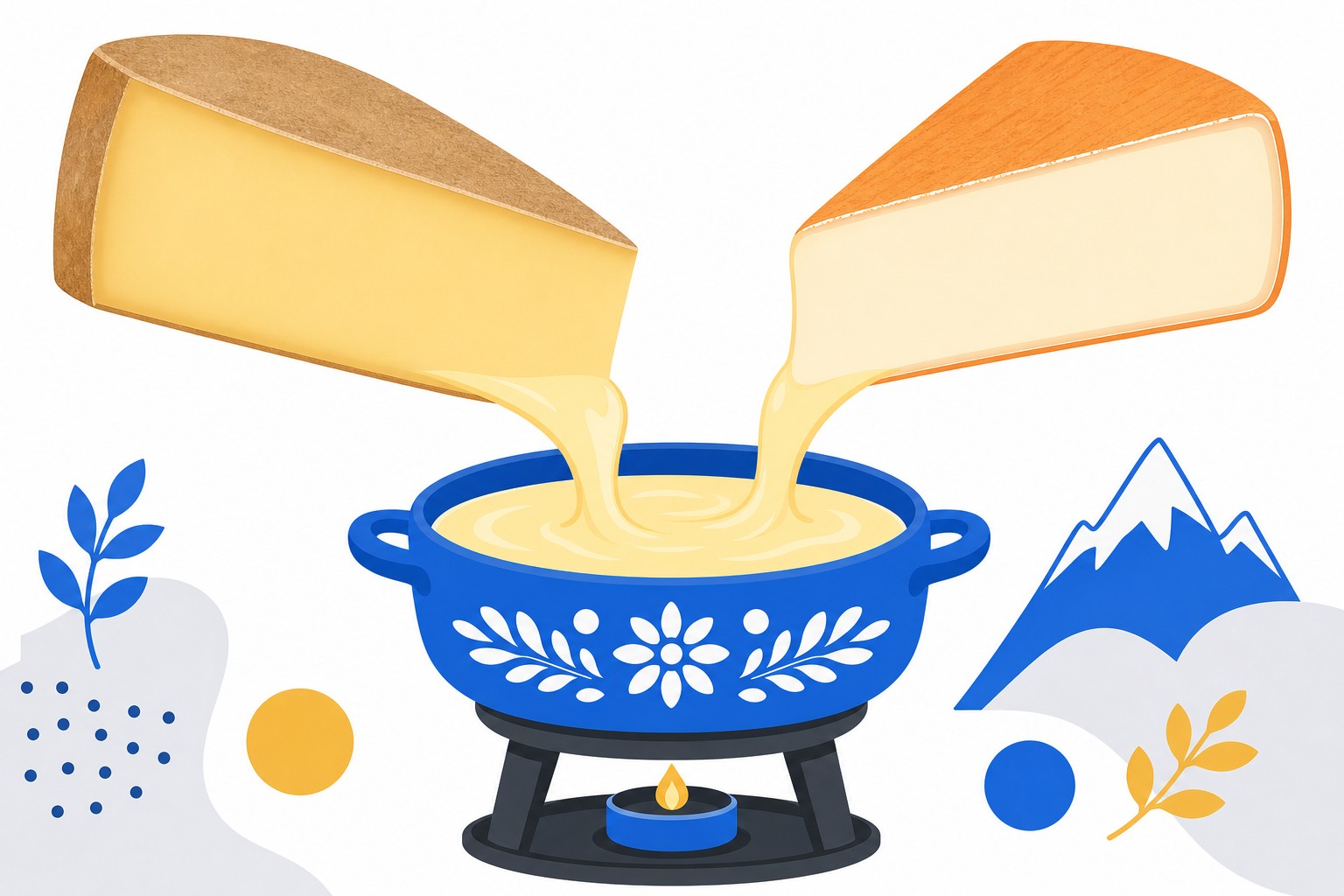 Moitié-moitié pairs Gruyère AOP with Fribourg’s own Vacherin Fribourgeois AOP — a genuinely different formula from the cartel’s Gruyère-and-Emmental national version.
A cheese with its own legend attached
Vacherin Fribourgeois comes with its own separate origin story, worth flagging clearly as folklore rather than documented history: local legend credits a young cowherd named Vaccarinus with inventing the cheese in 1265, upon returning from a trip to Catalonia, and even credits him with a pure-Vacherin fondue not long after. It’s a charming story and a genuinely old one as legends go — but it’s a legend, not a sourced historical account, and it predates any actual documented fondue recipe by more than four centuries.
Why this belongs in a series about menu storytelling
Fondue’s real history is a genuinely useful reminder that “traditional” and “invented deliberately for commercial reasons” aren’t opposites — a dish can be both, and the fact that a marketing campaign built the myth doesn’t make the dish itself any less real today.
- A dish’s popularity and its origin story are separate facts — fondue is genuinely beloved today regardless of how deliberately its “tradition” was constructed in the 1930s.
- Regional variants often carry more accurate provenance than the “national” version — moitié-moitié’s actual ingredients trace to Fribourg’s own cheese, not the cartel’s homogenized formula.
- AOP-protected ingredients are a real sourcing and costing variable, not just a menu-copy flourish — Vacherin Fribourgeois AOP and generic filler cheese are not interchangeable in cost or in the dish’s own claim to authenticity.
CalcMenu can’t settle whether Fribourg’s version predates the national marketing campaign by eighty years or not. It can make sure that whichever fondue is on your menu, Gruyère-Emmental or Gruyère-Vacherin, is costed accurately for the cheese actually going into the pot.
Running a menu built around a “traditional” dish with a more complicated real history? Book a free 15-minute call with our team — no commitment: Schedule a call.
Related reading
- In 1964, a Swiss hospital-catering association got fed up with trays that fit nobody’s oven — the container system it invented that afternoon still runs almost every professional kitchen in Europe
- Switzerland’s favorite ‘exotic’ dish is curried rice with tinned pineapple, invented by a hotelier who spotted the name on a London menu
Sources
- Swiss Cheese Union — Wikipedia
- Fondue — Wikipedia
- The History of Fondue and the Cheese Cartel that Popularized It — Now I Know
- You Can Thank A Swiss Cartel For Fondue’s Once-Massive Popularity — Tasting Table
- La fondue, moitié-moitié au Vacherin Fribourgeois — Fribourg.ch
- Fondue moitié-moitié — Wikipédia
- La mythique fondue moitié-moitié — Gruyère Traditions
Explore CalcMenu's recipe management software for restaurants, hotels & catering to see how it applies to your kitchen.
Related sectors
Comments
Comments coming soon.