
Switzerland's favorite 'exotic' dish is curried rice with tinned pineapple, invented by a hotelier who spotted the name on a London menu — and the Swiss Army served it to conscripts anyway
Riz Casimir — curry-spiced rice, banana, pineapple, cherries and almonds — has been a Swiss comfort-food fixture since 1952. It wasn't invented by a chef, or in India, or anywhere near Kashmir, whatever its name suggests. It came from Mövenpick founder Ueli Prager, a restaurateur who built an entire hospitality empire on the same instinct: take something people think they can't have, and make it work at scale.
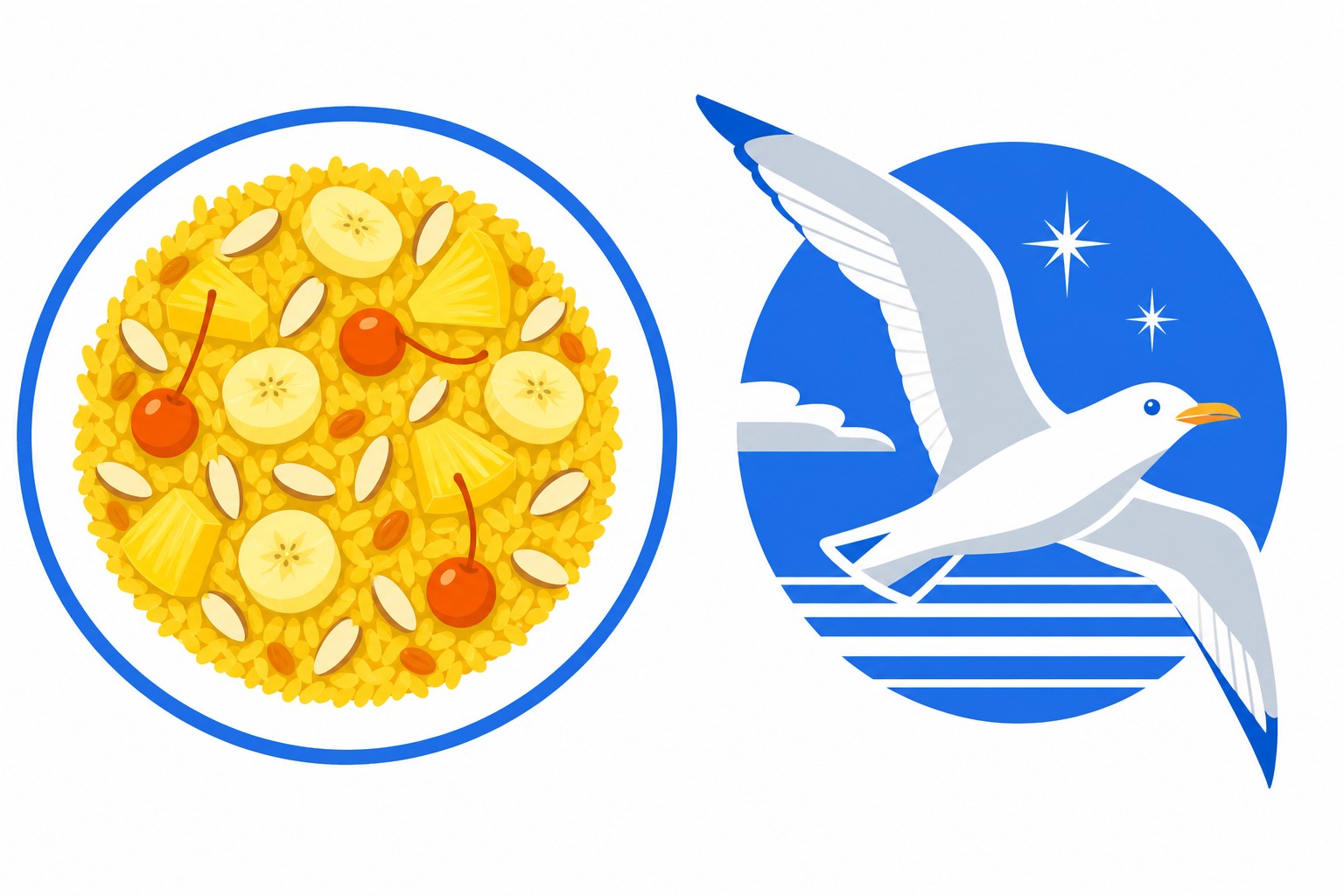
A curry with a name nobody in Kashmir would recognize
Riz Casimir is rice, mild curry sauce, sliced veal or chicken, and a genuinely unusual topping for a savoury dish: banana, pineapple, cherries and roasted almond slivers, all served warm. Ask a Swiss person over 40 about it and you’ll get instant recognition, maybe a little nostalgic wince — it’s the dish half the country ate at family lunches, ski camps, and, as it turns out, in the army. Ask anyone in Kashmir about it and you’ll get a blank stare. The name is the whole joke: it sounds like it should mean something, and it doesn’t, quite.
The man who invented it had never run a kitchen like this before either
The dish traces to Ueli Prager, who opened the first Mövenpick restaurant in Zürich in 1948. Prager wasn’t a chef by training — he was a restaurateur with, by every account, an almost compulsive curiosity, reportedly known to call his own staff at 11pm with a new idea he’d just thought of. On a trip to London in the late 1940s, he came across curry dishes advertised with “Kashmir” in the name. Curry was essentially unknown in Switzerland at the time, and real Kashmiri-style spicing would have been far too aggressive for the local palate Prager was building a business around. So he built a milder version, added the fruit and almonds, and put it on the menu in 1952 as Riz Casimir — Kashmir, softened into something a Swiss name day could handle.
Mövenpick — “seagull’s peak” — got its name the same way its most famous dish got invented: Prager saw something, and adapted it into something new.
The seagull, the tablecloths, and the wine you could actually just order a glass of
Mövenpick’s own name and logo have a similarly casual origin story: Prager reportedly watched a seagull snatch food out of mid-air and decided that was the brand — fast, elegant, no fuss. That “no fuss” instinct showed up everywhere in how he actually ran restaurants, and it was genuinely disruptive for Swiss dining norms at the time: he dropped tablecloths in favour of simple table settings, ditched the assumption that a proper meal meant a mandatory multi-course menu, and — a small thing that mattered a lot — let customers order wine and champagne by the glass, instead of forcing a full bottle. None of this sounds radical now. In late-1940s Switzerland, it was a genuine departure from a stuffy, class-coded restaurant culture, marketed under Prager’s own slogan: “first class for everyone.”
 Dropping the tablecloth and selling wine by the glass rather than the bottle were small changes that broke with a genuinely rigid Swiss restaurant convention.
The actual business trick: making “expensive” cheap through standardized process
The part of Prager’s approach most relevant to running a kitchen today wasn’t the wine or the dropped tablecloths — it was what he called Systemgastronomie, roughly “system gastronomy”: standardizing processes across every Mövenpick location so consistently that dishes considered luxuries elsewhere, like fish and scampi, could be sold at genuinely accessible prices without the quality collapsing. That’s a real, documented cost-control strategy, distinct from just “a good recipe” — it’s operational discipline applied at scale, which is exactly why Mövenpick could grow from one Zürich restaurant to 600 employees by 1958 without the food quality becoming a lottery depending on which branch you walked into.
The tinned-fruit industry noticed too
Riz Casimir got popular enough that it stopped being a Mövenpick-only dish and became a genuine national fixture: Betty Bossi, Switzerland’s dominant recipe-and-cookbook brand, published a version starting in 1968, and the canning company Hero marketed tinned fruit specifically packaged for making Riz Casimir at home. It reportedly became such a fixture that it showed up in Swiss Army rations — a curry dish, invented to make the exotic feel safe, ending up served to conscripts as an entirely unremarkable, everyday meal.
 Hero, the Swiss canning company, marketed tinned fruit specifically for making Riz Casimir at home — a sign of exactly how mainstream the dish became.
What happened to it, and to Prager
Riz Casimir’s popularity has faded since its peak — once actual Indian, Thai and other genuinely spiced cuisines became widely available in Switzerland, a mild fruit-and-curry rice dish started to read as quaint rather than exotic. It hasn’t disappeared, though; it still turns up on cafeteria and comfort-food menus decades later, more nostalgia dish than novelty now. Mövenpick itself kept expanding well past the restaurant — coffee in 1963, ice cream in 1969, hotels from 1973 (starting at Zürich airport), Egypt from 1975, and the self-service Marché restaurant concept in 1983. Prager’s own ending was less tidy than his business: unable to settle succession among his six children, he handed the company to his third wife in 1988, watched it decline, sold his majority stake in 1992, and moved to London, where he died in 2011 at 95 — having spent a career making the unfamiliar feel affordable and ordinary, right up to the dish that outlived his own control of the company that invented it.
Why this belongs in a series about menu costing
Riz Casimir is a fun story on its own, but the more useful fact underneath it is Systemgastronomie itself: a chain can only make an “expensive” ingredient affordable if its processes — not just its recipes — are standardized enough to hold the cost line at every single location.
- Standardized recipes are a pricing tool, not just a consistency one — the same discipline that let Mövenpick sell scampi affordably works for any premium ingredient on a modern multi-site menu.
- A signature dish needs a real cost model, not a per-location guess, especially once it’s popular enough to be ordered constantly.
- Nostalgia and nutrition claims both need accurate backing — a dish this identity-laden invites scrutiny, and the story should hold up as well as the costing does.
CalcMenu can’t invent your Riz Casimir. It can make sure that once you have one, every location serves it at the same cost, the same portion, and the same quality — the same problem Prager was solving in 1952, with better tools.
Running a multi-site kitchen that needs one recipe to cost and taste the same everywhere? Book a free 15-minute call with our team — no commitment: Schedule a call.
Related reading
- In 1964, a Swiss hospital-catering association got fed up with trays that fit nobody’s oven — the container system it invented that afternoon still runs almost every professional kitchen in Europe
- Zero-waste kitchens weren’t a virtue — they were a necessity before food got cheap
- Rijsttafel and vindaloo show “traditional” cuisine is usually a migration-era invention, not an unbroken heritage
Sources
- Riz Casimir — Wikipedia
- Recipe: Riz Casimir, A Swiss Curry from the 1950s — Cuisine Helvetica
- The man who made Mövenpick — SWI swissinfo.ch
- Ueli Prager schrieb Gastro- und Hotelgeschichte — SWI swissinfo.ch
- Ueli Prager — Wikipedia
Explore CalcMenu's recipe management software for restaurants, hotels & catering to see how it applies to your kitchen.
Related sectors
Comments
Comments coming soon.