
Banquet layouts and setups: choosing the right one for every event
The ten classic banquet layouts — from round tables to buffet lines and cabaret — when to use each one, and how to keep dish signage in sync when the event menu changes at the last minute.

The same ballroom hosts a breakfast buffet at seven, a product launch at eleven and a gala dinner at eight. What changes between the three is not the room — it is the layout. And the layout decision drives everything downstream: guest flow, staffing, how food is served, and what signage has to be in place before doors open.
Banquet teams tend to learn the layouts by doing. This guide puts the ten classic setups side by side, with what each one is genuinely good at — and then looks at the part most layout guides skip: what each setup means for the kitchen and for the labels that must sit in front of the food.
The ten classic layouts
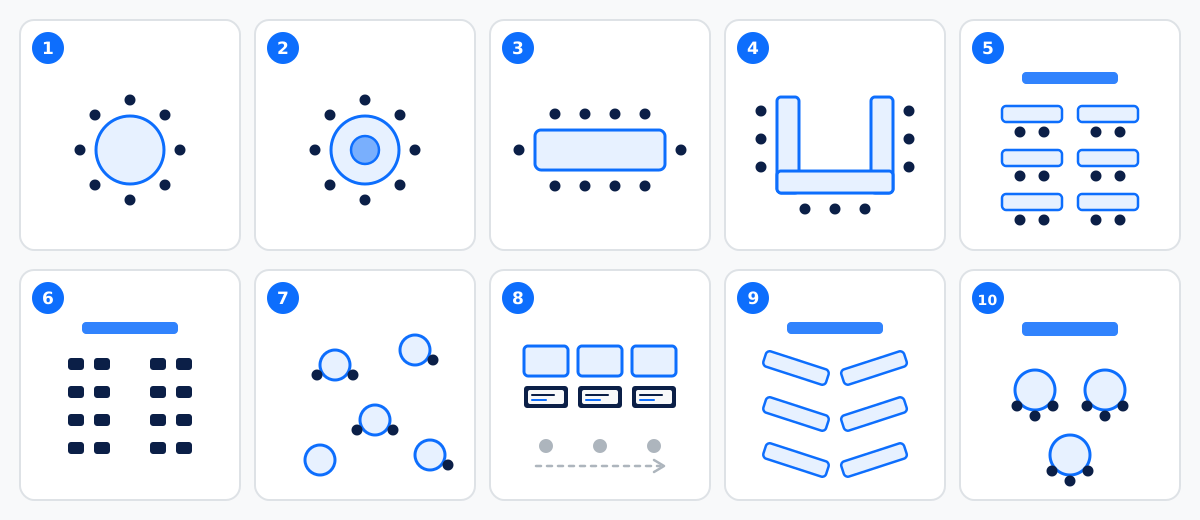
- Round table — the default for weddings, banquets and social dinners. Encourages conversation, easy to seat, comfortable for long meals.
- Round table with lazy susan — group dining with shared dishes in the centre. Efficient for large groups and family-style service.
- Rectangular table — formal dinners and structured seating. Maximises space along walls and works well for head tables.
- U-shape — meetings and workshops where everyone must see everyone. Ideal for presentations with discussion.
- Classroom — rows of tables facing front. Built for note-taking, training and long sessions.
- Theatre — chair rows only, no tables. Maximum capacity for presentations and large audiences.
- Cocktail / reception — standing tables scattered through the room. Encourages movement and networking.
- Buffet — service lines where guests choose for themselves. Efficient for large groups, reduces wait time — and the only layout where every single dish needs its own label.
- Herringbone (V-shape) — angled rows pointing at the screen. Better sightlines and more engagement than straight classroom rows.
- Cabaret — round tables with seating on the far side only, all facing a stage. The dinner-show and awards-night setup.
How to choose
Five questions settle most layout decisions:
- What is the event for? A discussion needs eye contact (U-shape, rounds); a presentation needs sightlines (theatre, herringbone); a meal needs table space.
- How many guests? Theatre seats the most per square metre; rounds and cabaret cost capacity but buy comfort.
- What shape is the room? Pillars, low ceilings and long narrow rooms eliminate some options before you start.
- How will food move? A plated dinner needs service corridors between tables; a buffet needs queue space that doesn’t collide with seating.
- Will it change mid-event? Many events flip — conference by day, dinner by night. Choose setups your team can convert in the available window.
What the layout means for the kitchen
Each setup changes the food logistics, not just the furniture plan. Plated service on rounds means synchronised courses and printed menus per cover. Lazy susans and family-style mean larger shared platters and allergen information that can’t sit on an individual plate. Cocktail receptions disperse food to stations around the room, each needing its own signage. And a buffet concentrates the entire information problem into one line: every tray needs a label with the dish name, the allergens — mandatory under Regulation (EU) No 1169/2011 — and often the price and dietary notes, in the languages your guests actually speak.
The last-minute problem: keeping signage in sync
Here is what layout charts never show: event menus change late. A delivery fails, the client swaps a course two hours before doors, chef replaces a dish between the lunch and dinner seating. The furniture doesn’t care — but every printed label, menu card and buffet sign is now wrong.
This is where electronic shelf labels (ESL) change the equation for buffet and station layouts. Each e-ink label is linked to the recipe database: when the dish changes in CalcMenu, the label in front of the tray updates within seconds — name, allergens, price, in every configured language. No reprinting, no laminating, no runner crossing a full ballroom with a stack of cards. For venues that flip layouts daily, the labels are simply reassigned to the new setup.
We covered how the labels themselves work in our article on electronic buffet labels. To see how they fit your banquet operation — whatever the layout — request a demonstration.
Related sectors
Comments
Comments coming soon.