
Mastering the combi oven: steam, steam roast and roast, explained
The combi oven is the most versatile machine in a professional kitchen — if the team knows which mode to use when. A practical guide to the three cooking modes, core temperatures for beef, and how to turn one chef's settings into a house standard with CalcMenu.
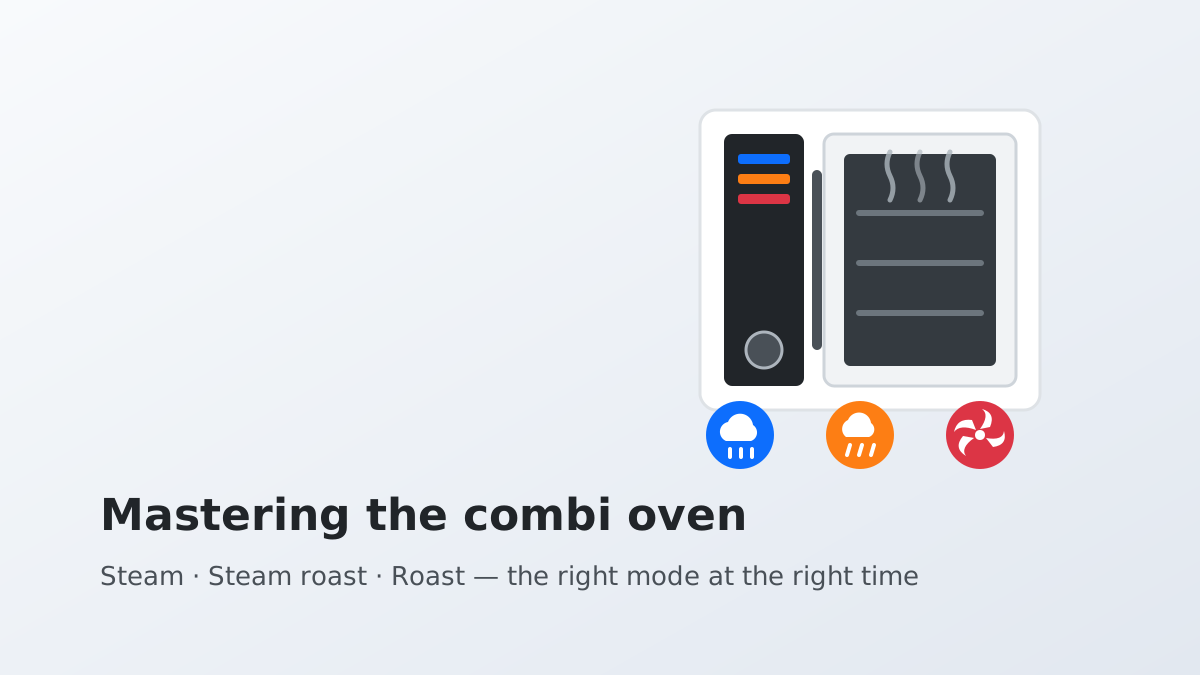
Walk into most modern professional kitchens and you will find a combi oven. It steams, it roasts, and it does both at once — which is exactly why it is the most versatile and the most misused piece of equipment in the kitchen. Used well, a combi oven improves food quality, consistency and yield at the same time. Used on autopilot — always the same mode, always the same temperature — it delivers a fraction of what it was paid for.
The difference comes down to one thing: knowing which of the three cooking modes to use, and when.
1. Steam (30–100 °C): moisture, nutrients, colour
In steam mode, the oven cooks with moisture only. No dry heat, no browning — just saturated steam at a precisely controlled temperature. That makes it the gentlest of the three modes: nutrients stay in the product instead of leaching into cooking water, natural flavours and colours are preserved, and nothing dries out.
Best for:
- Vegetables — vivid colour, firm bite, no vitamin loss to boiling water
- Rice and grains — even hydration without stirring or scorching
- Fish and seafood — delicate proteins that fall apart under dry heat
- Poultry — gentle cooking before a finishing step
- Regeneration — reheating plated food or components without drying them out
A detail many teams overlook: steam mode is not just “100 °C”. Cooking delicate fish at 65–75 °C steam is a completely different result from cooking it at full steam — and the combi oven controls that difference precisely.
2. Steam roast (120–180 °C): tenderness plus caramelisation
Steam roast — also called combination or combi mode — injects steam while circulating hot air. It is the balance point between the other two modes: enough dry heat to build colour and roasted flavour, enough humidity to keep moisture inside the product.
Best for:
- Whole chicken and poultry — golden skin, juicy flesh
- Beef roasts and lamb — even cooking through large muscles
- Large cuts of meat — where dry heat alone would dry the outside before the centre is done
- Roasted vegetables — caramelised surface without shrivelling
The benefits are measurable, not cosmetic: juicier meat, better yield (less weight loss during cooking), more even cooking from edge to centre, and a beautiful golden colour. For a kitchen costing its dishes seriously, the yield point matters most — a few percentage points less cooking loss on every roast changes the real cost per portion.
3. Roast (160–250 °C): dry heat for crust and crispness
Roast mode — convection only — uses dry hot air to produce a crispy exterior and deep roasted flavour. It is the mode for everything where texture contrast is the goal.
Best for:
- Roasted potatoes — crisp outside, fluffy inside
- Bread and pastries — oven spring and crust development
- Crispy chicken — skin that actually crackles
- Steaks after searing — finishing to core temperature without steaming the crust away
- Grilled vegetables — deep browning and intense flavour
The core temperature is the recipe
For meat, the mode sets the method — but the core temperature defines the result. This is where consistency is won or lost, because “medium rare” means nothing to a probe. Degrees do.
| Doneness | Core temperature | What you see |
|---|---|---|
| Rare | 50–52 °C | Cool red centre |
| Medium rare | 54–57 °C | Warm red centre — the chef’s favourite |
| Medium | 60–63 °C | Warm pink centre |
| Medium well | 65–68 °C | Slightly pink centre |
| Well done | 71 °C + | Fully cooked, no pink |
Two rules make this table work in practice. First, always use the core temperature probe — for accuracy and for consistency between cooks. Second, always rest the meat after cooking so the juices redistribute; the core temperature continues to rise by a few degrees during resting, and a good recipe accounts for that.
From one chef’s know-how to a house standard
Here is the uncomfortable truth about everything above: in most kitchens, this knowledge lives in one or two heads. The sous-chef knows the ballotine goes in at 140 °C steam roast to a core of 68 °C. The weekend brigade does not. And so Saturday’s chicken is not Tuesday’s chicken.
The fix is not another training session. It is writing the settings into the recipe itself — mode, cabinet temperature, time, target core temperature, resting time — so the standard travels with the dish, not with the person.
That is exactly what a recipe in CalcMenu is built to hold. Each recipe carries its method steps with the precise cooking parameters, in the team’s language — the same tech sheet whether it is opened by the chef who wrote it or by a cook hired last week, in one kitchen or across ten sites. When the recipe changes, it changes everywhere at once, and every station works from the current version instead of a photocopy of the old one.
Two side effects are worth as much as the consistency itself:
Yield and food cost. Cooking losses differ by mode — that is the whole point of steam roast. When recipes carry their real yields, food cost calculations reflect what actually comes out of the oven, not what went in raw. A kitchen that switches a roast from dry heat to steam roast and records the improved yield sees the saving appear directly in its cost per portion.
HACCP evidence. Core temperatures are not only a quality parameter — for many dishes they are a critical control point. With CalcMenu’s HACCP module, the temperature check is recorded at the moment it is taken, timestamped and signed, so the same probe reading that guarantees the guest’s medium rare also feeds the food safety record an inspector will ask for.
The short version for the kitchen wall
- Steam when you want to preserve moisture, nutrients and natural colour.
- Steam roast for meats and poultry, to get juicy results with a beautiful golden colour.
- Roast when you want crisp texture, deep browning and intense roasted flavour.
- Always probe the core temperature, and let meat rest before slicing.
- Write it all down — in the recipe, not on a sticky note.
To see how CalcMenu turns cooking parameters into tech sheets your whole team can follow, request a demonstration.
Related sectors
Comments
Comments coming soon.