
Poison apple to pizza sauce: how the potato and tomato rewired European cuisine
The potato and tomato were feared as poison for centuries before becoming Europe's kitchen staples — and the same weather and energy shocks that once caused famine now show up as line items on your food cost sheet.
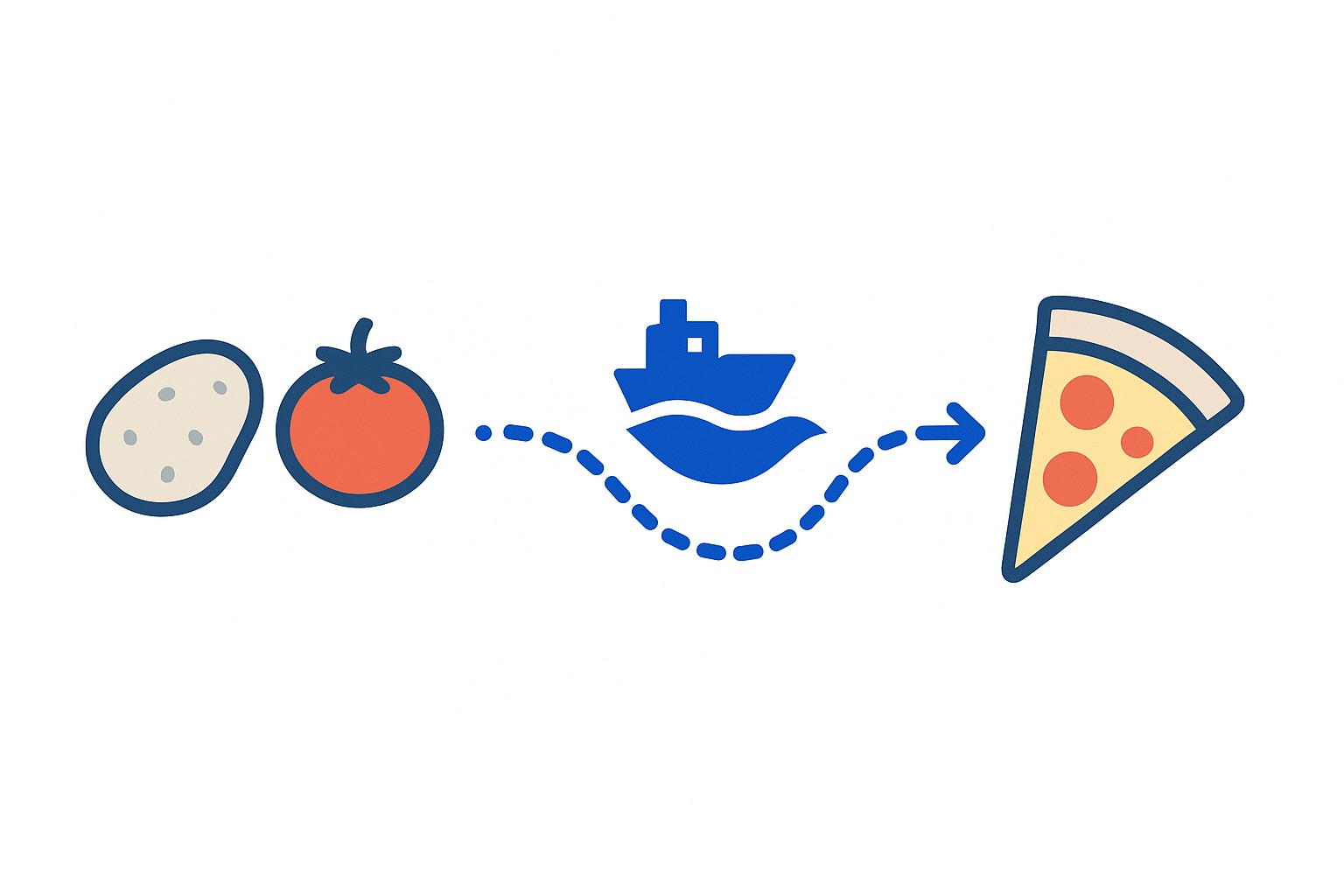
The sauce on your pizza is younger than the printing press
Here is the contradiction at the heart of two of Europe’s most “traditional” foods: the potato that defines Alpine rösti and Belgian frites, and the tomato that defines Neapolitan pizza and Italian passata, both arrived in Europe as suspicious, occasionally illegal, mostly ornamental curiosities from the Americas — and for roughly two centuries, almost nobody in Europe would eat either one. The tomato sauce recipe that Italian cuisine is now inseparable from was first published in 1692, in Antonio Latini’s cookbook Lo Scalco alla Moderna — more than a century after Michelangelo finished the Sistine Chapel, and centuries after the printing press was invented. What we now call “traditional” European cuisine is, for two of its most iconic ingredients, a relatively recent import success story — and one that took generations of active resistance to happen at all.
For anyone costing menus today, that history is not trivia. The potato and the tomato are still, four to five centuries later, two of the most price-volatile ingredients on a European kitchen’s order sheet — and understanding why they were so slow to be trusted also explains why they are still so exposed to weather and energy shocks today.
From the Andes to European suspicion
The potato was domesticated in the Andes between roughly 8000 and 5000 BC, in the area around Lake Titicaca in what is now southern Peru and northwestern Bolivia — making it one of the oldest domesticated food crops in the Americas, cultivated by Andean civilizations for millennia before any European saw one. Spanish conquistadors encountered it in the 1530s–1550s, and the plant reached Europe by two separate routes before the end of the 16th century: through Spain around 1570, and separately into the British Isles between 1588 and 1593.
Once in Europe, the potato ran straight into botanical prejudice. It belongs to the nightshade family, Solanaceae, the same family as deadly nightshade and henbane — and 16th-century botanists, working mostly from resemblance rather than chemistry, treated that family membership as evidence of toxicity. The plant is also absent from the Bible, which some religious authorities of the period took as a sign it was not meant to be eaten. The suspicion had real legal teeth in France: the French Parliament formally banned the cultivation of potatoes in 1748, fearing (among other things) that eating them caused leprosy. The ban stood for 24 years.
It took a military prisoner-turned-pharmacist to break it. Antoine-Augustin Parmentier, captured by Prussian forces during the Seven Years’ War, was fed potatoes as a prisoner and survived on them — an experience that convinced him the crop deserved a second look back home. In 1772, his prize-winning essay on the potato’s nutritional value helped persuade the Paris Faculty of Medicine to declare it edible, and the French ban was lifted. Parmentier then ran what amounts to an 18th-century marketing campaign: he hosted potato-themed dinners for figures including Benjamin Franklin, presented Louis XVI with a bouquet of potato flowers in 1785 (which the King and Marie-Antoinette reportedly wore), and — most famously — planted a potato field on the outskirts of Paris and posted armed guards around it by day, then withdrew them at night, letting curious locals steal the “valuable” crop and plant it themselves.
The strategy worked, and not just in France. By the end of the 18th century, potato cultivation had spread from kitchen gardens into full field cultivation across Northern Germany, Eastern Europe, Russia and Ireland. The economic historians Nathan Nunn and Nancy Qian estimate that the potato’s introduction explains roughly 22% of the population growth and 47% of the urbanization growth that Europe experienced between 1700 and 1900 — because a family could grow the same calories on a third of the land needed for wheat, barley or oats.
When one crop is the whole food system: the Irish Potato Famine
The same trait that made the potato revolutionary — extraordinary calories per acre — also made a monoculture catastrophically fragile. By the 1840s, roughly a third of Ireland’s population, concentrated in Munster, Connacht and west Leinster, grew and ate almost nothing but a single potato variety: the Lumper. Because potatoes are propagated vegetatively (planted from tubers, not seed), every Lumper plant in Ireland was, in effect, a genetic clone of every other — no diversity, no resistance, no buffer.
In late summer 1845, the fungus-like pathogen Phytophthora infestans — potato late blight — arrived in Ireland and, within months, cut what had been a bumper harvest in half. The blight recurred for several more seasons. The Great Famine that followed, running roughly 1845 to 1852, is estimated by historians to have killed somewhere between 800,000 and 1.5 million people through starvation and related disease, while a further estimated 2 million emigrated — a combined loss of close to a quarter of Ireland’s pre-famine population of about 8.4 million in under a decade.
It remains one of history’s starkest lessons in single-crop, single-variety dependency — and it is the reason “diversify your supply” is not just a modern procurement platitude but a lesson written in a national tragedy.
The tomato’s parallel, and even slower, journey
The tomato followed a strikingly similar arc, on a similar timeline, from the opposite side of the Americas. Wild tomato ancestors originated in the coastal Andes of what is now Peru and Ecuador, but domestication into something resembling the modern fruit happened further north: Indigenous peoples in Mesoamerica, including the Aztecs, were cultivating tomatoes in southern Mexico by around 500 BC, breeding larger, more varied fruit and cooking them into their cuisine. The Aztec name, xitomatl, is the direct root of the modern word “tomato.”
Spanish conquistadors carried tomato seeds back to Europe in the early 16th century — and Europe’s reaction was, again, suspicion dressed up as botany. In 1544, the Italian herbalist Pietro Andrea Mattioli classified the tomato alongside mandrakes and nightshades. In 1597, the English herbalist John Gerard published an influential (and largely plagiarized) Herbal declaring the whole plant possessed a “rank and stinking savour” — a claim that, by the account of Smithsonian historians, shaped British opinion against eating tomatoes for more than 200 years. For most of that period, across much of Europe, the tomato was grown as a curiosity or ornamental plant, not eaten at all.
The often-repeated story that European aristocrats were poisoned by tomato acid leaching lead from their pewter plates makes for a good anecdote, but the chemist Joe Schwarcz of McGill University has called it implausible — the amount of lead that acidic tomato juice could leach from pewter in the time it takes to eat a meal is trivial. The fear was cultural and botanical, not chemical.
The turning point is precisely datable. In 1692, the Neapolitan cookbook author Antonio Latini published the earliest known printed tomato sauce recipe — chopped tomatoes cooked with onion, thyme and salt, which he called “Spanish-style” sauce — in his cookbook Lo Scalco alla Moderna. It was still served with meat and fish, not pasta. Tomatoes reached the Kingdom of Naples via Spanish colonial administrators, and it was in and around Naples, over the following two centuries, that tomato and dough eventually met: pizza toppings combining tomato, basil and cheese were being recorded in Naples by 1849. Even the famous 1889 legend of Pizza Margherita being named for Italy’s queen — the version most people know — is now regarded by historians as unreliable, since no contemporary press coverage of the supposed royal visit exists and the story itself appears to have been popularized only in the 1930s–40s. What is not in doubt is the timeline: “traditional” Italian tomato cuisine, as most of the world recognizes it today, is a product of the 18th and 19th centuries — a few hundred years old, not ancient.
Beyond potato and tomato: what else the Columbian Exchange rewired
The potato and tomato are the two most dramatic case studies, but the wider exchange of crops between the Americas and the rest of the world after 1492 reshaped food systems on every inhabited continent.
Moving east, to Europe, Africa and Asia:
- Maize (corn) spread from the Americas through sub-Saharan Africa and southern Asia within decades of first contact, becoming a subsistence staple far from its origin.
- Chili peppers spread even faster: within roughly a century of Columbus’s voyages, capsicum peppers had reached India, Thailand, Korea, Hungary and West Africa, embedding themselves so deeply in local cuisines that most people today assume they are native — Indian curry, Sichuan cooking and Hungarian paprika all depend on a New World crop.
- Cacao reached Spain after Hernán Cortés brought it back around 1528. Europeans initially disliked its bitterness; adding sugar and, later, vanilla turned it into the luxury drink — and eventually the confection — that became a staple of European aristocratic culture by the 17th and 18th centuries.
Moving west, to the Americas:
- Wheat, brought by Spanish colonizers, adapted across climates from Mexico to Argentina and became a colonial staple grain.
- Sugar cane, native to Southeast Asia, was carried to the Caribbean by European colonizers (Columbus himself introduced it on his second voyage) and became the crop most responsible for driving the transatlantic slave trade, as plantation agriculture expanded to meet European demand.
- Coffee, native to Ethiopia, arrived in the Americas via European colonizers in the 18th century; the tropical climates of Central and South America — Brazil and Colombia above all — turned out to be ideal for it, and those countries remain leading global producers today.
The exchange ran in both directions, and in every direction it created new dependencies on crops that had not grown on that continent a generation earlier.
The volatility never went away: today’s potato and tomato markets
Five centuries on, the potato and tomato remain two of the most weather-exposed line items on a European kitchen’s ingredient list — the same structural vulnerability that caused 1840s famine now shows up as short-term price spikes.
Potatoes swung from shortage to glut inside eighteen months. In March 2024, English white potatoes were trading around £505 per tonne — up 159% year-on-year — and Maris Piper potatoes hit roughly £600 per tonne, up 192%, with prices touching levels not seen in three decades. The causes stacked directly on top of each other: one of the UK’s wettest winters on record waterlogged fields and delayed planting, post-Brexit labour shortages hit seasonal harvest crews, energy costs raised storage and transport bills, and a shortage of EU seed potatoes pushed farmers toward pricier alternatives. By late 2025, the market had flipped entirely: favourable weather drove a record Western European harvest of roughly 27.3 million tonnes — about 11% above the previous season — collapsing prices so sharply that surplus potatoes were being diverted into animal feed because storage and food-chain buyers couldn’t absorb the volume.
Tomatoes told a similar weather-and-energy story on the fresh side. In early 2023, UK and EU supermarkets rationed tomatoes after poor weather cut Spanish Almería production by roughly 22% year-on-year in February 2023, while high natural gas prices made it commercially unviable for UK and Irish glasshouse growers — including two of Britain’s largest producers — to heat their greenhouses through the winter. Spain and Morocco supply around 95% of the UK’s winter tomato imports, so when Morocco temporarily restricted exports to protect its own domestic and European supply, the shortage compounded further; UK tomato prices hit an all-time high of £2.96 per kilo that January. On the processing side, bulk tomato paste prices in Europe rose to roughly €1,150 per tonne in 2023, up from about €1,000 in 2022, driven by the same combination of energy costs and reduced Southern European yields — and in Sicily, drought-driven shortages pushed plum tomato prices as high as €5.50 per kilo in November 2024, before easing again as 2024–25 supply normalized.
What This Means for Your Food Cost
Potato and tomato are not exotic, occasional ingredients on European menus — they are foundational, high-volume staples, which is exactly why their price swings hit margin so hard. A handful of practical implications follow directly from the history and the data above:
- Seasonality is not a rounding error on these two items. A 159–192% year-on-year potato price swing, or a tomato price that moves from £2.96/kg in a shortage month to a fraction of that in a glut year, will blow through a fixed-cost recipe card if that card isn’t revisited seasonally.
- Weather-shock risk is structural, not occasional. Both crops depend on a small number of growing regions (UK/Netherlands/Germany for potatoes in Northern Europe; Spain, Morocco and Southern Italy for winter tomatoes) — a single bad harvest or energy spike in any one of them ripples through the whole continent’s supply within weeks.
- Format is a real cost lever, not just a kitchen preference. Fresh tomatoes, tinned tomatoes, passata and paste each sit on different points of the price-volatility curve — bulk paste contracts move on annual harvest cycles, while fresh spot prices can double in a single season. A recipe locked into “fresh tomatoes only” inherits all the volatility of the fresh spot market; a recipe with a costed passata or tinned substitute has a hedge built in.
- The same logic applies to potatoes: fresh vs. pre-peeled vs. frozen vs. dehydrated formats carry very different price stability, and knowing the real cost delta between them — not just the sticker price — is what lets a kitchen switch formats before a shortage forces the decision.
How CalcMenu Helps
- Recipe costing against live supplier prices — so a potato or tomato price swing shows up as an immediate, per-recipe margin alert instead of a surprise at month-end reconciliation.
- Substitution costing — compare fresh, tinned, frozen and passata/paste formats for the same recipe side by side, so a format switch during a shortage is a costed decision, not a guess.
- Multi-site price consistency — a restaurant group or catering operation sourcing potatoes or tomatoes across several regions can see where prices diverge and renegotiate or re-source accordingly, rather than each site absorbing local volatility independently.
- Yield and waste tracking — potato peeling loss and tomato trim/seed waste both materially change true cost per portion; tracking actual yield against recipe assumptions keeps the costed price honest.
- Historical price trend visibility — seeing a season-by-season price curve for a given ingredient makes it possible to plan menu pricing ahead of known seasonal patterns, rather than reacting after the invoice arrives.
Want to see what this actually costs on your menu? Book a free 15-minute call with our team — no commitment: Schedule a call.
Related reading
- Onion and garlic are the two ingredients every cuisine converged on independently — and just as exposed to price shocks
- Vanilla’s 300-year monopoly and cyclone-driven price spikes are the same single-region risk, at an even more extreme scale
- The Inca invented freeze-dried chuño from the same Andean potato that later rewired European cuisine
- Napoleon’s canning prize and the European sugar beet industry show the same era’s food system reacting to supply shocks
Sources
- History of the potato — Wikipedia
- Researchers trace roots of potato farming to Andes — University of California
- Immigrant Potatoes — Feeding the People, Cambridge University Press
- Why the Delicious Potato Was Once Feared — Food Culture Bites
- Antoine-Augustin Parmentier — Wikipedia
- History’s Greatest Potato Promoter Relied on Science and Stunts — Atlas Obscura
- Potatoes were Illegal in France between 1748 and 1772 — Perry Ponders
- Great Famine (Ireland) — Wikipedia
- Monoculture and the Irish Potato Famine — UC Berkeley, Understanding Evolution
- The Potato’s Contribution to Population and Urbanization: Evidence from an Historical Experiment — Nunn & Qian, NBER Working Paper 15157
- Foods Indigenous to the Western Hemisphere: Tomatoes — American Indian Health and Diet Project
- How the Misrepresentation of Tomatoes as Stinking ‘Poison Apples’ … Made People Afraid of Them for More Than 200 Years — Smithsonian Magazine
- The First Tomato Sauce Recipe in Print — Crystal King
- Antonio Latini — Wikipedia
- Pizza Margherita — Wikipedia
- Columbian exchange — Wikipedia
- Foods of the Columbian Exchange — Newberry Library Digital Collections for the Classroom
- Why is there a shortage of tomatoes in the UK? — Sustain
- Why the UK is Facing a Tomato Shortage in 2023 — Xtalks
- Deep dive in tomato prices: A comprehensive price study 2024-2025 — Wikifarmer
- The UK’s Potato Predicament: Rising Prices and Supply Challenges in 2024 — Mallport
- ‘Potato Flood 2025’: How Europe’s glut is rippling through the global supply chain — Potato News Today
Explore CalcMenu's recipe management software for restaurants, hotels & catering to see how it applies to your kitchen.
Related sectors
Comments
Comments coming soon.