
Blender Sous Vide: Why Oxidation Costs More Than You Think
Oxidation in blended preparations quietly drives up food costs and rejection rates in care catering — here's why vacuum blending matters for nutrition drinks and IDDSI purées, and how the right systems help you track the real impact.
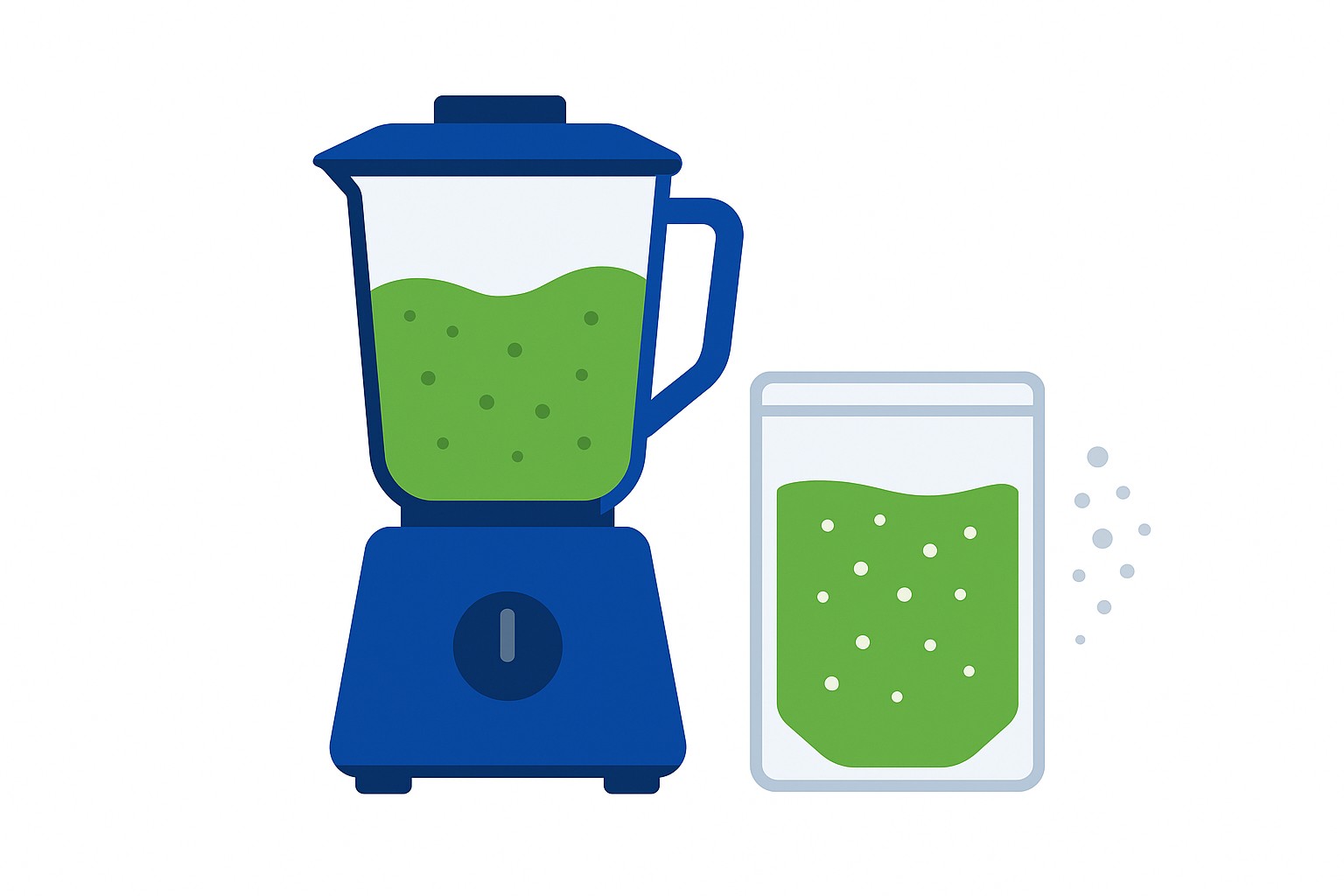
The Hidden Cost Nobody Is Tracking
In care catering — hospitals, rehabilitation centres, care homes — purées and nutrition drinks are not optional extras. They are clinical nutrition. Yet one overlooked variable quietly inflates costs every single day: oxidation during blending.
When purées are blended using conventional open blenders, exposure to air triggers oxidation almost immediately. The result? Browning, flavour loss, and a texture that degrades faster than it should. Care staff on the ward notice. And when a patient-facing dish looks unappetising or smells slightly off, it gets rejected — not recorded as waste on a formal report, but rejected nonetheless.
That rejection is costing you more than you realise.
What Sous Vide Blending Actually Changes
Vacuum blending — or blender sous vide — removes air from the blending chamber before processing begins. The practical effects are significant:
- Colour retention is visibly better. A carrot-and-squash purée stays vibrant orange rather than fading to a dull brown within an hour.
- Flavour compounds are preserved, which matters enormously for residents with reduced appetite — one of the biggest nutritional risk factors in long-term care.
- Shelf life within the meal cycle is extended, meaning preparations made during a morning production run hold their quality through lunch and into the afternoon snack service.
For IDDSI-compliant preparations specifically — where texture and consistency are clinical requirements, not preferences — degraded texture caused by oxidation can mean a preparation no longer meets the required IDDSI level by the time it reaches the patient. That is not just a quality issue; it is a safety issue.
Where the Real Financial Leak Happens
Most care catering managers look at raw ingredient costs and portion yields. Very few calculate the true cost of informal rejection — portions plated, transported, and left uneaten because they failed a visual or sensory check at the point of service.
Consider a production kitchen preparing 80 IDDSI purée portions per meal service. If even 8–10% of those portions are quietly set aside by care staff before reaching residents, that is eight to ten portions of clinical nutrition wasted — plus the labour, energy, and overhead baked into each one.
Vacuum blending reduces that rejection rate at the source, before the portion ever leaves the kitchen. Combined with tighter recipe control and real-time costing, the savings compound quickly.
Connecting Equipment to Management Systems
Equipment alone is only half the answer. The other half is knowing your numbers. When your blending process changes, your recipe yields change. Your portion costs change. Your nutritional outputs per serve change.
This is where a food management platform like CalcMenu becomes essential. With CalcMenu, care catering teams can:
- Update recipe yields directly when switching to vacuum blending, so costing stays accurate
- Track allergen and nutritional data per IDDSI level across multi-site production
- Flag texture-modified preparations with the correct dietary profile for each resident
- Print compliant labels that reflect the actual preparation method and texture category
When your kitchen equipment evolves, your data infrastructure needs to evolve with it — otherwise you are flying blind on costs that are already hard to measure.
Small Change, Measurable Impact
Vacuum blending is not a luxury upgrade for premium hotel kitchens. In care catering, it is an operational decision with direct clinical and financial consequences. Less browning means fewer rejected portions. Fewer rejected portions means lower real food cost and better resident nutrition outcomes.
If you want to understand how CalcMenu can help your team track recipe costs, manage IDDSI profiles, and connect production data across sites, book a 15-minute call with Marc. It is a practical conversation — no pitch deck, just answers to your actual questions.
Explore CalcMenu's recipe and menu software for nursing homes to see how it applies to your kitchen.
Related sectors
Comments
Comments coming soon.