
Combi Ovens & Steam Cooking: How Lower Cook-Loss Boosts Your Food Cost
Steam cooking in combi ovens can cut cook-weight loss by 5 to 15 percentage points compared to conventional ovens, meaning more portions per kilogram purchased. Here is what that shift means for your food cost and how to track it properly.
The Hidden Cost Sitting Inside Your Oven
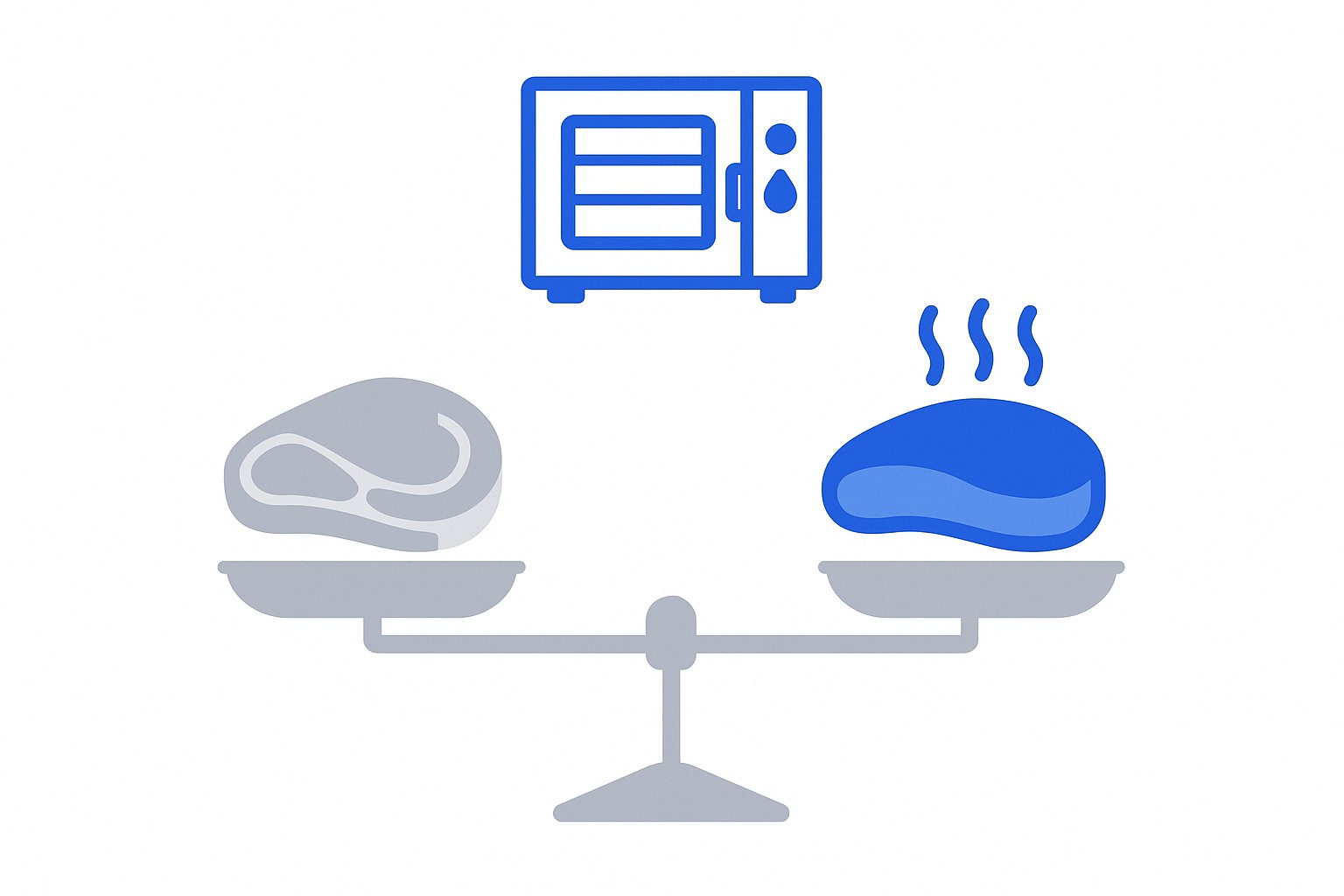
Most catering managers focus on purchase prices when trying to control food cost. Yet one of the biggest levers sits inside the oven itself. Cook-weight loss — the moisture a product loses during cooking — can quietly drain 20 to 35% of your raw ingredient weight before a single portion reaches a plate. Switch to steam or combi-steam cooking, and that figure often drops by 5 to 15 percentage points. On a high-volume operation, that gap translates directly into extra portions per kilogram purchased.
What Steam Actually Does to Yield
Conventional dry heat drives moisture out of proteins and vegetables aggressively. A chicken breast cooked in a standard convection oven at 180 °C might leave you with 68% of its raw weight. The same breast cooked in steam mode in a combi oven at the right core temperature can retain 78 to 82%. That 10-point difference means roughly one extra portion for every ten you were producing before — at zero additional purchase cost.
The effect is consistent across proteins, root vegetables, and grains. Roast beef, salmon fillets, carrots, and even pasta all respond to lower evaporation rates when steam is present in the cooking chamber.
Why Your Recipes Need to Reflect the Change
Here is where many operations stumble. A chef switches to a combi oven, achieves better yield, but the recipe cards and costings never get updated. The kitchen still orders based on old loss factors, and the finance team never sees the saving.
Accurate recipe costing requires a yield coefficient tied to the actual cooking method, not a generic industry average. If your recipe management software does not let you assign a specific cook-loss percentage per cooking process, you are costing blind.
In CalcMenu, each recipe step can carry its own yield factor. When you update the factor to reflect steam cooking results — measured from your own equipment, not a textbook — the software instantly recalculates raw material requirements, portion cost, and procurement quantities across every site using that recipe. One update, consistent numbers everywhere.
Measuring Your Own Cook-Loss in Practice
Do not rely on published tables alone. Run a simple cook-loss test on your three or four highest-volume proteins this week. Weigh raw, cook to your standard core temperature, weigh after resting. Record the result against both your conventional oven and your combi steam setting. The difference is your real saving.
Feed those numbers into your recipe system. With CalcMenu, the updated yield flows automatically into allergen declarations, label printing via NiceLabel, and production planning for multi-site operations — so compliance and logistics stay aligned without extra manual work.
The Compounding Effect at Scale
For a hospital kitchen producing 500 hot meals a day, a 10-point improvement in chicken yield could mean purchasing 8 to 12 fewer kilograms of raw protein per week while serving the same number of portions. Multiply that across a year, across multiple sites, and the saving is substantial — often enough to offset the cost of the equipment itself.
The same logic applies to care homes managing tight per-resident food budgets, hotel banqueting teams costing large-format menus, and airline catering operations where gram-level accuracy matters at scale.
Start With the Numbers You Already Have
You do not need a full kitchen audit to begin. Pull your top ten recipes by volume, check the yield factors currently stored in your system, and compare them against your actual combi oven results. The gap between assumed and real yield is usually where the money is hiding.
If you want to see how CalcMenu handles yield-adjusted costing across multi-site production — including automatic updates to labels, dietary profiles, and procurement — book a focused 15-minute call with our team and we will walk through a live example with your figures. Schedule your call here.
Explore CalcMenu's recipe management software for restaurants, hotels & catering to see how it applies to your kitchen.
Related sectors
Comments
Comments coming soon.