
HPP: How Many Sites Can One Central Kitchen Really Feed?
High Pressure Processing (HPP) is quietly transforming the economics of central kitchen production for multi-site hospital and care groups. Here is what the technology means for your operations — and your bottom line.
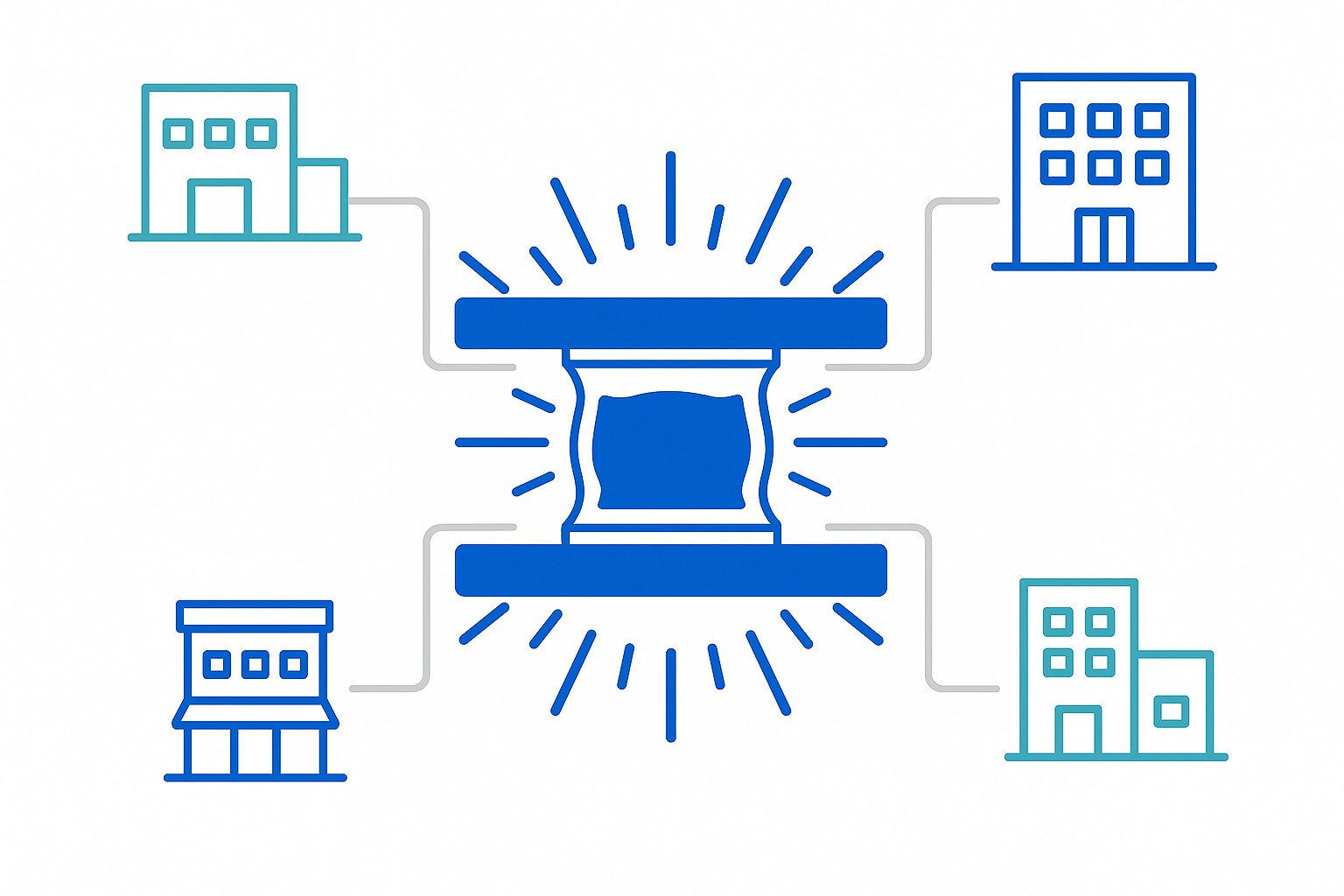
The Central Kitchen Promise — and Its Limits
The idea is compelling: one highly efficient central production unit supplying meals to a network of hospitals, care homes, and rehabilitation centres. No duplicated equipment, no fragmented procurement, no inconsistent recipes. The economics make obvious sense — until you hit the shelf-life wall.
Conventional cook-chill production gives you three to five days of safe storage. That window is tight. It forces high-frequency deliveries, limits your geographic reach, and leaves almost no buffer for demand spikes or logistics disruptions. For a group managing ten or fifteen sites spread across a region, it quietly kills the model before it starts.
Enter HPP — and Its Belgian Roots
High Pressure Processing (HPP) is a cold pasteurisation technology that subjects sealed, ready-to-eat food to pressures of up to 6,000 bar — with no heat, no preservatives, and no compromise on nutritional profile or texture. Pathogens are eliminated. Shelf life is dramatically extended.
What is less widely known in the hospital catering world is that some of the most rigorous applied HPP research for foodservice comes out of Belgium — specifically from Celabor and its commercial spin-off HiFoodtec, which have developed HPP integration protocols tailored to institutional catering contexts. Their work has demonstrated shelf lives of up to 45 days for certain chilled, HPP-treated meal components — compared to the standard three-to-five-day window.
Forty-five days. That number changes the entire conversation.
What 45 Days Actually Unlocks
When your central kitchen can produce and store meals for six weeks rather than five days, the operational calculus flips entirely:
- Delivery frequency drops from daily or every-other-day runs to weekly or even fortnightly logistics routes
- Geographic reach expands — sites two or three hours away become entirely viable to serve
- Production smoothing becomes possible — you can run full-capacity shifts during the week and cover weekend demand without weekend staffing
- Waste shrinks — longer shelf life means tighter alignment between production volumes and actual consumption patterns
For an EMS group or hospital network managing multiple sites, this is not a marginal efficiency gain. It is a structural shift in what a single central kitchen can do.
Where Software Becomes the Critical Layer
HPP extends shelf life, but it does not manage your operation. That is where recipe integrity, traceability, and compliance become non-negotiable.
With CalcMenu, every HPP-treated batch produced in your central kitchen carries full recipe traceability — ingredients, allergens, nutritional values, and production date — right through to label printing via NiceLabel at the point of dispatch. Satellite sites receive meals with accurate, regulation-compliant labels already generated. Allergen data and dietary profiles travel with every product, reducing risk at the point of service regardless of which site is receiving the delivery.
Multi-site production management within CalcMenu means your central kitchen team has visibility across the full network — planned orders, dietary requirements by resident or patient, and stock levels — without managing a patchwork of spreadsheets and phone calls.
HACCP documentation is captured at production, not reconstructed after the fact. If a regulatory inspection arrives at a satellite site, the paperwork trail leads cleanly back to central production.
The Model Is Viable — If the Infrastructure Is Right
HPP makes the one-kitchen-many-sites model genuinely viable at scale. But the technology investment only pays off when your production, compliance, and ordering workflows are robust enough to match it.
If your group is evaluating central kitchen consolidation or exploring HPP as part of a wider food production strategy, the conversation is worth having now — before the capital decisions are made.
Book a 15-minute call with Marc to explore how CalcMenu supports multi-site central kitchen operations — from recipe management and allergen control through to label printing and HACCP compliance across every site you serve.
Explore CalcMenu's recipe and menu software for nursing homes to see how it applies to your kitchen.
Related sectors
Comments
Comments coming soon.