
A 10-ounce rocks glass, 4 ounces of ice: the honest math on how much drink you're actually pouring
Ice isn't background noise in a glass — it can displace up to 40% of a rocks glass before a drop of spirit goes in. Here's the real math on volume, dilution, and what that means for pour cost.
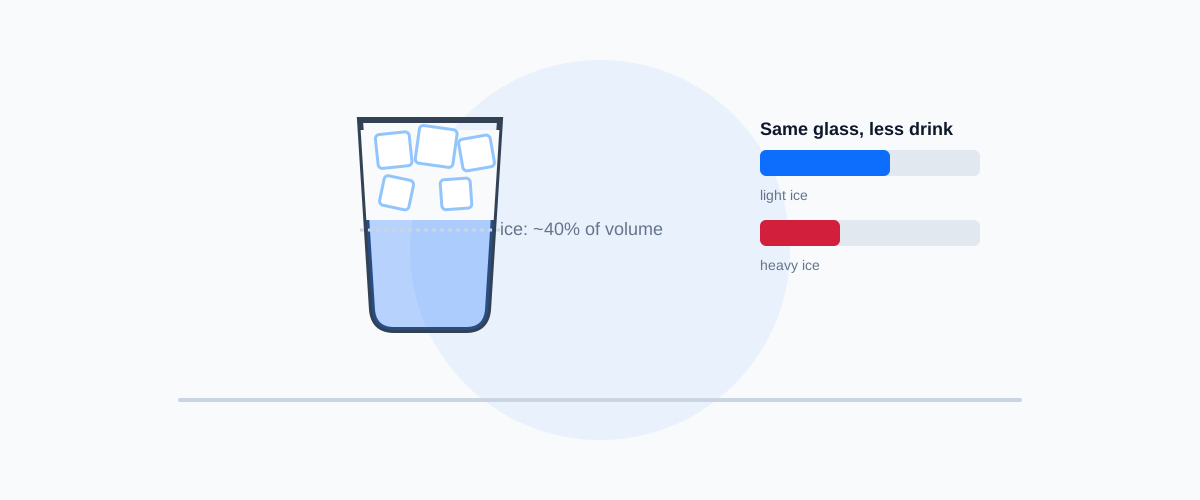
A 10-ounce glass rarely pours 10 ounces of anything
Order a whiskey on the rocks and the glass in front of you looks full. It usually isn’t — not with liquid, anyway. A standard-size ice cube can displace 2.5 to 3 ounces (74-89 ml) in an 8-ounce (237 ml) glass, and a single large 2-inch (5cm) cube or sphere can occupy 3 to 4 ounces (89-118 ml) on its own — meaning up to 40% of the visible glass is ice, not drink, before the pour even starts. Crushed ice displaces even more. None of this is a trick of the light. It’s basic geometry, and it’s the part of a cocktail’s “recipe” that almost never appears on a spec sheet.
This sits right next to a companion topic — what it actually costs to make the ice in the first place, machine electricity and water included. This post is about something different: once that ice exists, how much room it takes up in the glass, how it changes what a customer is actually drinking, and where the line sits between a real craft technique and a way to quietly serve less.
Dilution is a tool — deliberately, most of the time
Professional bar sources are consistent that dilution isn’t an accident to be minimized; it’s an ingredient bartenders control on purpose. Shaking a drink with dry, freezer-cold ice adds roughly 20% dilution to the final volume, according to Difford’s Guide, one of the trade’s standard technical references — and that dilution is doing real work: it’s the difference between a cocktail that tastes like straight spirit and one that’s actually balanced and cold enough to drink. Stirred drinks are built the same way, just slower — professional guidance generally points to a 15–25% dilution window across the whole build, reached through 20–40 seconds of stirring rather than a 10–15 second shake.
Where it gets more nuanced — and less like marketing copy — is ice size. The popular claim that “big ice dilutes less” is only half true. Dave Arnold’s widely cited bar-science research (Cooking Issues) found that once ice is dry, cube size has surprisingly little effect on shaken dilution; what actually drives it is surface moisture, not surface area. Difford’s Guide reaches the same conclusion: with dry ice, “the size of ice cube has little effect on the level of dilution.” What large-format ice genuinely changes is what happens after the drink is poured — a big, dense clear cube sitting in a finished rocks drink keeps melting slowly over the next 20 minutes, which is a real and different thing from the dilution added during shaking or stirring.
Cube, crushed, or clear: three formats, three different costs
The ice itself isn’t one product. A standard ice-machine cube costs a fraction of a cent and is what most bars use by default. Crushed or pellet ice chills fast and packs densely — useful for juleps and tiki drinks — but melts and dilutes quickly, so it’s a short-window format, not a sipping one.
Large-format clear ice is a different business entirely. Producing it in volume typically means directional-freezing equipment: entry kits from suppliers like Clearly Frozen start around $100 for a few trays, while commercial block machines such as the Clinebell — the standard in the craft-ice trade — run about $5,500 and take three to four days to freeze a 300-pound (136 kg) block that then has to be cut into roughly 450 to 800 individual 2-inch (5cm) cubes with a saw. Bars that don’t want to run that equipment themselves buy from craft-ice suppliers instead, where a delivered block has run around $140 in a market like San Francisco and individual clear cubes typically retail for $0.78 to $1 each. Distiller Magazine’s reporting on the format puts the added cost of an outsourced clear-ice program at roughly 60 to 80 cents per drink over machine ice — and one bar-industry cost estimate cited by The Gourmet Edit put a clear-ice cube at 15–20% of a cocktail’s total ingredient cost. That’s a real, non-trivial input, not a rounding error.
The transparency edge, stated plainly
Here’s the part worth naming honestly rather than dressing up. Because ice occupies real volume, more ice in the glass structurally means less room for everything else — including the spirit — at the same menu price. Consumer-facing coverage of the “big ice” trend documents this exact concern directly: some drinkers assume the ice is there specifically to reduce how much alcohol goes in the glass without lowering the price. Industry sources push back that the primary driver is genuinely temperature and dilution control, not cost-cutting, and the clear-ice economics above support that — craft ice is expensive to make, not a cheap way to pad a glass.
Both things can be true at once, and that’s the honest version: controlled dilution and slow-melting large ice are legitimate, well-documented craft techniques with real costs behind them — and a heavier-than-necessary fill of cheap ice is also a documented, low-effort lever for quietly reducing pour cost on a drink that’s priced and marketed the same either way. The two look identical from across the bar. The difference is in the spec — whether the ice fill is a deliberate, consistent part of the recipe, or a variable nobody’s actually decided on.
Why this matters for anyone costing a menu
Ice sits in the same blind spot as garnish: treated as “basically free” until someone actually measures it. The real questions aren’t about morality — they’re operational:
- Is your ice fill a specified part of the recipe, the same way a shot size or a garnish portion is — or does it vary by whoever’s behind the bar that shift?
- Do you know the true cost of your ice format — machine cube, crushed, or sourced clear — per drink, not just per delivery?
- Would a pour-cost swing from inconsistent ice fill show up in your numbers, or would it just look like a slightly-off margin nobody can explain?
How CalcMenu helps
CalcMenu’s real strength here isn’t a sensor in the ice bin — it’s recipe and yield costing that treats a drink’s full spec, ice fill included, as a standardized, costed recipe rather than a bartender’s habit.
- Every component as a line item — ice format and fill level can be entered and priced as part of the recipe, alongside spirit, modifiers, and garnish, instead of being folded into an untracked overhead line.
- Recipe costing in minutes, not days — re-cost a drink instantly if you switch ice formats (machine cube to sourced clear, for example) and see the real margin impact before it hits the menu.
- Consistency across sites — a standardized pour spec, including ice fill guidance, means the same drink costs and tastes the same whether it’s built in your flagship bar or a satellite location.
CalcMenu doesn’t tell your bartenders how much ice to use. It makes sure that whatever the house decides — light fill, heavy fill, machine cube, or hand-cut clear — is a costed, consistent choice instead of an invisible one.
Related reading
- Cost your own cocktail recipe with our free calculator — enter your ingredients and see the true cost and pour cost side by side
- Your $14 cocktail costs almost 70% more than the recipe card says — the companion piece on ice’s production cost, plus garnish
- Pour cost percentage, explained: what it actually measures and where the industry benchmarks come from
Want to see what your bar program is really costing you? Book a free 15-minute call with our team — no commitment: Schedule a call.
Sources
- How Many Ounces in a Rocks Glass: A Bartender’s Guide — Las Vegas Restaurant Equipment
- The Correct Amount of Ice for a Cocktail — Andrew Bohrer, Bar Napkins
- The Science of Ice in Cocktails Clears Up Misconceptions — SevenFifty Daily
- Shaking Cocktails: Advanced Tips, Myths and Lessons — Difford’s Guide
- Cocktail Science in General, Part 1 — Dave Arnold, Cooking Issues
- The New Business of Big Ice — SevenFifty Daily
- How to Start a Big Clear Ice Program — Distiller Magazine
- The Ice Paradox: Are Premium Cocktails Shrinking — Or Finally Being Made Right? — The Gourmet Edit
- Why Do Bartenders Use So Much Ice? — Memphis Ice
Related sectors
Comments
Comments coming soon.